
From 'Alchemist's Brew' to 'Genesis': NVIDIA SC25 and the Paradigm Shift to Interactive Science
As NVIDIA propels scientific computing towards a new paradigm of real-time, AI-driven discovery, what fundamental shifts in infrastructure, workflow, and scientific mindset are required to unlock this future, and what critical challenges must the community overcome to keep pace?


When Science Goes 'Game Mode': NVIDIA's Vision for the Future of Computing at SC25
Imagine you are a top aerospace engineer designing the wing of a next-generation aircraft. In the past, every minor adjustment to your design meant submitting data to a supercomputer, followed by hours, perhaps an entire day, of waiting for the simulation results. The spark of inspiration often dies out during this endless wait.
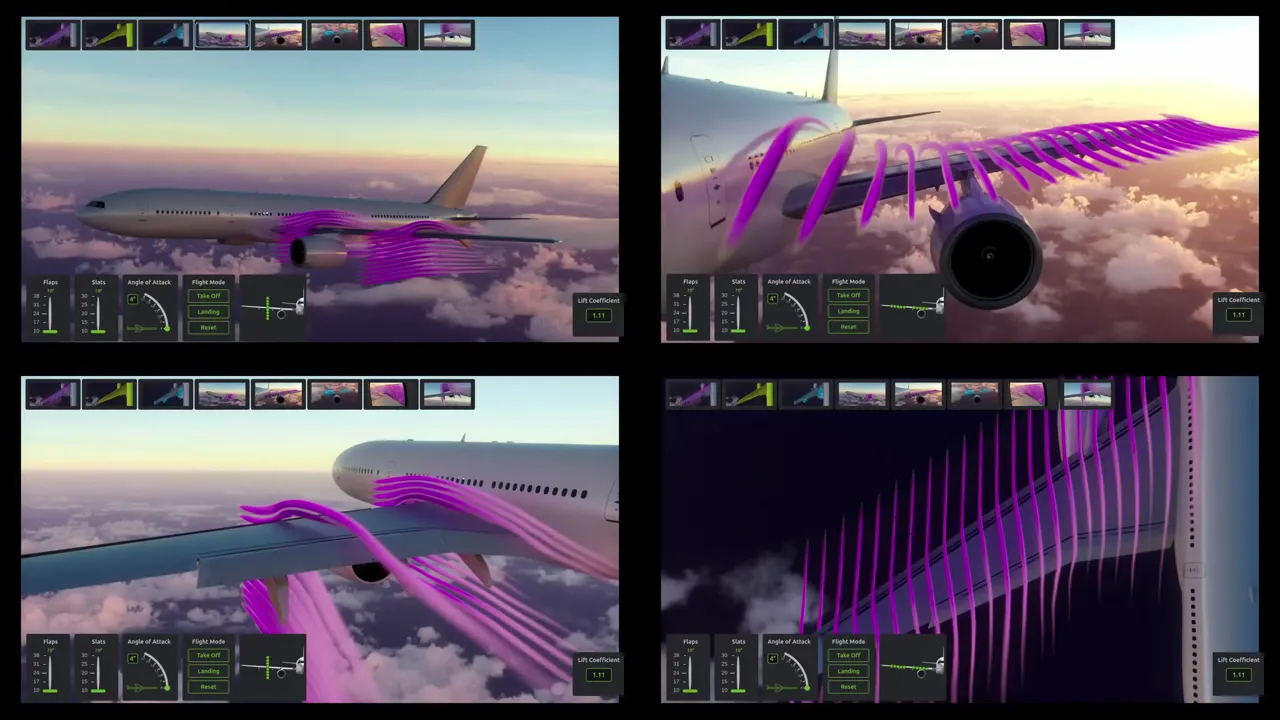
Now, imagine an alternative scenario: You are sitting in front of a screen, using a mouse to drag and reshape the wing’s curvature, much like playing an ultra-high-fidelity physics simulation game. With every change, you can see how the complex airflow behaves, smoothly wrapping around the wing, all in under 5 seconds. You are free to explore, iterate, and test at will until you find the optimal solution.
This might sound like something out of a science fiction movie, yet this is precisely the future NVIDIA demonstrated at the recent SC25 supercomputing conference—a future that is already unfolding. By deeply merging the three foundational pillars of Simulation, Artificial Intelligence (AI), and Quantum Computing, NVIDIA is driving a profound paradigm revolution: transforming scientific discovery from a slow, linear "batch processing" procedure into an instant, interactive journey of exploration. This is not merely about speed; it concerns an entirely new way of thinking about science. However, to fully open this door to the future, the cost involves far more than simply buying faster chips.
The Three Pillars: A Long-Awaited Computational Revolution
This transformation was not achieved overnight. NVIDIA Vice President Ian Buck noted at the conference that this has been a "Long March" spanning nearly 20 years. From the initial, modest unveiling of the CUDA programming model at the SC conference in 2006, to the groundbreaking collaboration with IBM in 2010 that involved positioning GPUs sideways to optimize connectivity; and then the launch of the influential DGX product line in 2016—every step taken by NVIDIA appears to have been a calculated precursor to today's landscape.
Today, accelerated computing is no longer a niche concept; it is the undisputed champion of the supercomputing world. On the latest Top 100 list, a staggering 88 supercomputers boast accelerator "hearts," accounting for over 90% of the total computing power. It is upon this robust foundation that NVIDIA has built its three pillars for the new era:
The Three Computational Pillars and NVIDIA's Ecosystem Layout
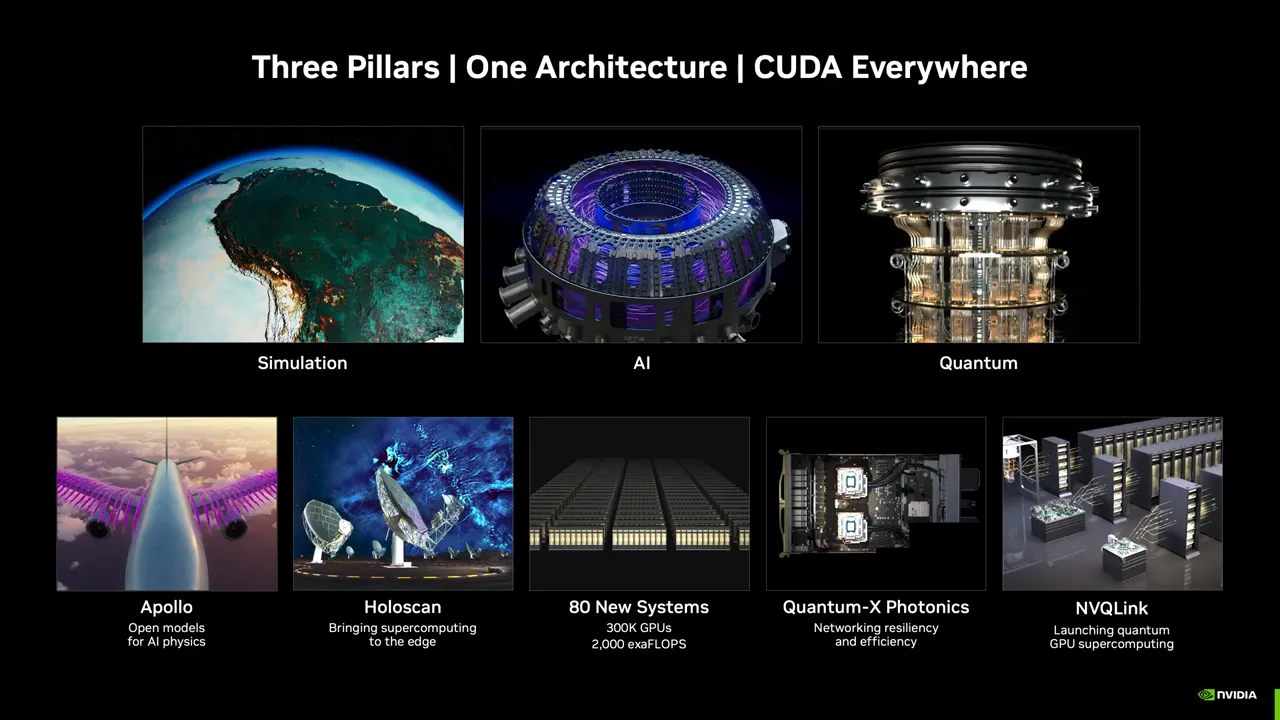
- Simulation: This is the "classical" cornerstone of computational science, allowing us to peek into the interactions within an atom or witness the grand spectacle of colliding galaxies.
- AI: This is the current "viral" variable. Since 2016, it has moved from image recognition right into the core of science, becoming a catalyst for accelerated discovery.
- Quantum Computing: This represents the "mysterious" force of the future. While true quantum supremacy has yet to arrive, NVIDIA is already enabling us to simulate tomorrow's quantum computers using today's supercomputers, allowing us to explore this unknown domain ahead of time.
What binds these three together is NVIDIA's true moat—the massive CUDA-X software ecosystem. Its cumulative downloads exceed a staggering 600M times, supported by approximately 7M developers. This functions like a colossal app store, providing scientists with over 1,000 pre-built SDKs and AI models, ensuring they don't have to "reinvent the wheel" from scratch.
From 'Alchemist's Brew' to 'Genesis': When AI Becomes the Scientist's Magic Wand
If past scientific simulation was akin to an "alchemist's brew"—adding ingredients, sealing the furnace, and patiently awaiting the result—then today's AI physics grants scientists the power of "genesis."
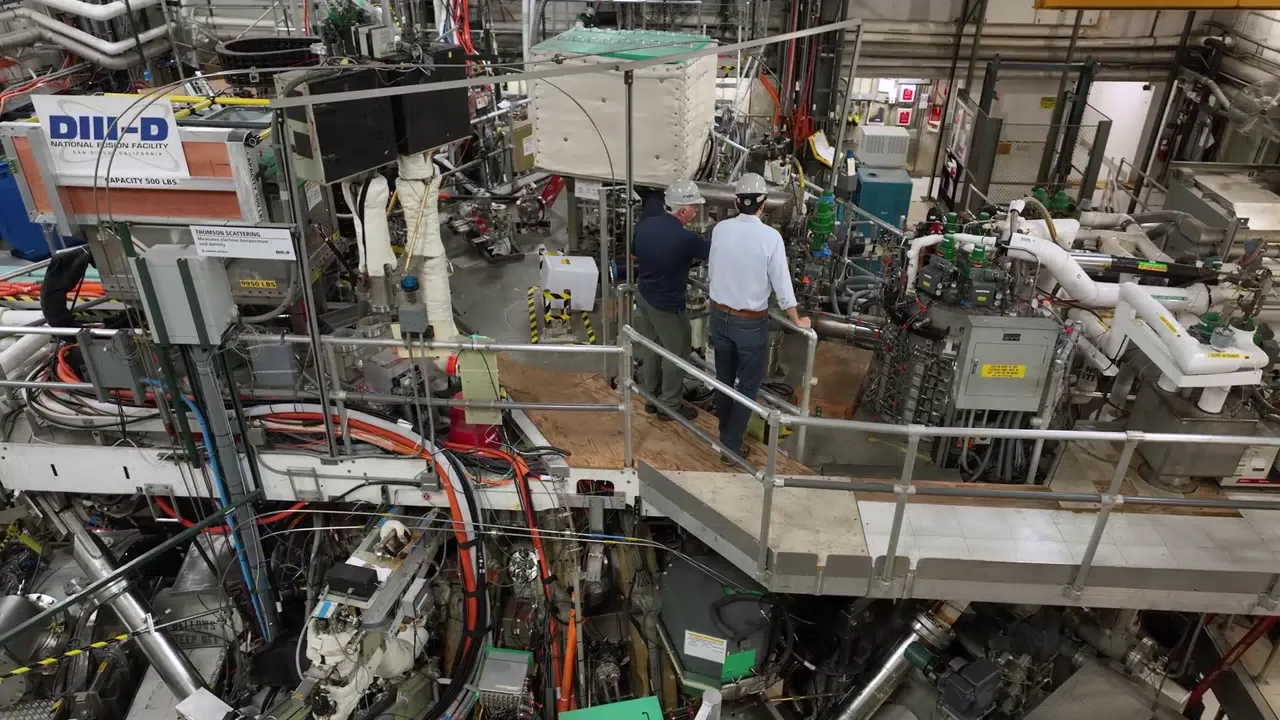
- Taming Plasma Hotter Than the Sun: In the field of nuclear fusion, General Atomics is leveraging NVIDIA Omniverse to construct a fully interactive digital twin for its DIII-D Tokamak reactor. Controlling plasma that is hotter than the core of the sun is the key to achieving controlled nuclear fusion. Previously, even the world's fastest computers struggled to simulate its complex physical processes in real-time. Now, researchers can safely and affordably conduct various extreme experiments within a virtual reactor, much like rehearsing how to "tame" an artificial sun in a simulator.
General Atomics DIII-D Reactor Facility
- Real-Time Tsunami Warning: At the University of Texas at Austin, a team trained an AI model with 1B parameters using 15 years of seismic data. This model can now provide real-time probabilistic tsunami forecasts for the Cascadia Subduction Zone off the West Coast of North America. This means that when an underwater earthquake occurs, we no longer have to wait hours for complex physics models to run; within minutes, we can assess the tsunami risk, buying precious evacuation time for coastal residents.
- Cutting Race Car Simulation from Half a Day to a Lunch Break: In the realm of motorsports, where speed demands are extreme, the SCAR team utilized a single GB200 node to compress a complex Computational Fluid Dynamics (CFD) simulation involving 180M cells from the original 11 hours down to approximately 48 minutes.
The magic behind all this is enabled by new tools like NVIDIA Warp and NVIDIA Apollo. Warp is a Python library that makes physics code "differentiable," meaning the computer knows not only "what is" but also "what if." Apollo, on the other hand, is a series of pre-trained physics AI models that package the "experience" of thousands of simulations, allowing successors to stand directly on the shoulders of giants. The real-time aircraft wing design mentioned at the start of the article is a prime example of Apollo's capabilities.
Real-Time Interactive Demonstration of the NVIDIA Apollo Model
The Engine’s Roar: Hardware and Interconnect Innovation Driving the Future
Naturally, all these dazzling applications rely on the powerful roar of the underlying hardware engine. NVIDIA makes no secret of its "brute force aesthetic": achieving annual, platform-level performance leaps through comprehensive, compound innovation across GPU architecture, memory, NVLink, and networking technology.
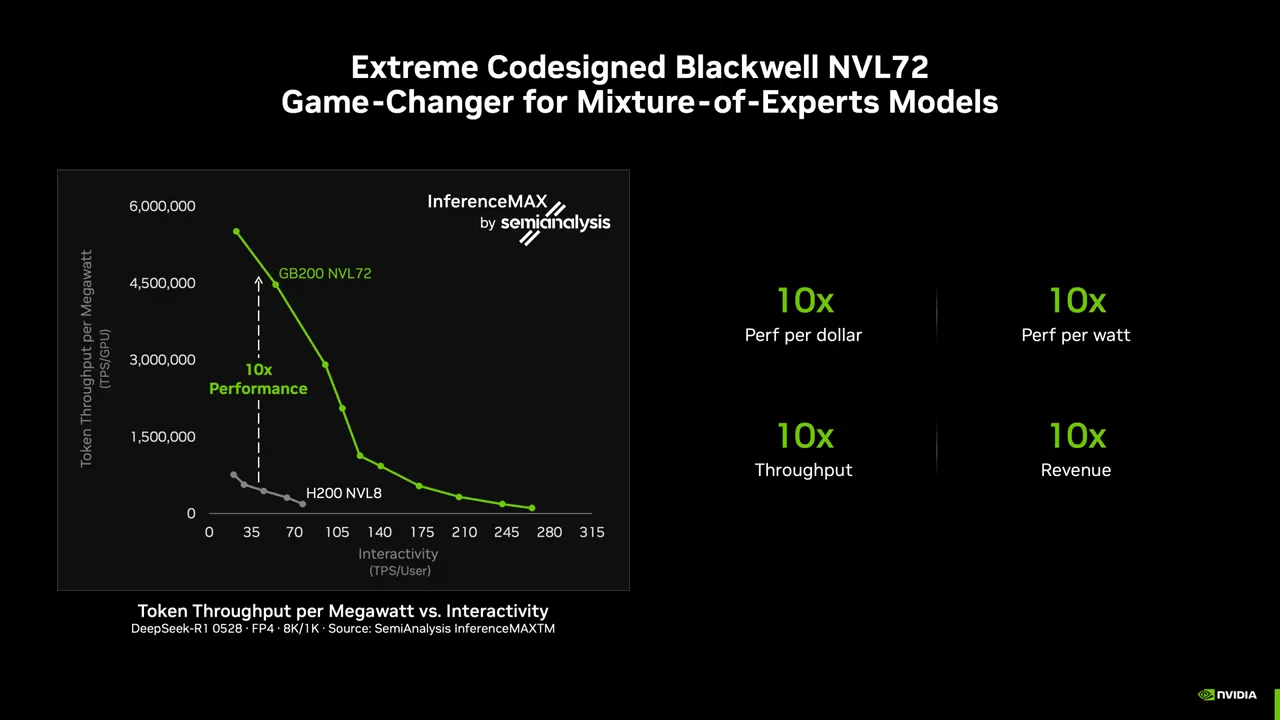
This year's centerpiece is the Blackwell architecture and the GB200 NVL72 system it powers. Its core secret weapon is NVLink, a "nervous system" designed specifically for high-speed communication between GPUs. It differs entirely from standard Ethernet, prioritizing extreme low latency and high bandwidth. Thanks to this, the GB200 NVL72 achieves an astonishing 10x performance improvement compared to the previous Hopper generation. This translates to customers receiving a tenfold increase in compute power per dollar and per watt.
Performance Leap Delivered by Blackwell NVL72
Crucially, NVIDIA is building a more open ecosystem. It unveiled its independently designed NVIDIA Vera CPU, which offers a 2x performance boost over Grace, while simultaneously announcing that chip giant Arm has joined the NVLink Fusion ecosystem. This is NVIDIA's way of inviting chip designers worldwide: "Come, connect to my highway, and together we will build more powerful computing clusters."
After the Hype: Experts’ Sober Reflections and Real-World Challenges
Following this technological feast, experts from the world's top supercomputing centers offered a dose of sobriety. They pointed out that to make this bright future a reality, the entire scientific community faces profound challenges.
Mohamed Wahib of Japan's R-CCS noted that we are undergoing a fundamental shift from "compute centers" to "data centers." This means we can no longer focus solely on computation; data must be treated as a first-class citizen, requiring thought on how to efficiently manage, process, and circulate data. Furthermore, the working model must transition from the "batch processing" approach—where one submits a job and then goes for coffee—to an "interactive" mode that requires constant engagement.
Jenny Msh from Argonne National Laboratory offered a more "down-to-earth" perspective. She stated frankly that power, cooling, and energy efficiency—seemingly basic issues—are the number one bottlenecks for deploying the next generation of massive machines. Additionally, she raised the "data curse": the volume of scientific data we possess is growing exponentially, yet the amount of high-quality, well-labeled data suitable for training AI is pitifully scarce. "We are sitting on a data gold mine but lack the tools for extraction and refinement."
Dan Stanzione of the Texas Advanced Computing Center used a vivid example to highlight the software conundrum. He mentioned that an analysis found that a smart home garage door opener was linked to a staggering 17M lines of code! "That is terrifying," he lamented. "The complexity of scientific applications is even greater." He urged scientists to learn to stand on the shoulders of giants, making good use of mature software libraries instead of falling into the trap of "reinventing the wheel." At the same time, he offered a sharp viewpoint: the scientific community must learn to "dance in the shackles of resource constraints," demanding the efficiency standards of commercial AI to squeeze the highest scientific output from hardware optimized for commercial applications.
Conclusion: The 'Science' and 'Scientists' of the New Era
The blueprint NVIDIA presented at SC25 is undoubtedly an exhilarating leap forward in computational science. It frees scientists from lengthy waiting periods, granting them unprecedented real-time interaction with the digital world, essentially redefining the process of "experimentation" and "discovery."
However, the path to this future is not paved with roses. It requires not only more powerful hardware but also a comprehensive upgrade across infrastructure, software ecosystems, and research methodologies. The experts' sober reflections remind us that there are no shortcuts on this road. It demands the collective effort of the entire community—to maintain those seemingly humble foundational code libraries, to build specialized data tools that serve science, and to cultivate a new generation of interdisciplinary talent skilled in both physics and AI.
Ultimately, the success of this transformation will not be judged by a chip’s clock speed, but by its ability to genuinely accelerate the expansion of human knowledge. It tests the adaptability, collaborative spirit, and innovative wisdom of the entire scientific community. A new scientific age is dawning, and the scientists of this era will perhaps be explorers, programmers, and, above all, the "super players" in the virtual world of physics.


