
Mastercard Oct 2025 news flow - AI-Powered Optimization and B2B Control to Bolster Network Dominance Amid Stablecoin Threat
How is Mastercard leveraging a blitz of AI-powered optimization and B2B control to secure its network dominance against the disruptive, multi-billion-dollar threat of stablecoin?


Mastercard's Two-Front War: Fortifying the Old Citadel with AI while Charting a Course for the New World through possible Acquisition
In a single week in October 2025, the payment giant Mastercard unleashed a series of blockbuster announcements with unprecedented intensity. From AI-driven payment optimization platforms to unified merchant cloud services and a comprehensive overhaul of B2B payments, each move seemed to trumpet its technological prowess. Yet, behind this dazzling array of rollouts, a rumor about its potential multi-billion-dollar bid to acquire a stablecoin startup adds a starkly different dimension to the overall narrative.
These seemingly disparate actions actually outline a clear strategy for a financial empire facing the shockwave of technological change: a meticulously orchestrated "two-front war." Facing the potential disruption brought by emerging technologies like stablecoin, is Mastercard merely using AI to reinforce its impregnable existing fortress, or is it quietly charting a maritime map toward a new continent?
Front Line One: Elevating the Traditional Moat with AI and Data
Mastercard’s primary strategic thrust is the radical optimization of its core business—the vast global card payment network. The logic is crystal clear: by injecting the power of AI and data, the company aims to push the efficiency, security, and convenience of its existing system to the extreme, thereby raising the switching costs for merchants and users alike.
On October 13th, Mastercard unveiled the Payment Optimization Platform (POP). This platform directly addresses a core pain point in e-commerce: payment failure. In online transactions, any unnecessary 'transaction rejection' translates into lost sales and a poor customer experience. The POP platform leverages the vast volumes of transaction data accumulated within the Mastercard network, integrating cutting-edge AI technology to evaluate trillions of data combinations. By intelligently optimizing authorization messages in near real-time, it significantly boosts the transaction success rate. Early pilot data indicates the service can boost merchants' conversion rates by 9% to 15%—an undeniably massive incentive for the razor-thin margin retail sector.
Immediately following, on October 14th, the Merchant Cloud platform was released. This functions as a one-stop service center, consolidating previously dispersed capabilities—such as payment gateways, fraud protection, identity verification, and data services—into a unified, open platform. More notably, the platform explicitly stated its support for Agentic Commerce, paving the way for future scenarios where AI assistants conduct shopping on behalf of humans.
On the corporate side, the Commercial Connect API and Clearing Controls, announced on October 15th, are designed to introduce the convenience of consumer-grade payments into the complex B2B payment landscape. Through unified API interfaces and virtual card control capabilities that span the entire transaction lifecycle, Mastercard is actively working to resolve the intractable issues of cumbersome corporate payment processes and difficult system integration.
Commercial Payments Innovation Illustration
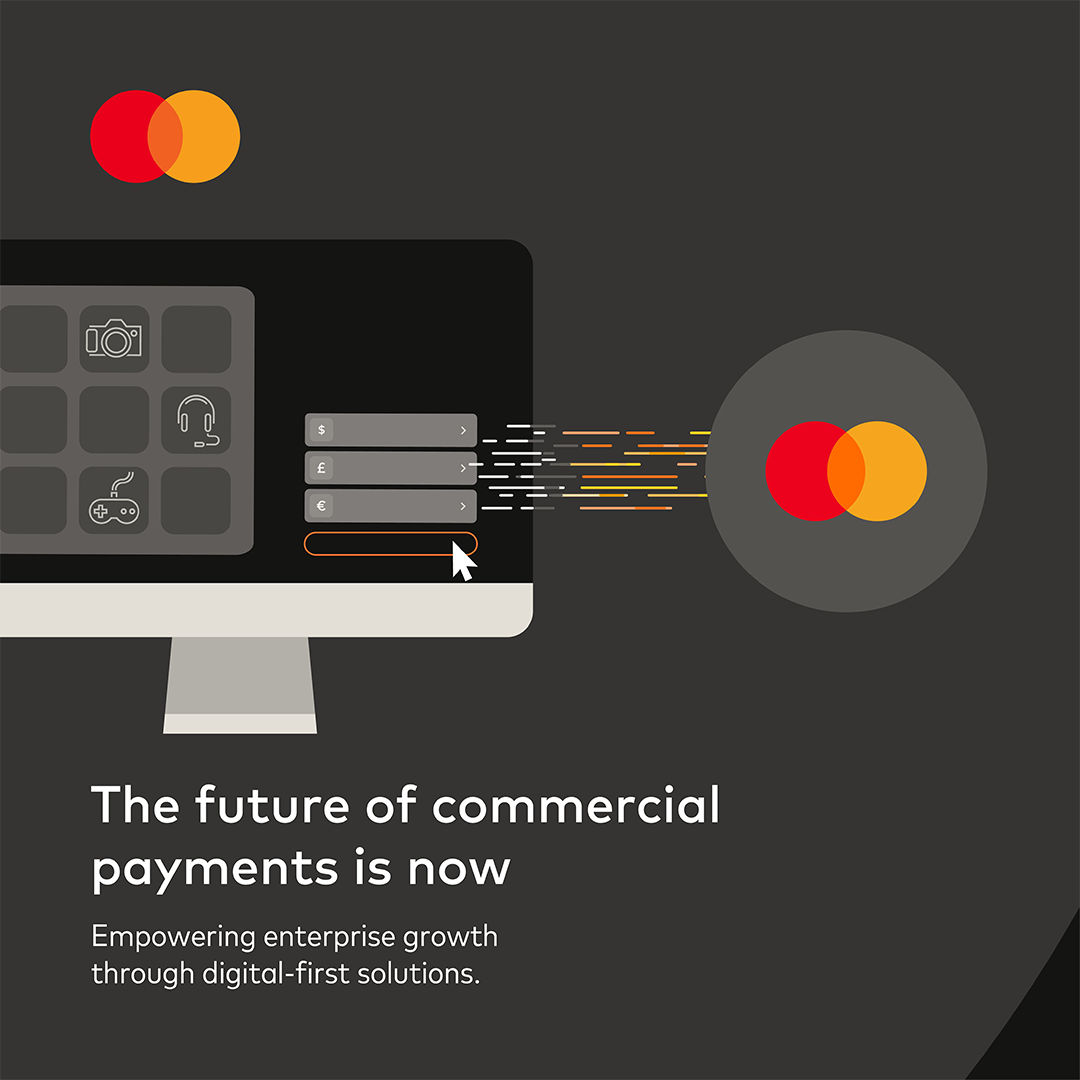
Source: Mastercard
The essence of this series of strategic moves is fundamentally defensive. Mastercard is utilizing its most powerful weapons—global data coverage and network reach—for highly refined operations. The aim is to signal to all ecosystem partners that the traditional payment rail remains not only reliable but, with the enhancement of AI, will become unprecedentedly smart and efficient.
Front Line Two: Confronting the New Frontier—Is Stablecoin a Threat or an Opportunity?
However, while reinforcing the ramparts, Mastercard’s gaze has also been cast toward that distant new continent—stablecoin—a frontier full of uncertainty, yet potentially holding the key to the future.
On October 9th, according to reports from multiple outlets, including Fortune and CoinDesk, Mastercard and the cryptocurrency exchange Coinbase had entered late-stage negotiations to acquire the stablecoin payment startup BVNK, with the valuation reportedly climbing up to $1.5 billion to $2.5 billion. Should the deal materialize, it would mark the largest acquisition in the stablecoin sector to date.
BVNK's core business is providing enterprises with stablecoin-based payment infrastructure, enabling near-instantaneous, low-cost global fund settlement. This capability poses a direct challenge to the business model of traditional card organizations like Mastercard. Stablecoins bypass complex clearing networks, completing cross-border payments in seconds, a process that can take days within the legacy system.
BVNK Founders: Chris Harmse, Jesse Hemson-Struthers, and Donald Jackson

Source: Fortune Crypto
The timing of this potential acquisition is quite telling. Just months earlier, former U.S. President Trump signed the Genius Act, which provides a regulatory framework for crypto assets, clearing a major hurdle for the compliant development of stablecoins. The market reacted swiftly; Mastercard's stock price even saw a dip following the passage of the bill, reflecting investor anxiety about its future competitive standing.
Interestingly, during an analyst call in July 2025, Mastercard executives expressed caution regarding the threat of stablecoins, arguing that most payments would always begin and end in fiat currency. However, the rumor of this acquisition negotiation reveals a classic corporate strategy where actions speak louder than words. Spending a substantial sum to acquire a potential "disruptor" is a textbook example of "offensive defense"—if you can't kill it, acquire it, thereby gaining control, deep insight into the new technology, and valuable strategic options.
Conclusion: The Survival Playbook of a Modern Financial Empire
Returning to our initial question: Is Mastercard's strategy purely defensive or aggressively offensive?
The answer is: Both, and it must be both.
This is not a sign of strategic confusion or contradiction; rather, it is the most rational survival playbook any industry giant caught in the wave of technological transformation can adopt today. On one hand, the incumbent must relentlessly extract and optimize every fraction of value from its existing 'cash cow' operations, building higher competitive barriers with new technologies like AI. On the other hand, it must embrace, explore, and even acquire the nascent forces that could fundamentally rewrite the rules of the game in the future.
Mastercard's acquisition of threat intelligence company Recorded Future in 2024 and its subsequent launch of the AI-driven Autonomous Threat Operations this year further underscore its commitment to transforming into a high-tech service company.
Mastercard is currently using AI to construct a higher, smarter wall around its vast traditional payment empire, while simultaneously dispatching a costly expedition team to survey and attempt a landing on the new continent called Stablecoin. The ultimate outcome of this "two-front war" remains to be seen, but it undoubtedly paints a vivid illustration of how the incumbent dances with the disruptor in the modern business world.
source: Recorded Future Launches Autonomous Threat Operations, Enabling AI-Powered Continuous Defense Exclusive: Coinbase and Mastercard have both held advanced talks to buy stablecoin startup BVNK for around $2 billion | Fortune CryptoCoinbase and Mastercard Held Talks to Buy Stablecoin Fintech BVNK for Up to $2.5B: Fortune Mastercard Payment Optimization Platform uses the power of data to drive more approvals Mastercard launches Merchant Cloud to simplify and support commerce growth in global acceptance ecosystem# Mastercard is supercharging commercial payments innovation


