OpenAI & Anthropic - The Accelerating Global AI Adoption - Evolving Usage Patterns and Divergent Economic Impacts
As AI tools like ChatGPT and Claude become integral to both work and life, are they fostering a more productive, equitable world, or carving deeper divides based on economic status and geography?


Anthropic Economic Index: Tracking AI's role in the US and global economy \ Anthropic & How People Use ChatGPT
The Global AI Wave: Multi-dimensional Impacts Amidst Explosive Growth
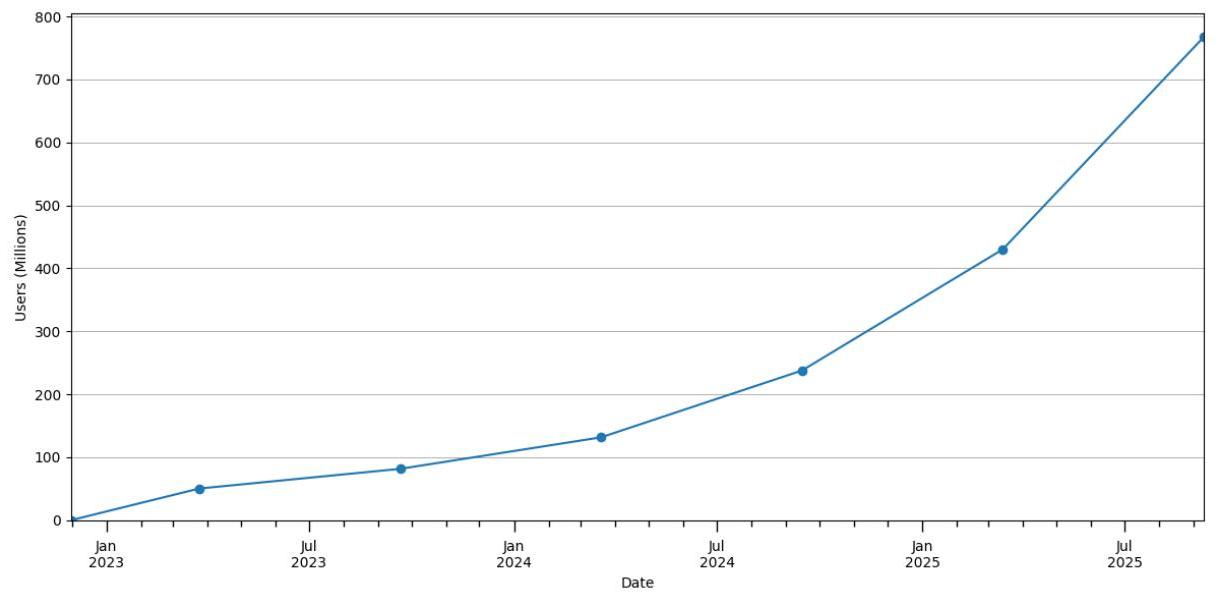
Since the launch of ChatGPT in November 2022, AI, particularly Large Language Models (LLM), has been reshaping the global social and economic landscape at an unprecedented pace. OpenAI's report indicates that by July 2025, ChatGPT's Weekly Active Users (WAU) have surpassed the 700 million mark, covering approximately 10% of the global adult population, with a growth trajectory steeper than any previous technological adoption wave in history.
ChatGPT Consumer Plans Weekly Active Users (Free, Plus, Pro)
Source: OpenAI
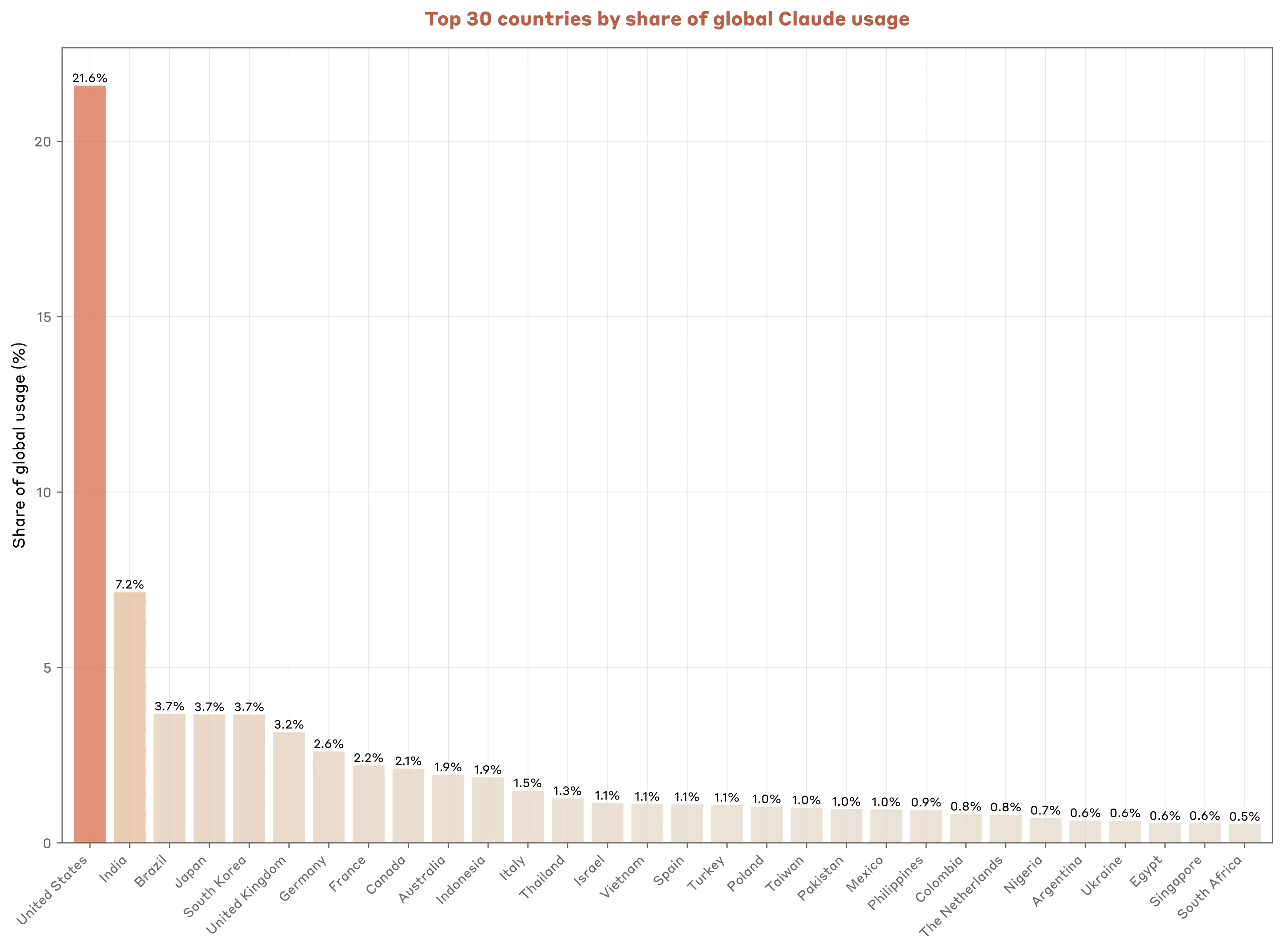
Concurrently, the third edition of the Anthropic Economic Index report published by Anthropic corroborates the global expansion of AI. Usage of its product, Claude, has spread worldwide, with the US leading significantly with a 21.6% share. However, when measured by the Anthropic AI Usage Index (AUI) adjusted for the working-age population, small technologically advanced countries like Israel and Singapore exhibit even higher per capita usage intensity.
Top 30 Countries by Share of Global Claude Usage
Source: Anthropic
Nevertheless, amidst this global AI wave, its impact is not uniform. While AI, as a general-purpose technology, is widely expected to enhance societal productivity, its adoption patterns, usage objectives, and user demographics exhibit significant dynamic shifts and unevenness, signaling both potential opportunities and challenges.
Profound Transformation in Usage Patterns: From Work Assistant to Autonomous Agent
As model capabilities improve and user trust deepens, AI usage patterns are undergoing a profound evolution, with its role gradually shifting from an initial work assistance tool to a life consultant and autonomous task agent.
From "Execution" to "Consultation": Shifting User Intent
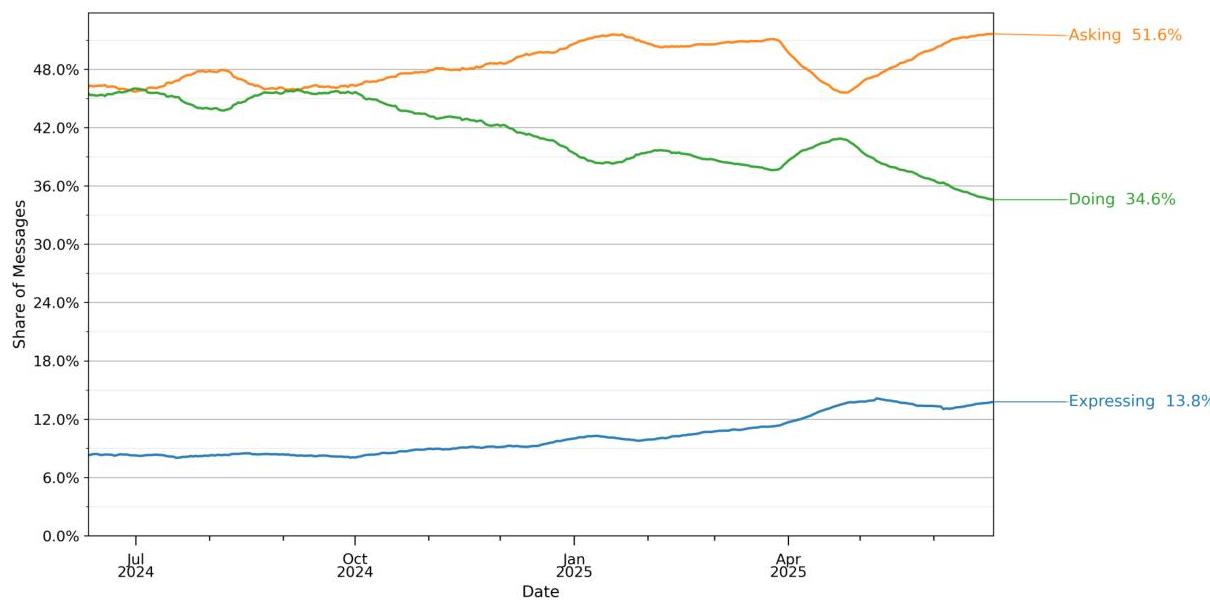
OpenAI's report categorizes user intent into three types: Asking (seeking information or advice), Doing (requesting AI to perform tasks), and Expressing (expressing opinions). Data shows that the growth of Asking has outpaced that of Doing, reaching 51.6% by June 2025. This indicates that users are increasingly inclined to view ChatGPT as a "consultant" or "research assistant," utilizing it for decision support rather than merely a task executor.
Evolution of ChatGPT Message Share by Asking, Doing, or Expressing
Source: OpenAI
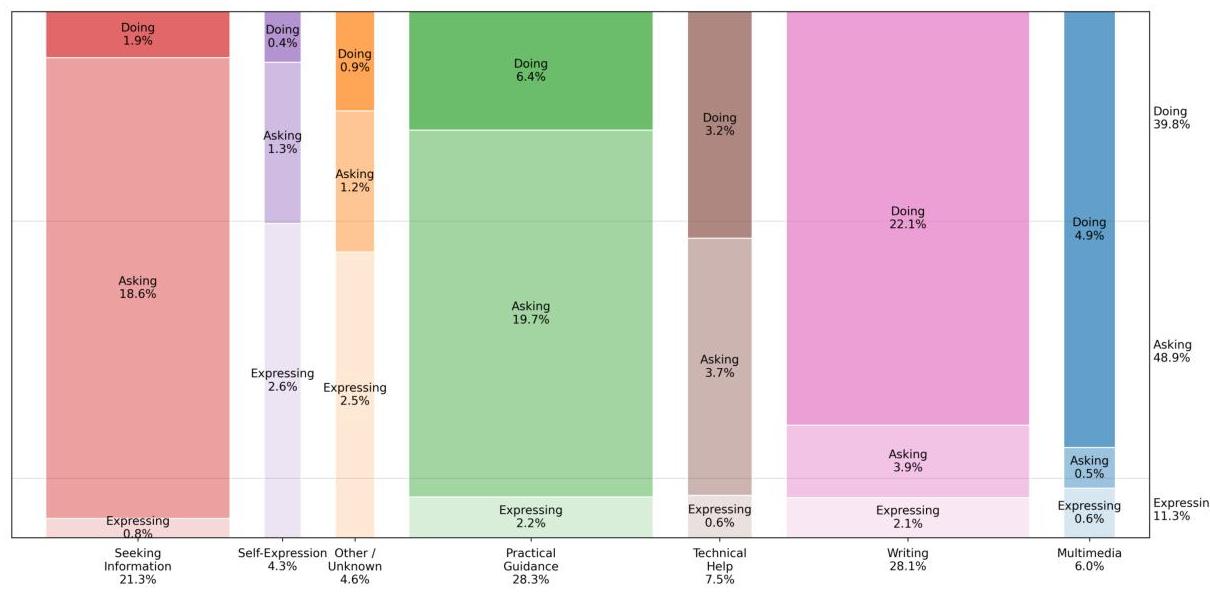
In terms of specific usage topics, Practical Guidance (29%), Seeking Information (24%), and Writing (24%) are the three core application scenarios for ChatGPT, collectively accounting for nearly 80% of all conversations.
ChatGPT Conversation Topic Breakdown (by Asking/Doing/Expressing)
Source: OpenAI
From "Augmentation" to "Automation": An Upgrade in Trust
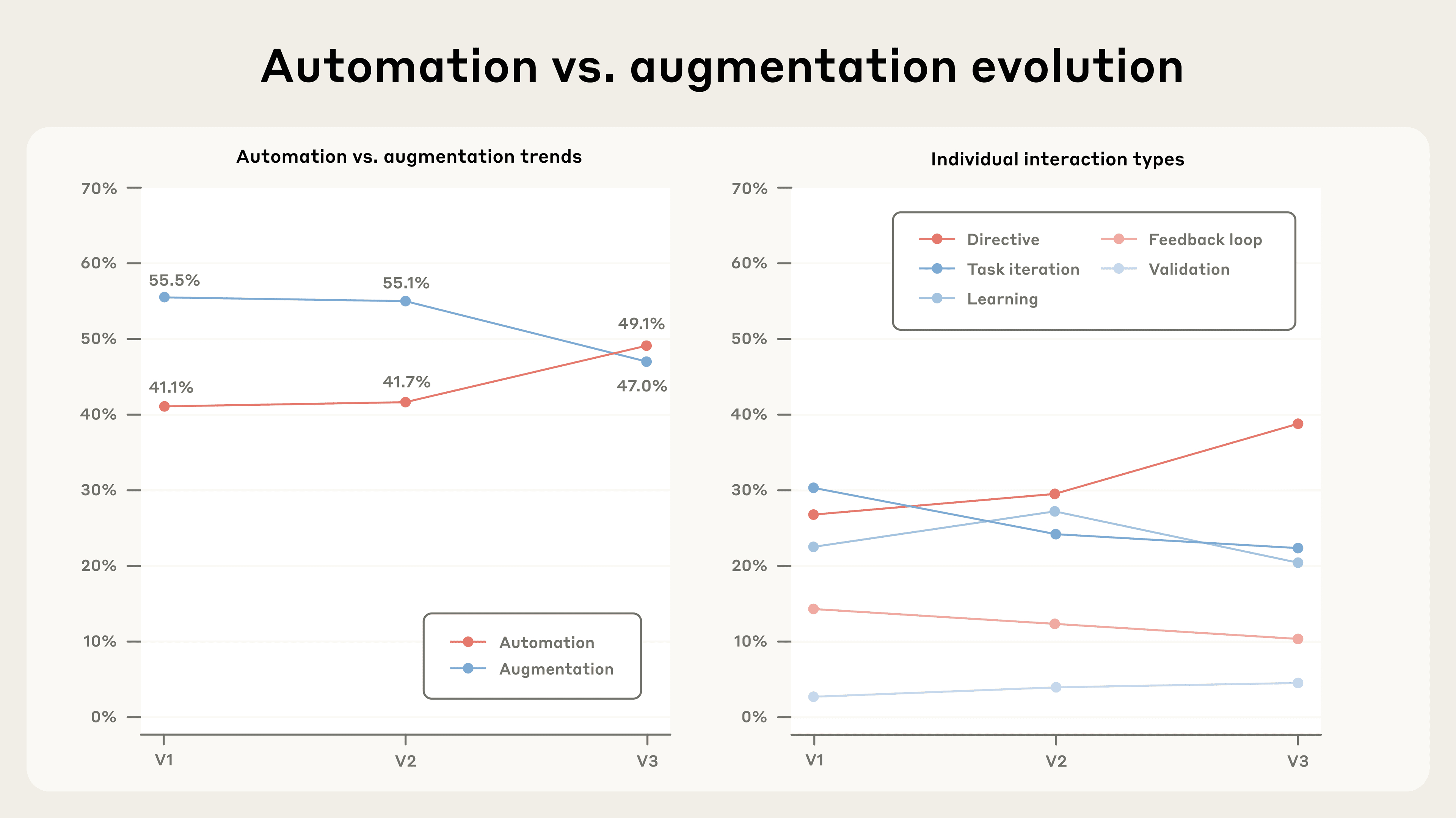
Anthropic's report, from another dimension, reveals an increase in user trust. Since December 2024, the proportion of "directive" automation tasks on Claude has surged from 27% to 39%, causing the overall share of Automation tasks to surpass Augmentation mode for the first time. This implies that users are no longer content with using AI as a tool to augment their own capabilities but are increasingly entrusting AI directly with tasks.
Evolutionary Trends of Automation and Augmentation Modes
Source: Anthropic
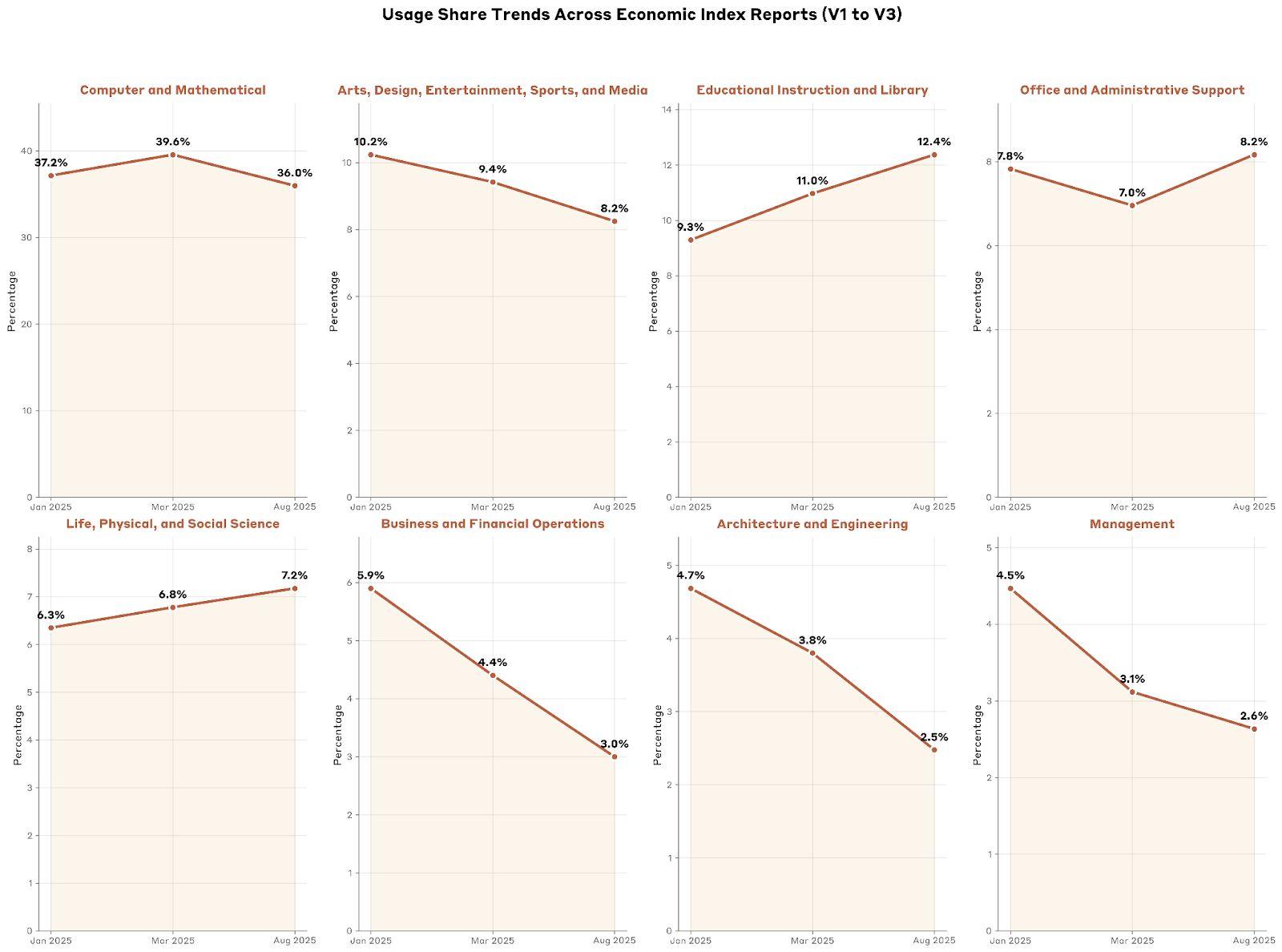
Regarding Claude's usage topics, while technical tasks like software development still dominate, applications in knowledge-intensive fields such as education and scientific research are rapidly growing, while the relative frequency of traditional business tasks has decreased, indicating AI's penetration into higher-value knowledge work processes.
Trends in Claude Usage Topics Over Time
Source: Anthropic
Enterprise Applications: The Frontier of Automation
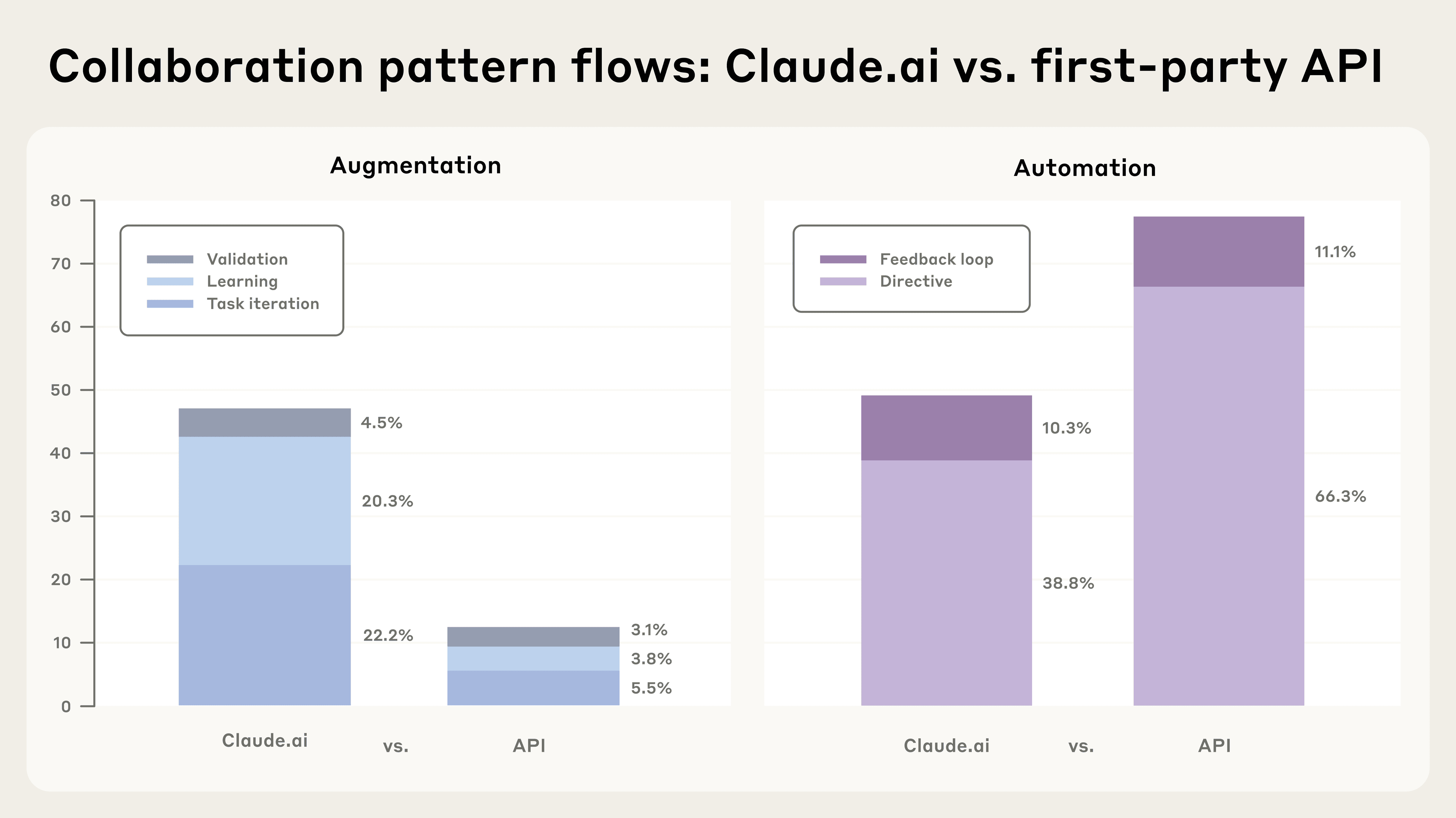
This automation trend is particularly pronounced among enterprise users. Anthropic's first data analysis of its API clients (primarily businesses and developers) shows that their Claude usage patterns differ significantly from that of ordinary consumers: a staggering 77% of API conversations exhibit an automation pattern, while augmentation mode accounts for only 12%. This foreshadows the immense potential of AI as a "digital workforce" in enterprise settings, where commercial users are more willing to grant AI a high degree of autonomy and agency.
Differences in Collaboration Patterns: Claude.ai vs. API Clients
Source: Anthropic
Who is Embracing AI? User Demographics and Structural Divides
Despite the astonishing pace of AI adoption, its uptake is not indiscriminate. Different user groups with varying characteristics and different geographical regions exhibit significant differences in their acceptance and usage patterns of AI, potentially becoming a significant factor in future economic divergence.
Demographic and Occupational Profiles
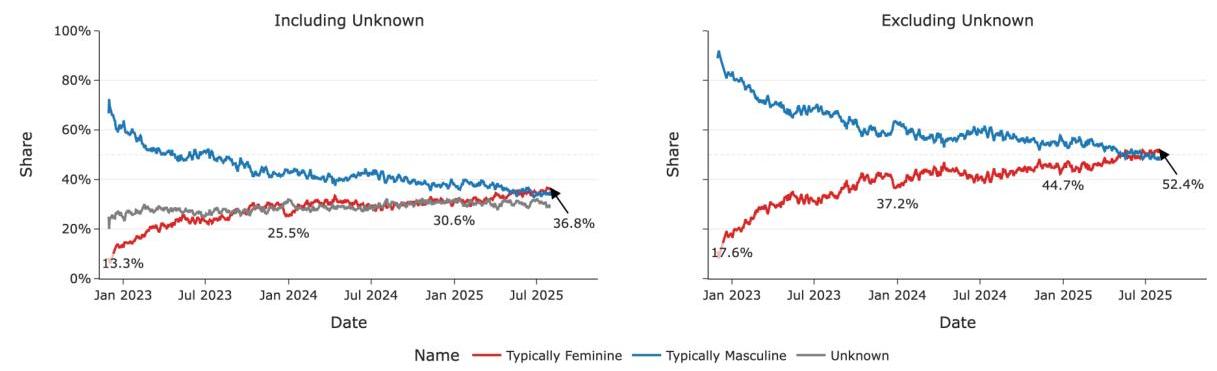
- Gender and Age: The male-dominated landscape observed in the early days of ChatGPT's release has been completely transformed. By June 2025, the proportion of active users with typically feminine names has surpassed that of masculine names. In terms of age structure, young users aged 18-25 are the absolute main force, contributing 46% of the message volume.
- Education and Occupation: Users with higher educational attainment are more inclined to use ChatGPT for work-related purposes. In high-paying professional and technical occupations, the proportion of work-related usage is significantly higher, for example, Computer-related occupations at 57% and Management and business at 50%.
Weekly Active ChatGPT Users by Typically Masculine and Feminine Names
Source: OpenAI
By mapping AI interactions to the General Work Activities (GWA) in the O*NET database, research found that ChatGPT's core value in the workplace lies in information processing, decision support, and creative thinking. Making Decisions and Solving Problems is almost the most widely used activity across all occupational groups.
Ranking of the Top Seven Most Common GWAs in Work-Related Queries

Source: OpenAI
Geographical and Economic Divides
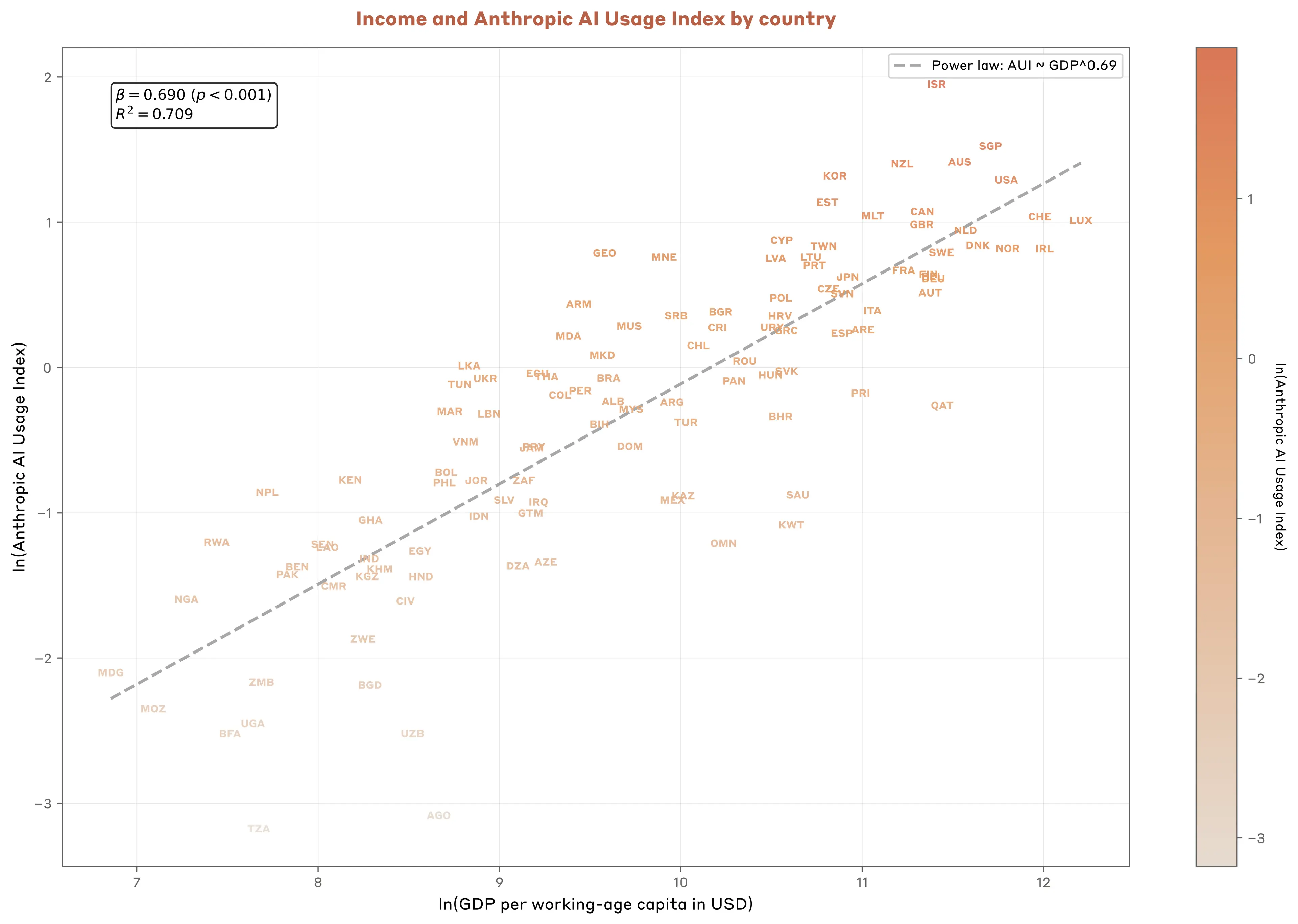
AI adoption exhibits significant geographical unevenness and is highly correlated with economic development levels. Anthropic's report shows a significant positive correlation between AUI and per capita GDP (R² = 0.709), where for every 1% increase in per capita GDP, the AUI increases by approximately 0.7%. This indicates that AI usage is currently more concentrated in affluent countries with robust internet infrastructure and knowledge-intensive economies.
Positive Correlation Between Per Capita Claude Usage and Per Capita Income by Country
Source: Anthropic
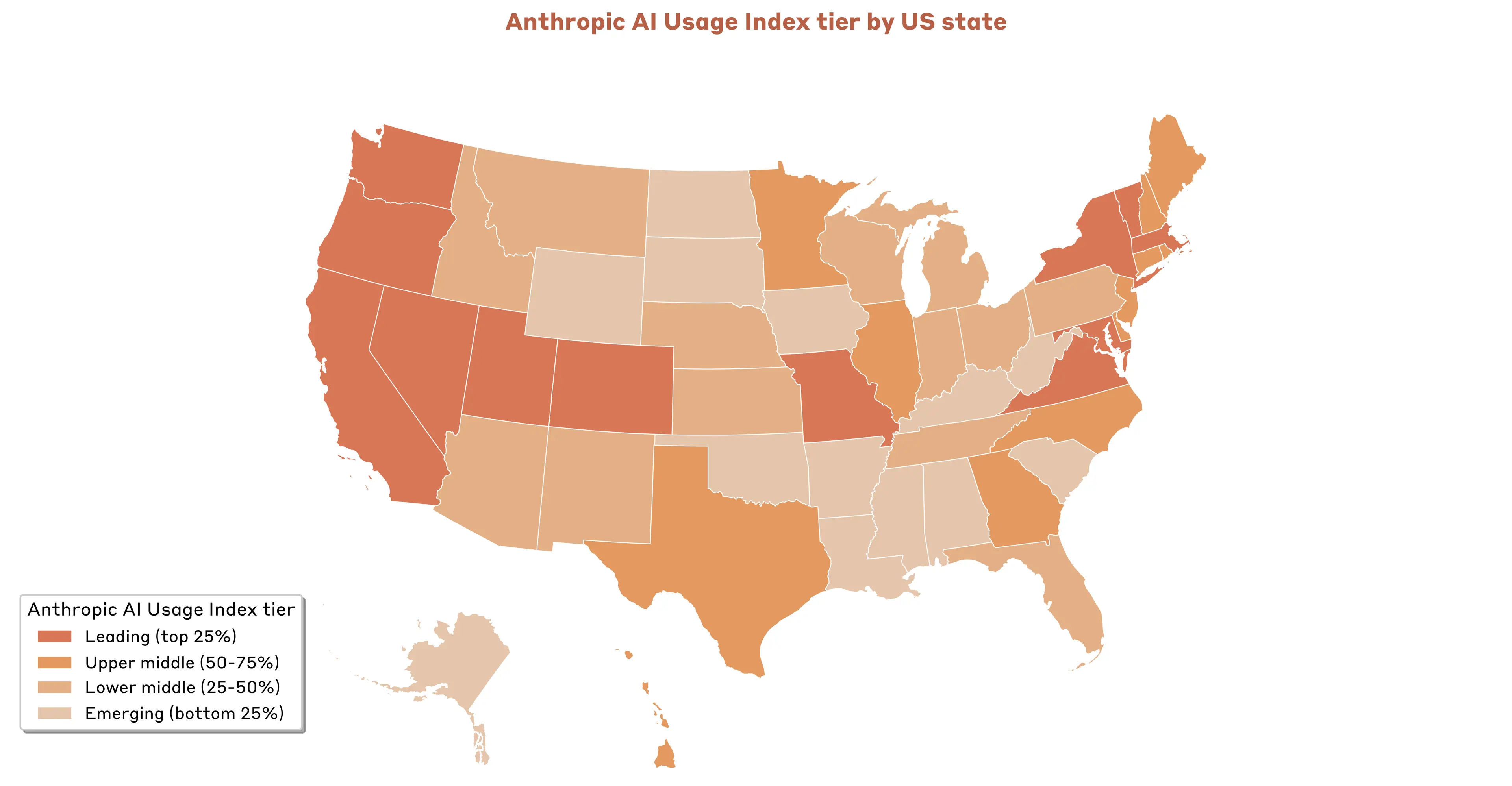
This pattern also holds true within the US, with an even stronger correlation. The economic composition of each state is a key factor in explaining differences in AI adoption. For instance, the District of Columbia, primarily focused on knowledge work and government affairs, ranks first nationwide in per capita Claude usage intensity.
Tiered Map of Claude Adoption Intensity by US State
Source: Anthropic
The Double-Edged Sword of Economic Impact: Productivity Revolution and Divergence Risks
The rapid proliferation of AI and the evolution of its usage patterns undoubtedly have profound implications for the global economy, bringing both immense economic value and potential challenges.
Unleashing Enormous Economic Value
- Consumer Welfare: The explosive growth of non-work-related ChatGPT usage signifies significant consumer surplus. According to estimates by Collis and Brynjolfsson (2025), US users' willingness to accept compensation of up to $98 per month to forgo using Generative AI means that at least $97 billion in consumer welfare is created annually.
- Enterprise Productivity: In work settings, AI's role as a "consultant" enhances the efficiency of knowledge work. In enterprise applications, its highly automated potential further foreshadows a profound productivity revolution, especially in areas such as programming, administration, and customer service.
Potential Risks of Economic Divergence
However, the widespread adoption of AI could also act as a catalyst for exacerbating global economic inequality. The strong positive correlation between AI usage intensity and per capita GDP raises profound concerns: if AI-driven productivity gains primarily concentrate in affluent nations, it could further widen the gap in global living standards.
A particularly noteworthy finding is that countries with higher per capita Claude usage tend to exhibit usage patterns leaning towards "Augmentation" (human-AI collaboration), whereas countries with lower usage rates lean more towards "Automation" (task replacement). This may hint at a disquieting future: high-income countries leverage AI for innovation and complex decision-making, occupying the top of the value chain, while low-income countries more frequently utilize AI for cost reduction and labor substitution, thereby being in a relatively disadvantageous position in value creation.
Conclusion: Adapting to the AI Era Through Continuous Observation
Overall, the pace of AI adoption and the evolution of its usage patterns represent one of the most compelling grand narratives in the current global economy. From the widespread personal applications of ChatGPT to the deepening of Claude's role in enterprise automation, AI is reshaping our work and lives with multi-dimensional forces.
However, this technological revolution is not without its challenges. The geographical and economic unevenness of AI adoption, coupled with its differing usage patterns across economies at various development levels, starkly remind us that while AI drives productivity growth, it could solidify or even widen existing economic divides. Therefore, continuously monitoring AI's usage dynamics and understanding its long-term impacts on labor markets and economic structures is crucial for policymakers, businesses, and individuals alike. Only by doing so can we better harness the power of AI, maximize its inclusive benefits, while actively addressing the challenges it presents.


