
OpenAI Launches Sora 2 Video Generation Model and Sora iOS Social App - A Dual Breakthrough in Technology and Social Creation
Can OpenAI’s Sora 2 and new social app redefine how people create and share video content?


Sora 2 is here | OpenAI Introducing Sora 2 - YouTube
Sora 2 and the Sora App: A Dual Launch of Technology and Product
On September 30, 2025, OpenAI announced its latest-generation video model, Sora 2, alongside a standalone iOS social application, Sora. Unlike previous announcements that focused purely on model capabilities, this time OpenAI is forging new paths on two fronts simultaneously: technology and product. On one hand, it unveils core breakthroughs in video generation; on the other, it explores a new form of communication through a social app.
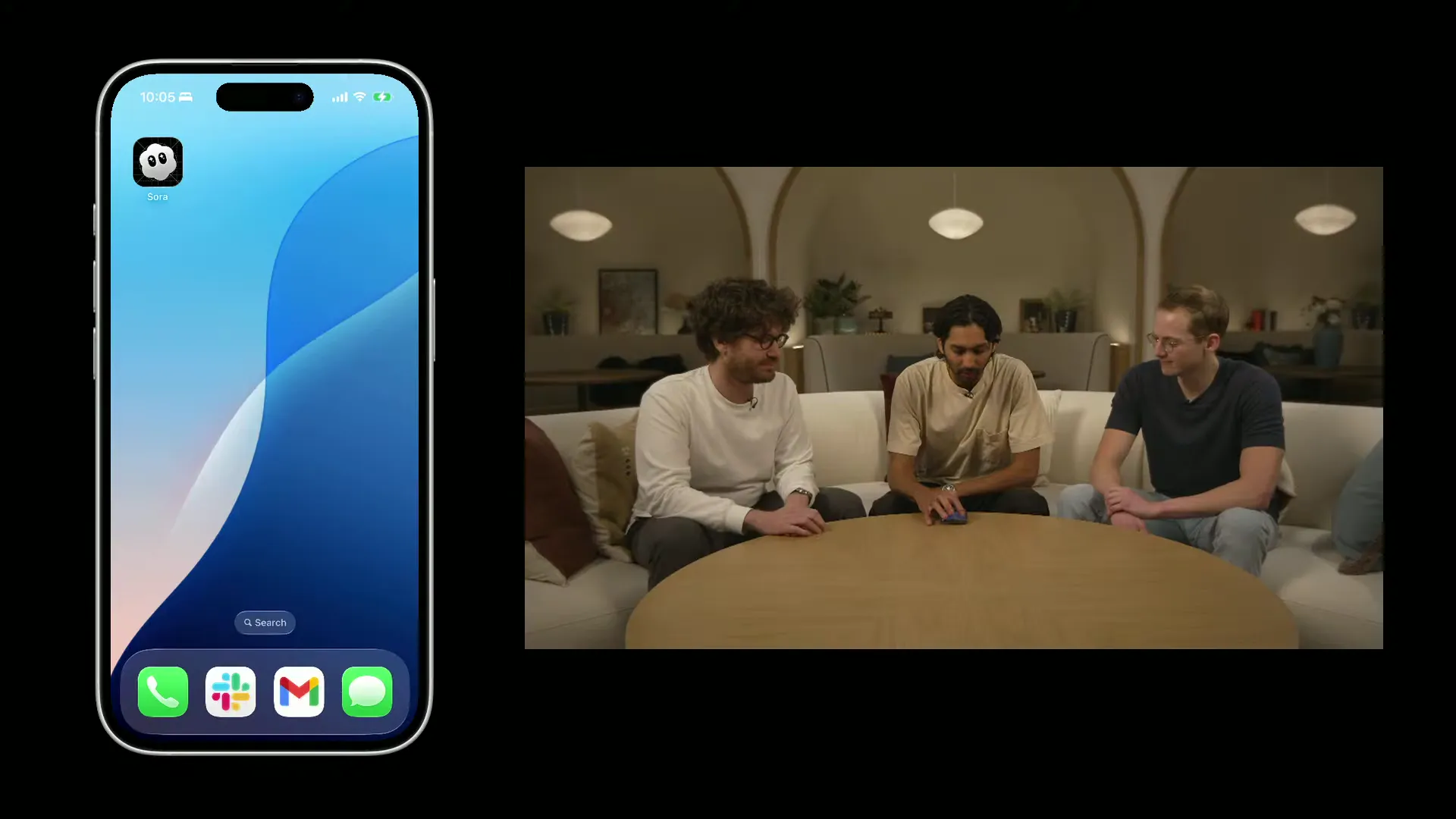
The Sora app icon (source: OpenAI):
This combination marks both a milestone in model iteration and a strategic foray into the consumer market.
Technological Breakthroughs: A More Realistic and Coherent Sora 2
Sora 2 is being described as a "watershed moment" in the field of video generation. Compared to its predecessors, this generation of the model shows significant improvements in realism, physics simulation, and narrative coherence.
It adheres more closely to the laws of physics, handling complex actions and scene dynamics with naturalism. Whether it's a gymnast's difficult maneuver or the instant a basketball bounces off the backboard, the results are rendered with remarkable fidelity. More importantly, it can simulate failure scenarios, moving beyond simply fulfilling prompts to adhering to real-world logic.
In terms of narrative capability, Sora 2 supports the generation of multi-shot videos in a single pass while maintaining state consistency. This means users can create works that are more aligned with cinematic language, rather than just a patchwork of isolated clips.
Another breakthrough is synchronized audio-video generation. This is the first time OpenAI has enabled a model to generate video and audio tracks simultaneously. It can output dialogue in multiple languages, complex ambient sounds, and sound effects that are strictly aligned with the visuals—such as the delayed echo of a shout in a snowy landscape, or the perfect synchronization of wind sounds and ice cracking with on-screen dynamics.
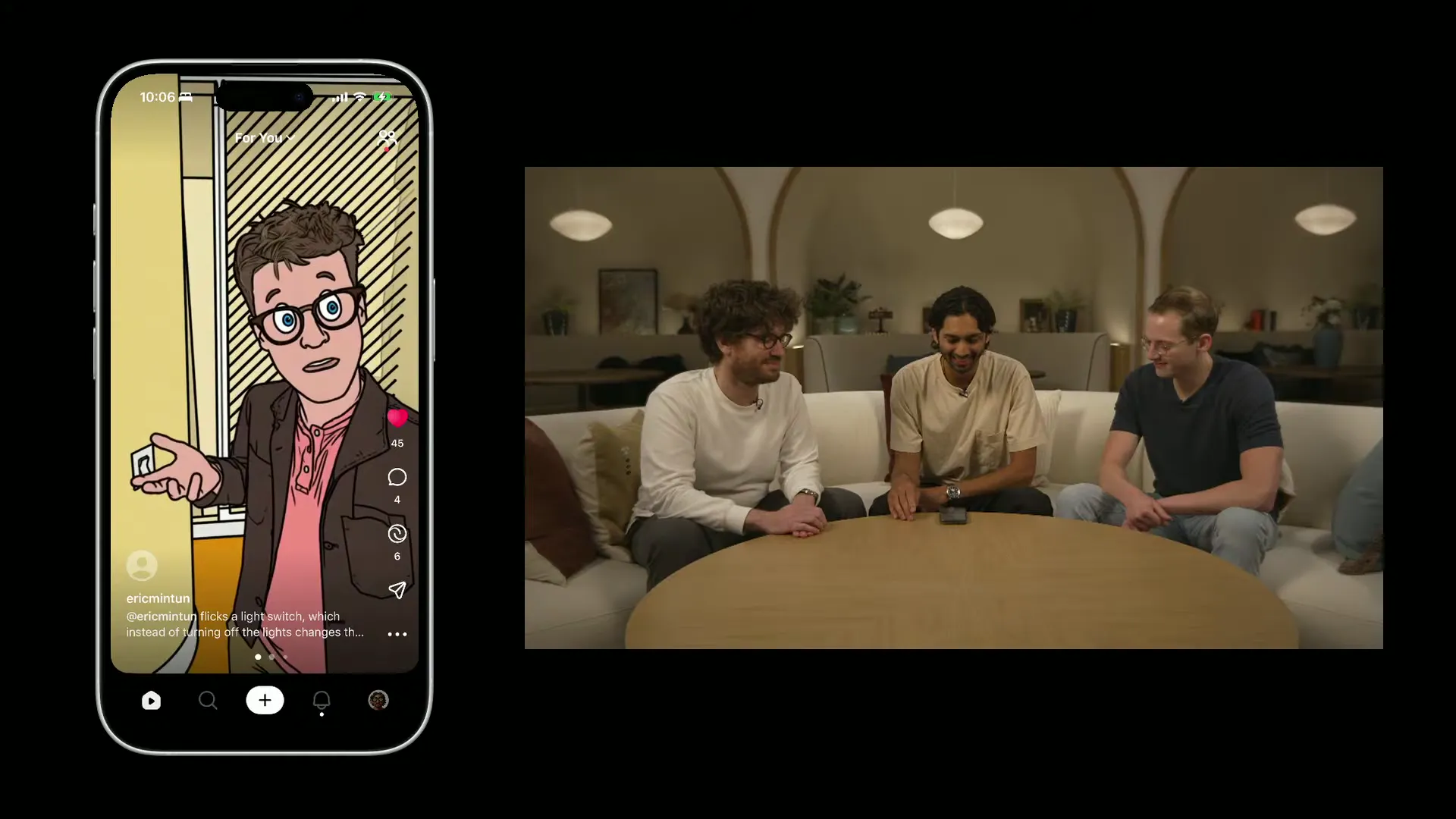
Sora 2's stylistic range is also incredibly broad, effortlessly handling everything from hyper-realistic cinematic looks to cartoon and anime styles.
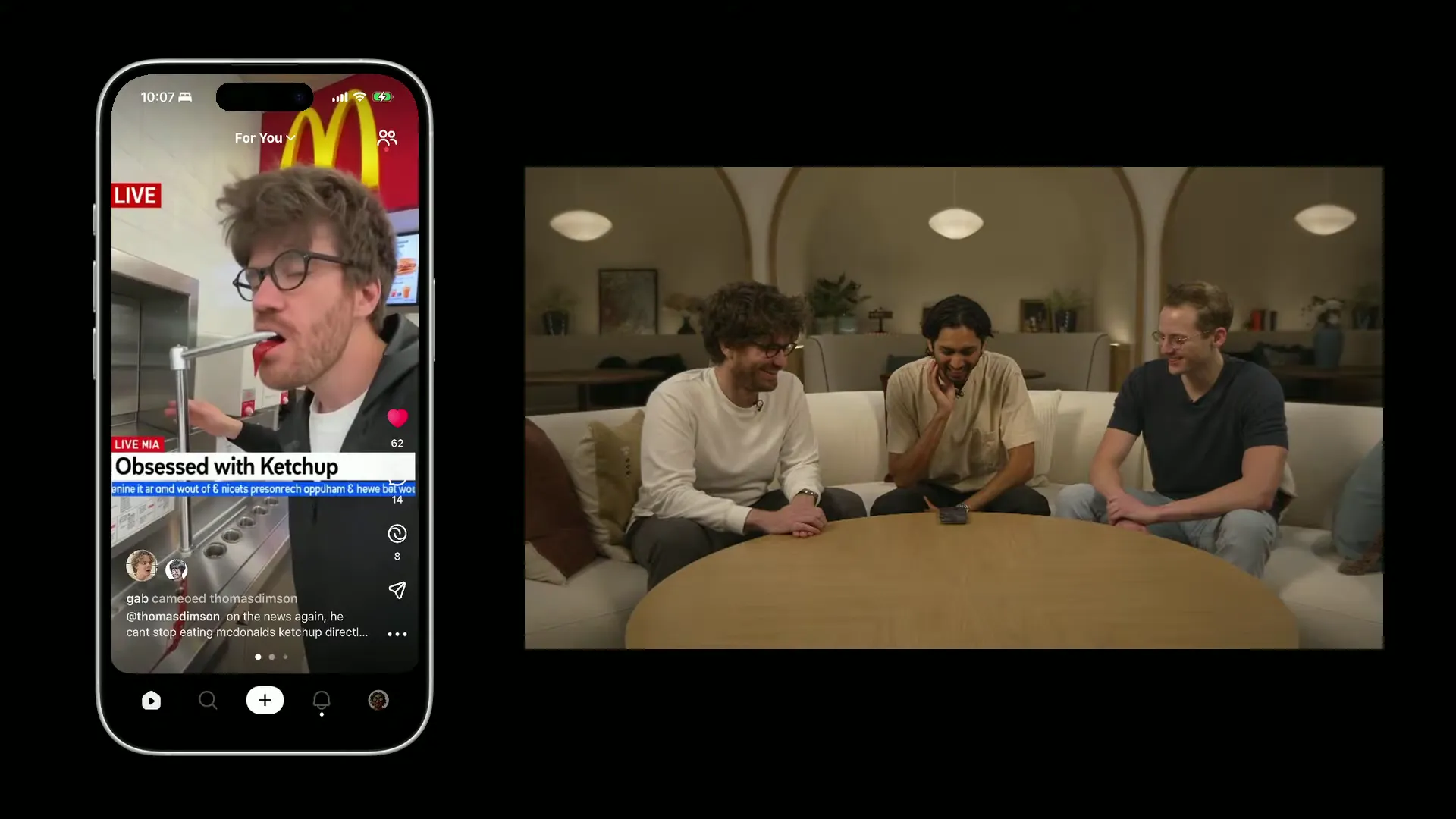
Photorealistic style example (source: OpenAI):
Anime style example (source: OpenAI):
The Product Experience: A Social Experiment with Cameo and Remix
The significance of technology is ultimately demonstrated through its application. The Sora app is OpenAI's answer.
This standalone iOS app is built around its core feature: Cameo. Users can generate their own digital likeness by uploading a short video of themselves. This likeness can then be seamlessly injected into any generated video scene, acting as a new creative element.
Generating a video of Sam Altman celebrating with a fist pump (source: OpenAI):
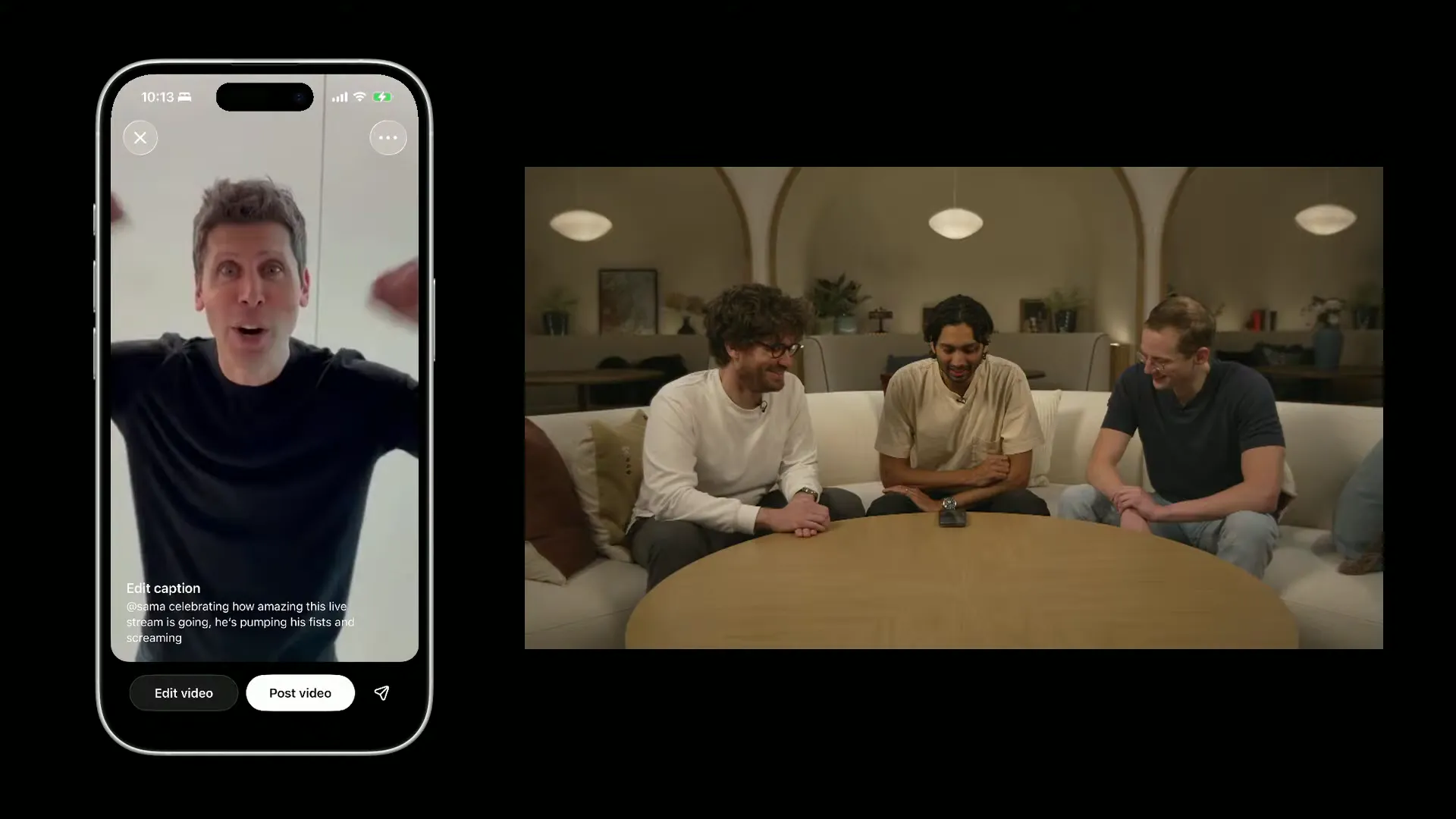
Compared to traditional emojis or text, Cameo offers a more immersive and expressive way to communicate. During internal testing, employees used this feature to enhance interactions, often with a touch of humor. The experience isn't limited to people; pets can also become the stars of generated videos.
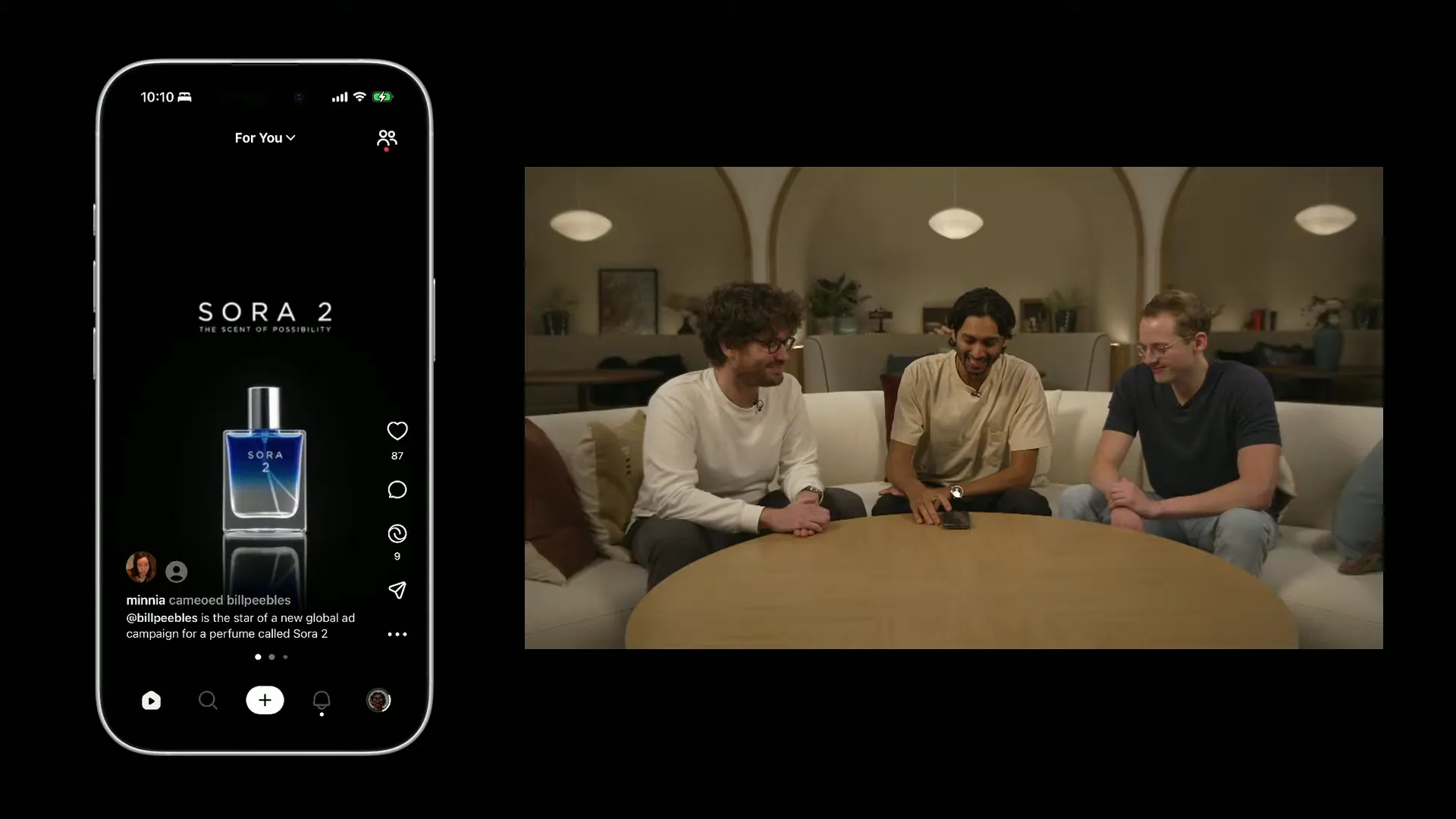
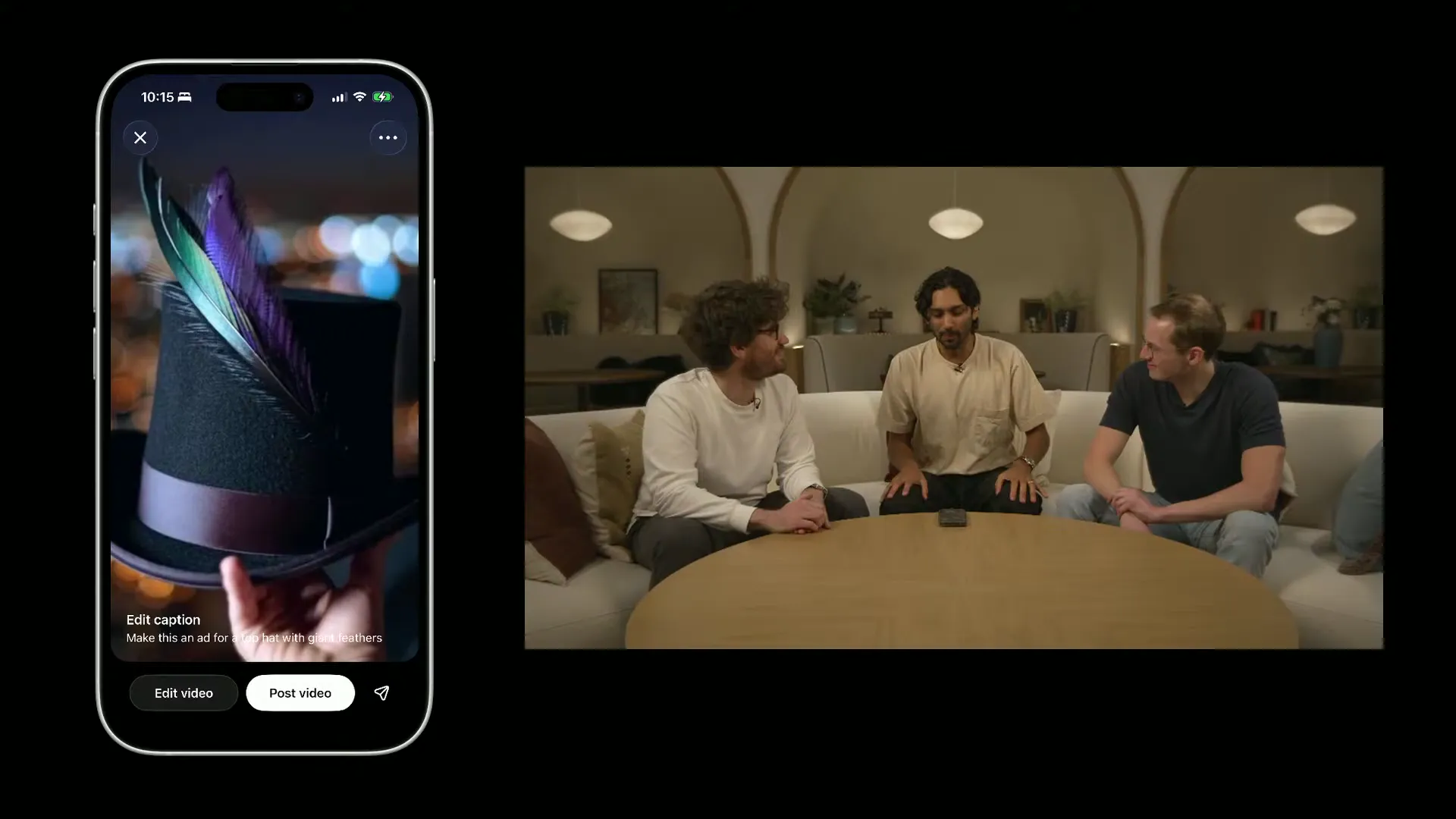
Another key feature is Remix. Users can easily re-imagine any video in their feed. For example, a perfume ad can be transformed into one for a top hat, or converted into a Korean-language version. Remix lowers the barrier to derivative creation, making the evolution and spread of content more participatory.
Remix feature demo: from a perfume ad to a top hat ad (source: OpenAI):
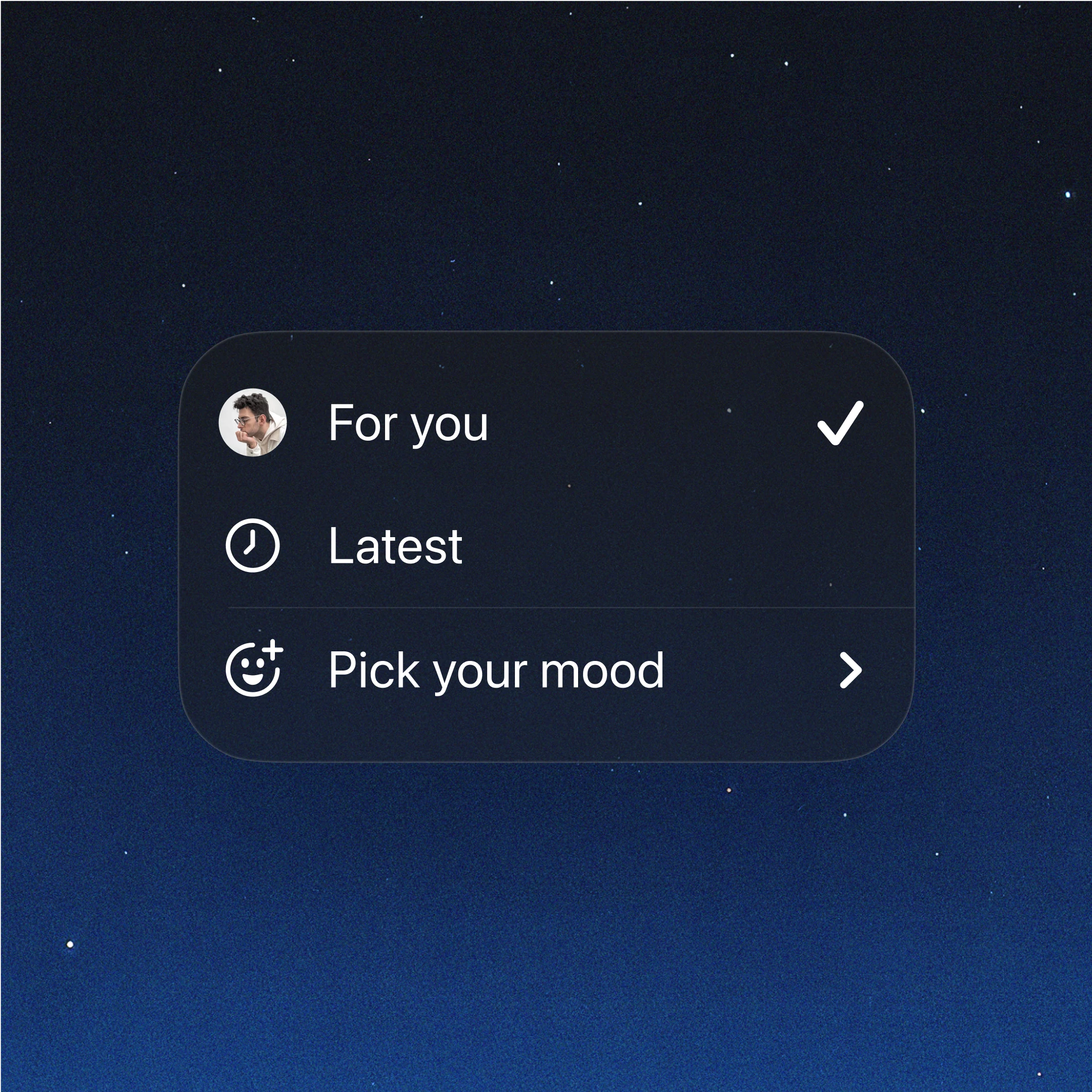
Sora differs philosophically from traditional social apps. It doesn't aim to maximize time spent scrolling through a feed. Instead, it emphasizes creation-driven engagement and connections with people you know. This means the platform's algorithm prioritizes content from friends and close connections rather than pushing an endless stream of information.
Sora's feed design philosophy: maximize creation, not consumption (source: OpenAI):
Safety and User Control: A Responsibility-First Product Strategy
As it enters the consumer market, OpenAI is placing a strong emphasis on safety and responsibility.
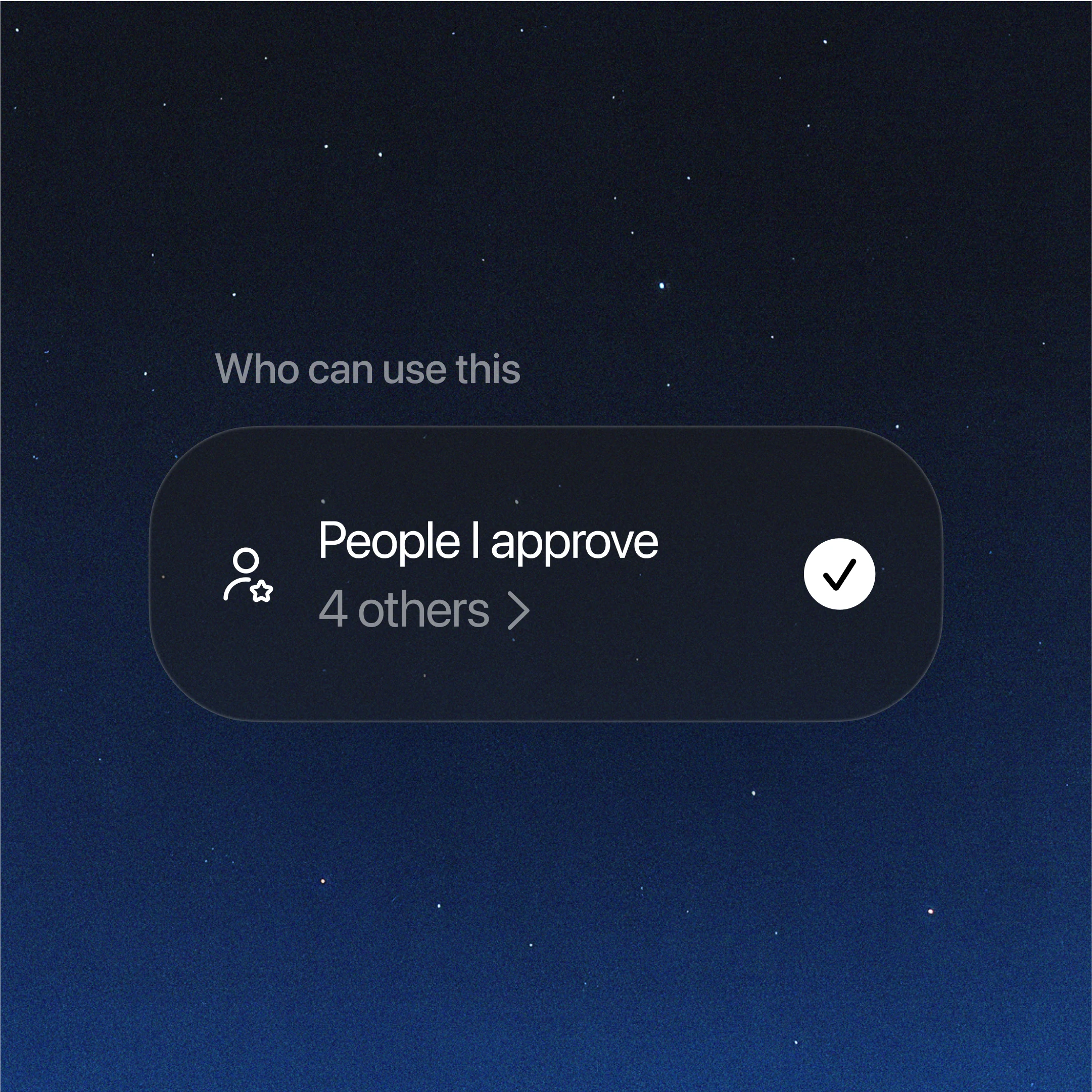
First is the verification mechanism for the Cameo feature. When creating a Cameo, users must undergo a liveness check and record dynamic prompts to ensure their identity is authentic. Thereafter, users have full control over their digital likeness, with the freedom to decide who can use and display it. All generated videos can also be deleted at any time.
Cameo preference settings, allowing users to control usage permissions and portrayal of their likeness (source: OpenAI):
Second is the protection of minors. For users under 18, Sora defaults to disabling infinite scroll and provides parental controls, allowing guardians to set usage limits.
Furthermore, all generated content is output with a visible watermark and adheres to the industry-standard C2PA for traceability during dissemination. The platform's content moderation policy adopts a "conservative blocking" principle. While this may lead to some false positives, the priority in the early stages is to ensure safety and compliance.
Productization and Commercialization: Starting Small
The Sora app became available on the App Store in the US and Canada on launch day, but it operates on an invite-only basis. Each invited user can then invite four friends, a distribution model that reinforces the "experience it with friends" characteristic. In the future, OpenAI plans to gradually expand its regional coverage.
Regarding its business model, the app is currently free to use, with paid options available only when compute resources are heavily consumed. OpenAI has explicitly stated it does not intend to introduce an ad-driven model, to avoid conflicts with its goal of user well-being. Concurrently, the Sora 2 API will be opened soon, allowing developers to integrate its capabilities directly into their own tools.
This series of strategies shows that OpenAI is not just showcasing its technological prowess but is also pushing its video generation capabilities into the market in a familiar, consumer-friendly form. It is testing user adoption in consumer-grade scenarios to accumulate data for future commercialization and ecosystem building.
Conclusion
From model upgrades to application deployment, OpenAI has completed a full circle with this launch: on one side, the realistic and controllable Sora 2 model, and on the other, the Sora app centered around Cameo and Remix.
This reflects not only the maturity of the technology but also a clear strategic intent for productization and market entry. In the short term, balancing user experience, safety moderation, and compute costs will remain a challenge. But undeniably, Sora 2 and the Sora app have already opened up new possibilities at the intersection of video generation and social creation.


