
Nomad Investment Partnership: Decoding the 921.1% Returns with 'Scale Economies Shared' and Behavioral Edge
How did two unassuming investors achieve a staggering 921.1% return over 13 years, defying market norms? Discover Nomad Investment Partnership's radical blend of long-term vision, deep value, and psychological mastery that reshaped the very definition of investment success.


FullCollection_Nomad_Letters.pdf
Excerpt: How did two unassuming investors achieve a staggering 921.1% return over 13 years, defying market norms? Discover Nomad Investment Partnership's radical blend of long-term vision, deep value, and psychological mastery that reshaped the very definition of investment success.
The Nomad Playbook: How a 921% Return Was Forged by Breaking the Rules
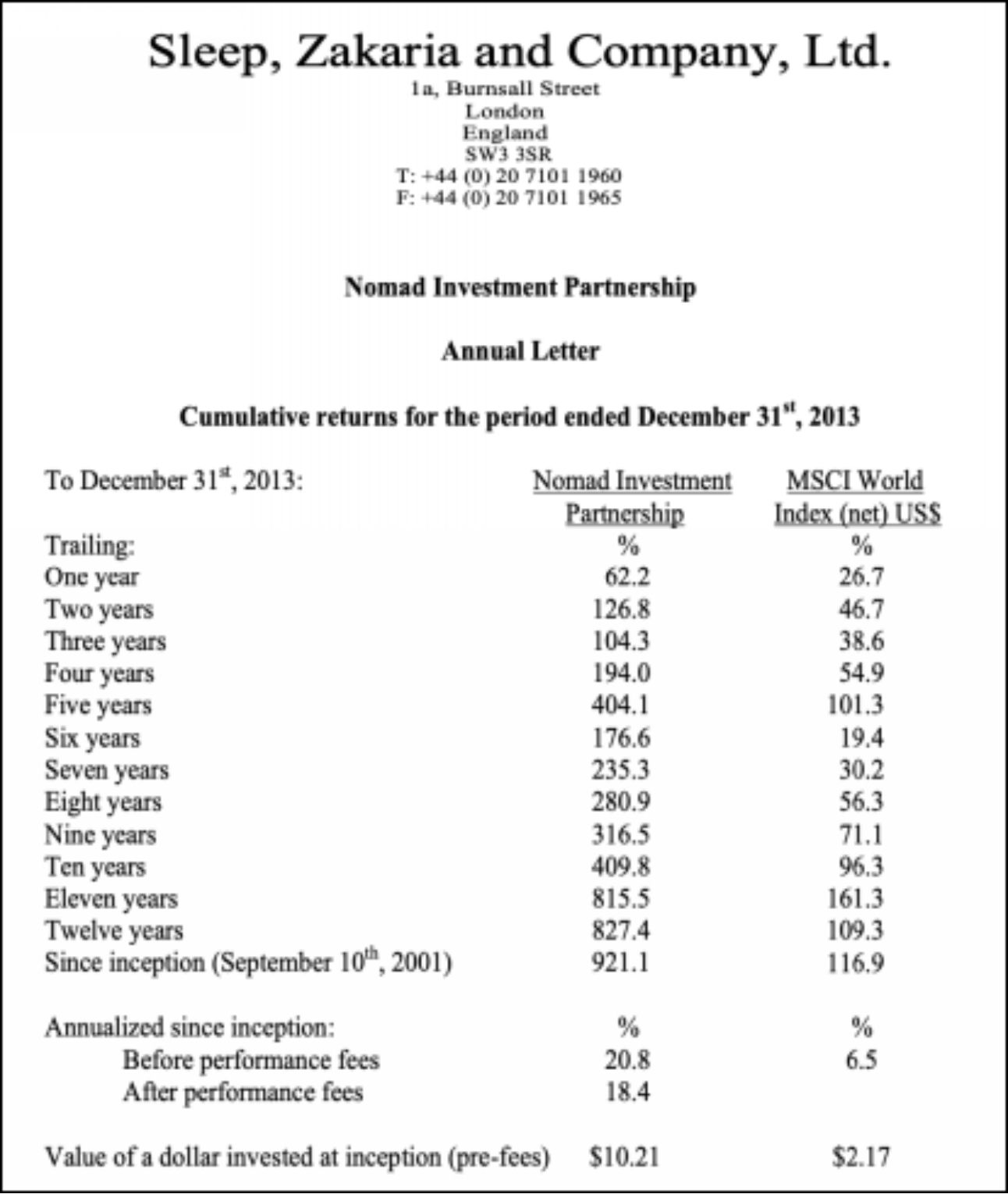
In the world of investing, performance is the ultimate measure. Between 2001 and 2013, a little-known fund called the Nomad Investment Partnership delivered a staggering cumulative return of 921.1% after fees. During the same period, the MSCI World Index returned just 116.9%. An investment of $1 in Nomad grew to $10.21; the same dollar in the index grew to a mere $2.17.
This remarkable achievement was the work of two investors, Nick Sleep and Qais Zakaria. Yet, their methods were anything but conventional. They ran a highly concentrated portfolio, held positions for years on end, and operated with a fee structure that would make most fund managers balk. They deliberately chose a path of anti-mainstream thinking, patience, and deep psychological awareness.
How did they achieve such extraordinary results by playing a completely different game? The answer lies in a philosophy built on a few powerful, interconnected ideas.
Nomad Partnership Performance vs. MSCI World Index
The Foundation: A Partnership Built on Trust and Discipline
Before even considering what to buy, Sleep and Zakaria engineered a structure that was fundamentally different from the rest of the industry. They named their venture a "partnership," not a "fund," to emphasize alignment and a shared journey with their investors. This philosophy was reflected in their operations:
- Radical Fee Structure: Nomad charged a minimal management fee (initially around 0.1%, later up to 1%) designed only to cover [...] costs, not to be a profit center. Their compensation came almost entirely from a 20% performance fee, but only after clearing a 6% annual return hurdle. They even introduced a "holdback" mechanism, where they would have to return previously earned fees if subsequent performance fell short, creating immense self-discipline.
- Focus on Returns, Not Size: In an industry obsessed with asset gathering, Nomad was obsessed with returns. They frequently closed the partnership to new capital when they couldn't find compelling opportunities, refusing to compromise quality for size. They explicitly stated the fund was unsuitable for anyone with an investment horizon of less than 5 years.
- Total Commitment: Sleep and Zakaria had 100% of their personal investments in Nomad. Their interests were perfectly aligned with their partners'. They used no leverage, no short-selling, and no complex derivatives.
This unique structure was the bedrock that enabled them to practice their patient, long-term investment strategy without pressure from the outside world.
The Strategic Evolution: Discovering "Scale Economies Shared"
Nomad's investment strategy evolved over time. They began with a classic value approach, searching for "fifty-cent dollars" in the tradition of Benjamin Graham. They looked for decent companies trading at deep discounts, such as Xerox after its accounting scandal or Stagecoach during a period of mismanagement.
However, their most profound insight came from identifying a specific business model they termed "Scale Economies Shared." This model creates a powerful, self-reinforcing virtuous cycle.
The "Scale Economies Shared" Flywheel
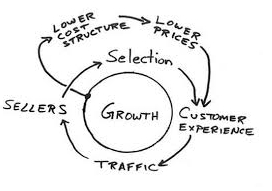
The mechanism is simple yet incredibly powerful:
- A company relentlessly focuses on lowering its own costs.
- It passes the majority of these cost savings on to its customers in the form of lower prices.
- Customers respond by buying more, increasing the company's volume and scale.
- This increased scale allows the company to lower its costs even further, restarting the cycle.
This model builds an ever-widening competitive moat. As the company grows by "giving back" to its customers, it becomes almost impossible for competitors to match its prices or value proposition. This insight shifted Nomad's focus from buying cheap companies to buying truly exceptional ones.
The Thesis in Action: Costco and Amazon
Nomad's letters famously analyzed several companies that exemplified this model, with Costco and Amazon being the cornerstones of their portfolio.
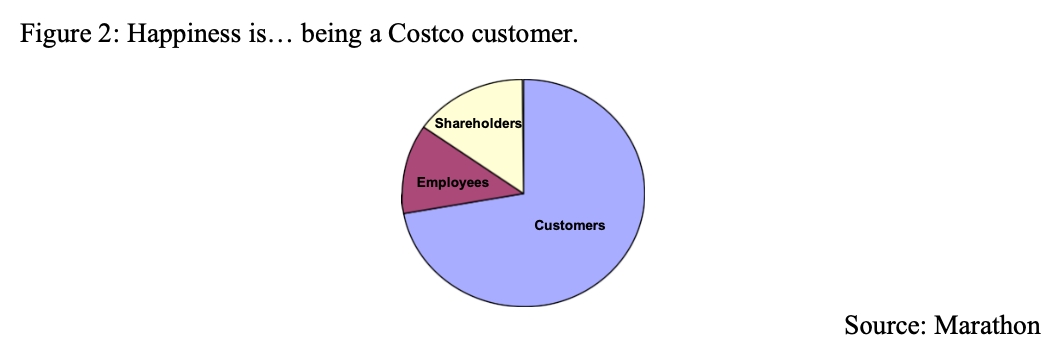
Costco is the textbook example. Its business model is not retail, but a membership club that sells products at incredibly low prices. By capping its gross margins (around 14% on branded goods) and passing all operational savings to members, Costco fosters intense customer loyalty. Nomad introduced the concept of a "robustness ratio"—the value delivered to customers versus the value captured by shareholders. For Costco, this ratio was estimated to be as high as 5:1; for every dollar of profit Costco kept, it saved its customers five dollars. This created a business that customers loved and competitors feared.
Happiness is... being a Costco customer (Value distribution)
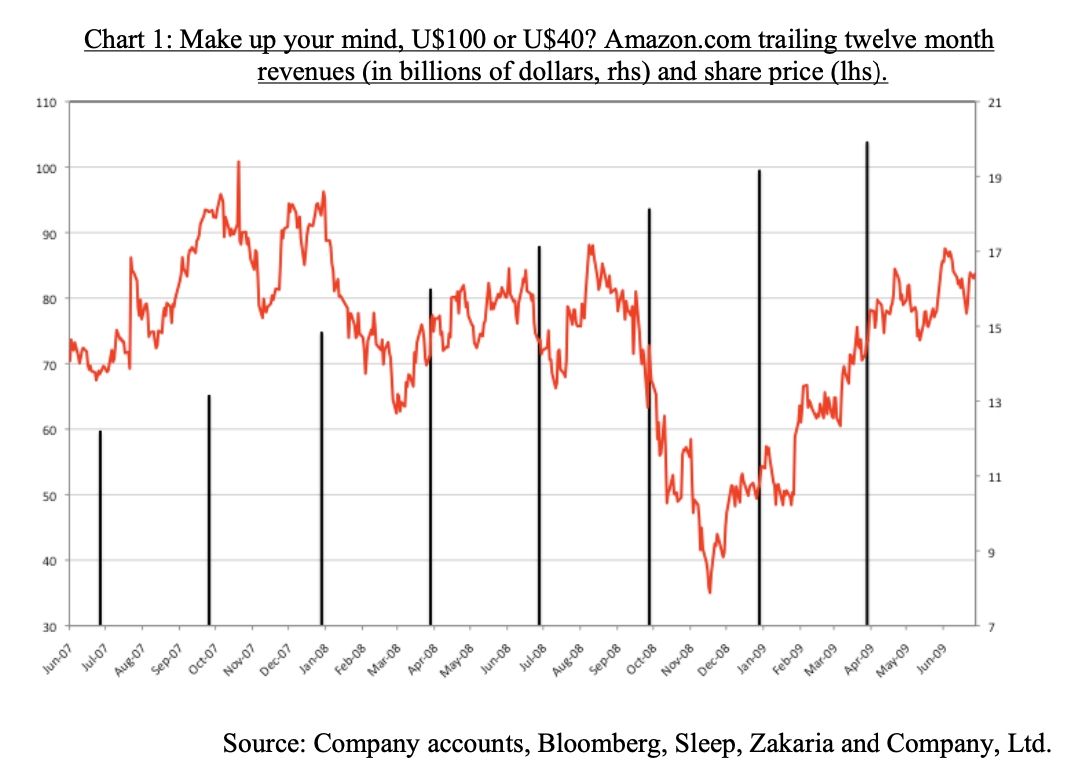
Amazon represented the same philosophy applied to the digital world. Jeff Bezos consistently chose to reinvest in lower prices and a better customer experience, even when it meant sacrificing short-term profits and free cash flow. Wall Street was often baffled, with the stock price swinging wildly, but Nomad understood the long-term logic. Bezos was building an unstoppable machine, and the market's short-term focus created a golden opportunity for patient capital. The disconnect between Amazon's soaring revenues and its volatile stock price was a perfect illustration of the opportunity Nomad sought to exploit.
Amazon's Revenue Growth vs. Volatile Share Price
The Unseen Edge: Psychology, Patience, and Concentration
Beyond identifying great business models, Nomad's true competitive advantage was behavioral. They understood, deeply, that the biggest enemy to long-term returns is often the investor's own psychology.
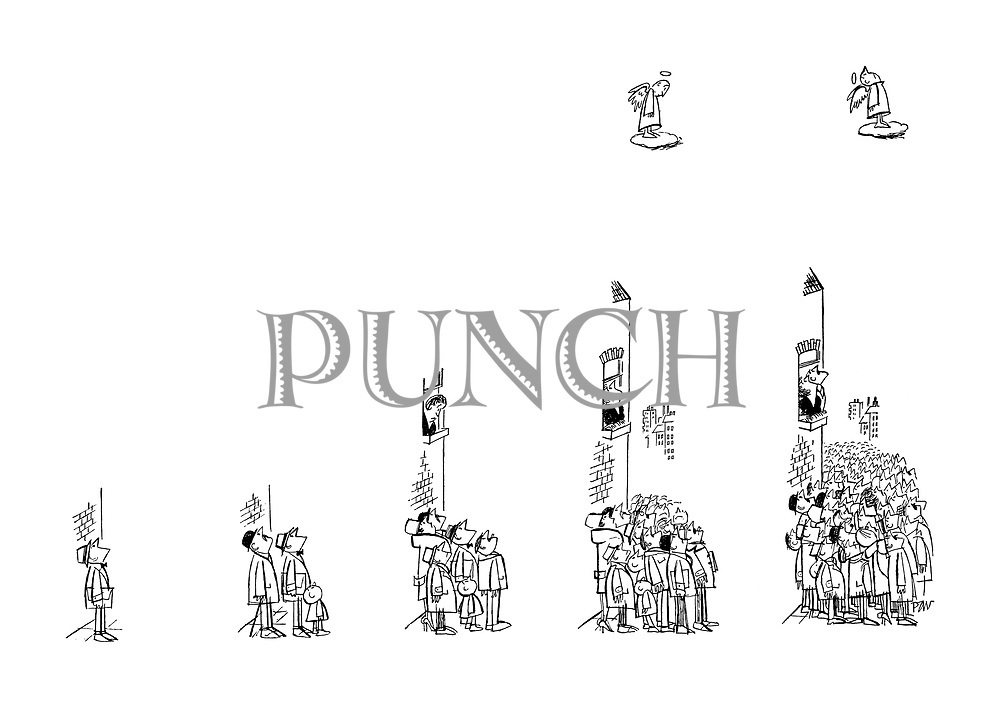
- Overcoming Psychological Biases: Drawing heavily from Charlie Munger, they were acutely aware of biases like social proof—the tendency to follow the herd. While the market chased trends, Nomad stood apart, understanding that consensus is often the enemy of superior returns. The famous Punch cartoon they cited perfectly captures this folly of crowds.
The Folly of Social Proof
- Patience as "Time Arbitrage": As the institutional world's average holding period shrank to less than a year, Nomad's was over 5 years. They weren't smarter than everyone else; they were simply willing to operate on a different timescale, allowing the value of their chosen companies to compound without interruption.
- The Power of Concentration: Nomad ran a portfolio of just 10-20 stocks. They believed that if you have high conviction in a truly exceptional business, the logical step is to bet big. They saw the industry's obsession with diversification as "diworsification"—a way to ensure mediocrity by knowing a little about a lot.
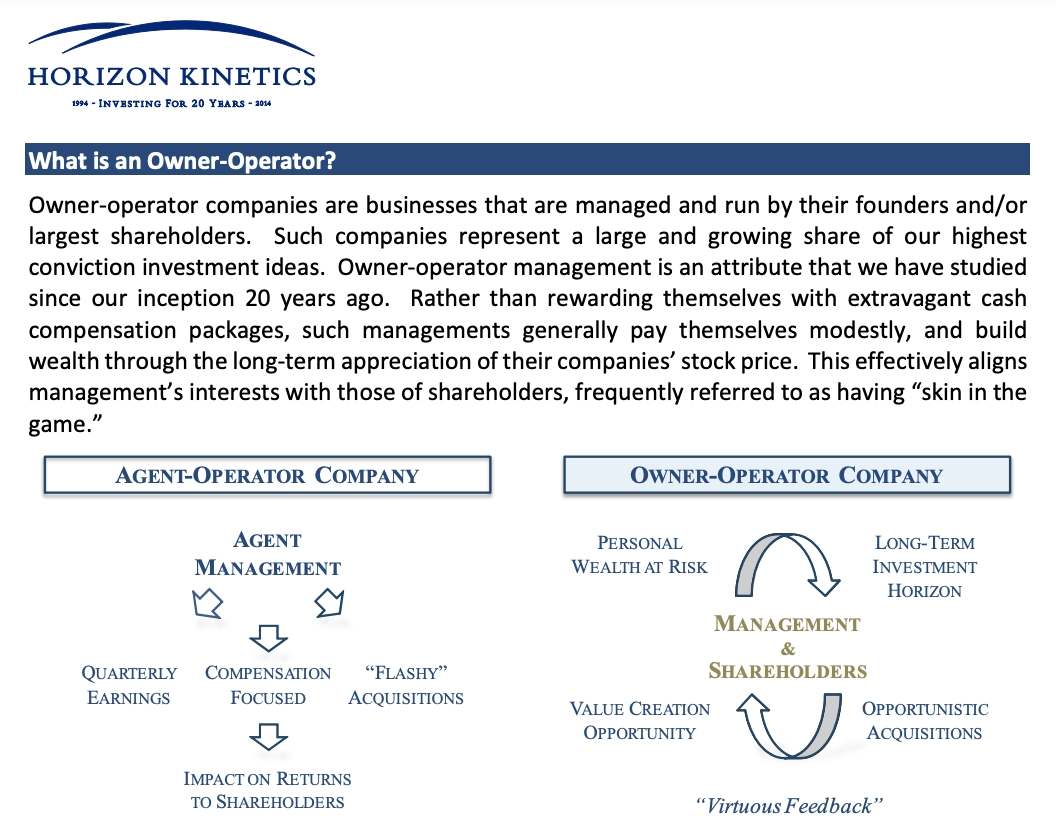
- Backing Owner-Operators: They had a strong preference for companies run by their founders or largest shareholders. These "owner-operators" think like owners, not agents. They tend to have their wealth tied up in the company's stock, focus on long-term value creation, and make decisions that are aligned with fellow shareholders, creating a virtuous feedback loop.
Agent-Operator vs. Owner-Operator Model
The Enduring Lessons from Nomad
The story of the Nomad Investment Partnership is more than a tale of investment success; it's a masterclass in independent thinking. Their journey teaches us that in a world fixated on short-term results, the greatest opportunities lie in playing a longer game.
Their success was not a fluke. It was the result of a carefully constructed system: a philosophy centered on exceptional business models, a behavioral discipline to overcome human folly, and a partnership structure that gave them the freedom to execute their vision without compromise. By choosing to be different, patient, and concentrated, Nick Sleep and Qais Zakaria didn't just beat the market; they redefined what it means to be a true investor.


