
Apple's 2025 Product Launch - iPhone, Apple Watch, and AirPods Pro 3 Evaluation and Market Impact Analysis
Does Apple's latest product refresh truly redefine innovation, or is its subtle pricing strategy the real game-changer for its ASP growth amidst divided market expectations on its AI future?


Apple's 2025 New Product Launch Review: Innovation, Pricing, and Market Outlook
Apple comprehensively upgraded its core product lines at the "Awe Dropping" event on September 9, 2025, including AirPods Pro 3, Apple Watch Series 11, Apple Watch SE 3, Apple Watch Ultra 3, iPhone 17, iPhone Air, and iPhone 17 Pro series. The core of this launch lies in Apple's continuous product design innovation, deep integration of hardware and software, and focus on user experience and health features. Apple CEO Tim Cook emphasized that Apple's design philosophy extends beyond aesthetics, prioritizing functional realization, such as the immersive audio experience of AirPods, the health and connectivity features of Apple Watch, and the versatility of iPhone in daily use. New software designs, like "liquid glass," bring fluidity, vibrancy, and flexibility to everyday operations, offering a more intuitive and enjoyable user experience.
While the pricing strategy for the base iPhone 17 model might cause short-term market disappointment, Apple aims to continue driving iPhone's Average Selling Price (ASP) growth and premiumization trend by discontinuing low-capacity storage options, introducing higher-capacity alternatives, and subtly adjusting prices for some models. Simultaneously, Apple has maintained entry-level pricing to expand its user base and benefit from ongoing carrier promotions. However, sell-side analysts are divided on the degree of innovation in this launch and its potential to boost user upgrade rates: Morgan Stanley views the new iPhone Air as exceeding expectations, combining higher trade-in values and carrier subsidies to significantly improve affordability, calling it a "modestly positive surprise"; conversely, J.P. Morgan and BNPP Exane View consider the innovations incremental and lacking in disruption, holding moderate or pessimistic expectations for iPhone Air's sales contribution and overall upgrade rates, emphasizing that Apple's AI strategy will be a critical factor for its stock performance.
AirPods Pro 3: Audio, Health, and Revolutionary Smart Translation
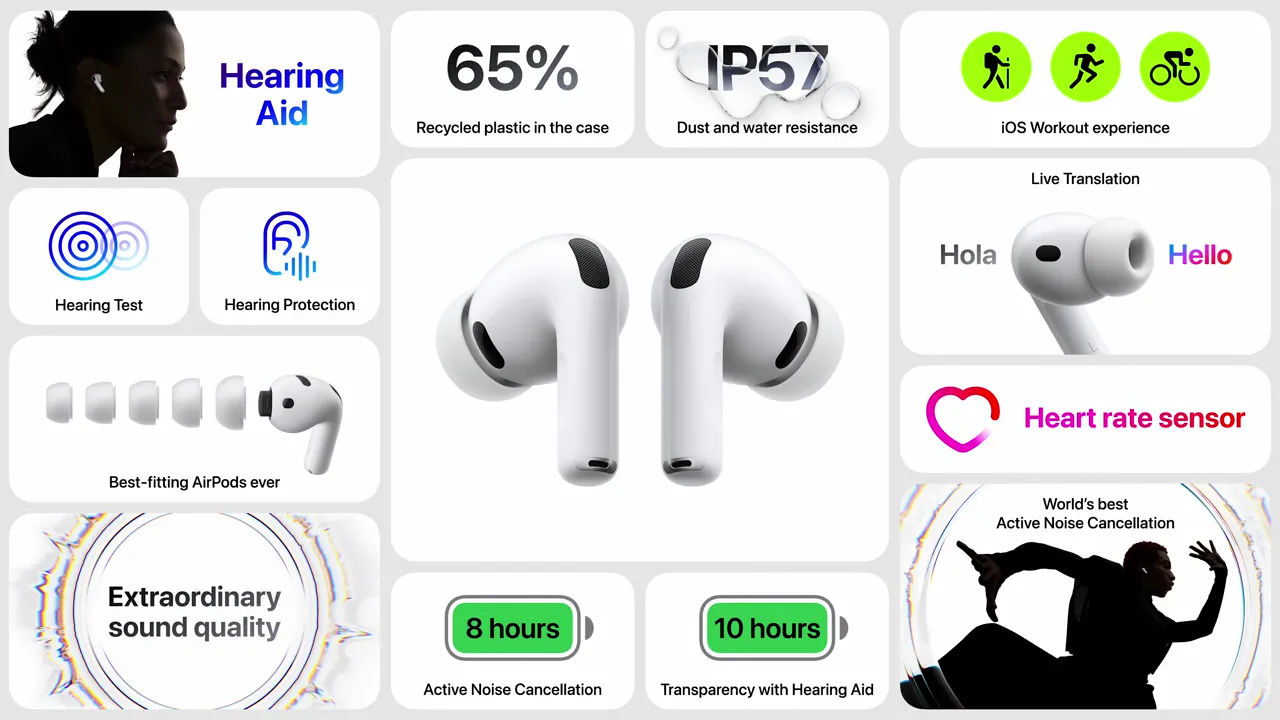
Apple unveiled the new generation AirPods Pro 3, maintaining its price at $249, bringing several significant updates. In terms of audio and noise cancellation, Kate Bergeron (VP, Hardware Engineering) stated that AirPods Pro 3 offers an astounding spatial audio experience, with a custom multi-port acoustic architecture precisely controlling airflow, optimizing bass response, and broadening the soundstage to focus vocals. Its Active Noise Cancellation (ANC) feature is significantly enhanced, improving by 2x compared to the previous generation, and by 4x for users with the original AirPods Pro. Ultra-low noise microphones and advanced computational audio, combined with new foam ear tips, provide stronger noise isolation. Transparency Mode allows users to hear their surroundings while making their own voice and conversations sound more natural.
AirPods Pro 3 Overview
(source: Apple)
Smart Translation Feature: Real-time Communication Across Language Barriers
AirPods Pro 3 introduces a real-time translation feature powered by Apple Intelligence, bringing the magic of AirPods to cross-language communication, which is undoubtedly a major highlight of this launch. Users can initiate real-time translation with simple gestures. For instance, when translating Spanish, ANC automatically reduces the speaker's volume, allowing users to focus more on the translated content. This translation feature is not limited to single words but can translate the meaning of each phrase; when the user speaks, the iPhone displays their words in the other person's language and can even read them aloud. When two people are wearing AirPods Pro, the real-time translation feature becomes even more practical and convenient, greatly enhancing the efficiency and experience of cross-cultural communication. This functionality is enabled by advanced computational audio technology on AirPods and Apple Intelligence models running on the iPhone.
iPhone Displays Translation

(source: Apple)
Two People Wearing AirPods Pro for Translation

(source: Apple)
Regarding wearing comfort and durability, Apple optimized the fit of AirPods Pro by analyzing over 10,000 3D ear scans and 100,000 hours of user research. Each AirPod is made smaller and designed according to the natural geometry of the ear canal to ensure a more secure fit, offering 5 sizes of new foam ear tips. Notably, AirPods Pro 3 is the first to feature IP57 sweat and water resistance, enhancing its durability.
In terms of fitness and health integration, Julz Arnery (Sr. Director, Fitness Technologies) stated that AirPods Pro 3 adds a heart rate sensing function during exercise, with Apple's smallest heart rate sensor built-in. Machine learning algorithms combine sensor and accelerometer data to provide precise measurements, and a new on-device AI model is used for activity and calorie tracking, trained on over 50 million hours of data from the Apple Heart and Movement Study. Users can track up to 50 different types of workouts in the iPhone Fitness app via AirPods Pro and access audio experiences like Workout Buddy powered by Apple Intelligence to motivate users. For battery life, a single charge now lasts 8 hours (with ANC on), up from 6 hours, and provides 10 hours of battery life for hearing aid users in Transparency Mode.
Analysts generally consider AirPods Pro 3 an impressive upgrade. However, J.P. Morgan and BNPP Exane View note that despite these enhancements, their impact on Apple's overall investment thesis is relatively limited, with BNPP Exane View specifically mentioning that the heart rate sensor might be redundant for users who already own an Apple Watch.
Apple Watch Series: Continuous Evolution of Health, Safety, and Connectivity Features
Apple's newly released Apple Watch products (Apple Watch Series 11, Apple Watch Ultra 3, and Apple Watch SE 3) largely met market expectations, with no price changes. Pre-orders opened on September 9, 2025, and sales began on September 19, 2025. Tim Cook emphasized that Apple Watch has become an indispensable daily companion, helping millions discover potentially serious health issues and save lives by being worn on the wrist, offering fall detection, crash detection, heart rate monitoring, sleep tracking, and providing a lifeline in emergencies.
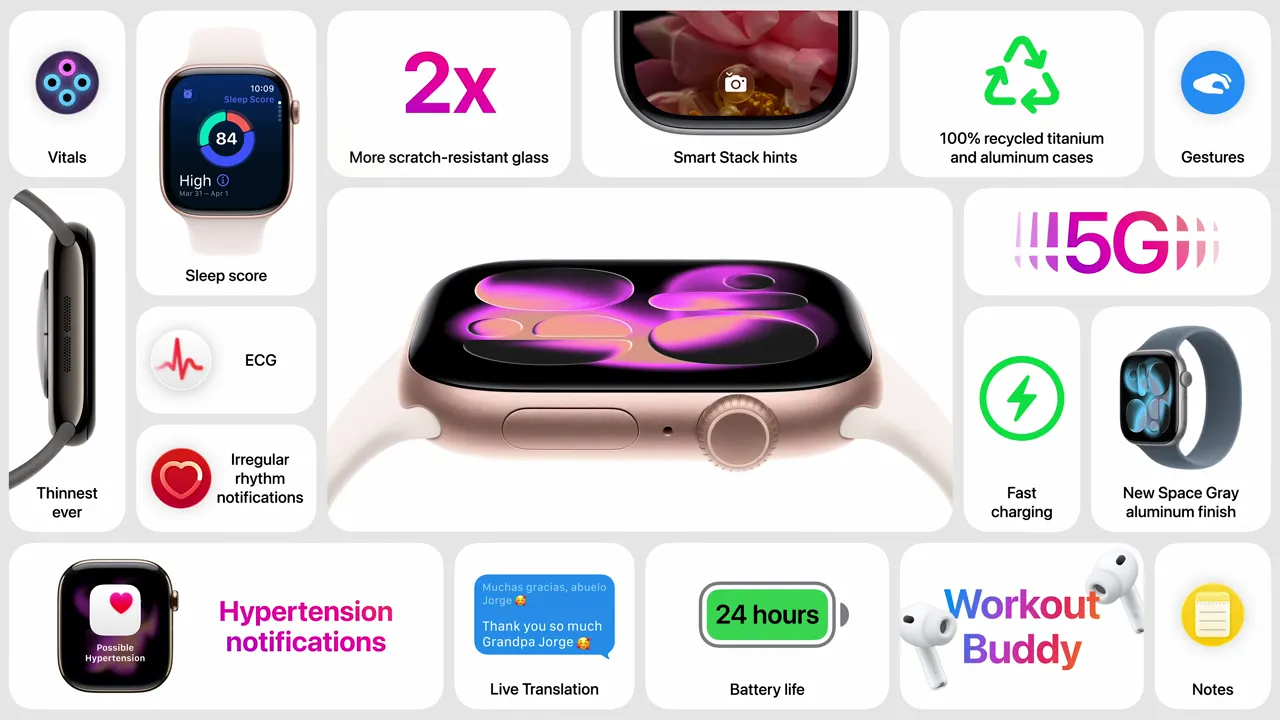
Apple Watch Series 11: Stan Ng (VP, Apple Watch and Health Product Marketing) introduced Apple Watch Series 11 as Apple's thinnest, most comfortable, and more durable watch ever. It features proprietary IonX glass and a custom Apple-designed ceramic coating, improving scratch resistance by 2x. The new 5G cellular technology, with a new 5G modem and antenna architecture, enhances performance and coverage while being more energy-efficient. Running watchOS 26, it brings new features, smart capabilities, and elegant new designs, including the new Flow and Exactograph watch faces, with battery life extended to 24 hours.
Apple Watch Series 11 Overview
(source: Apple)
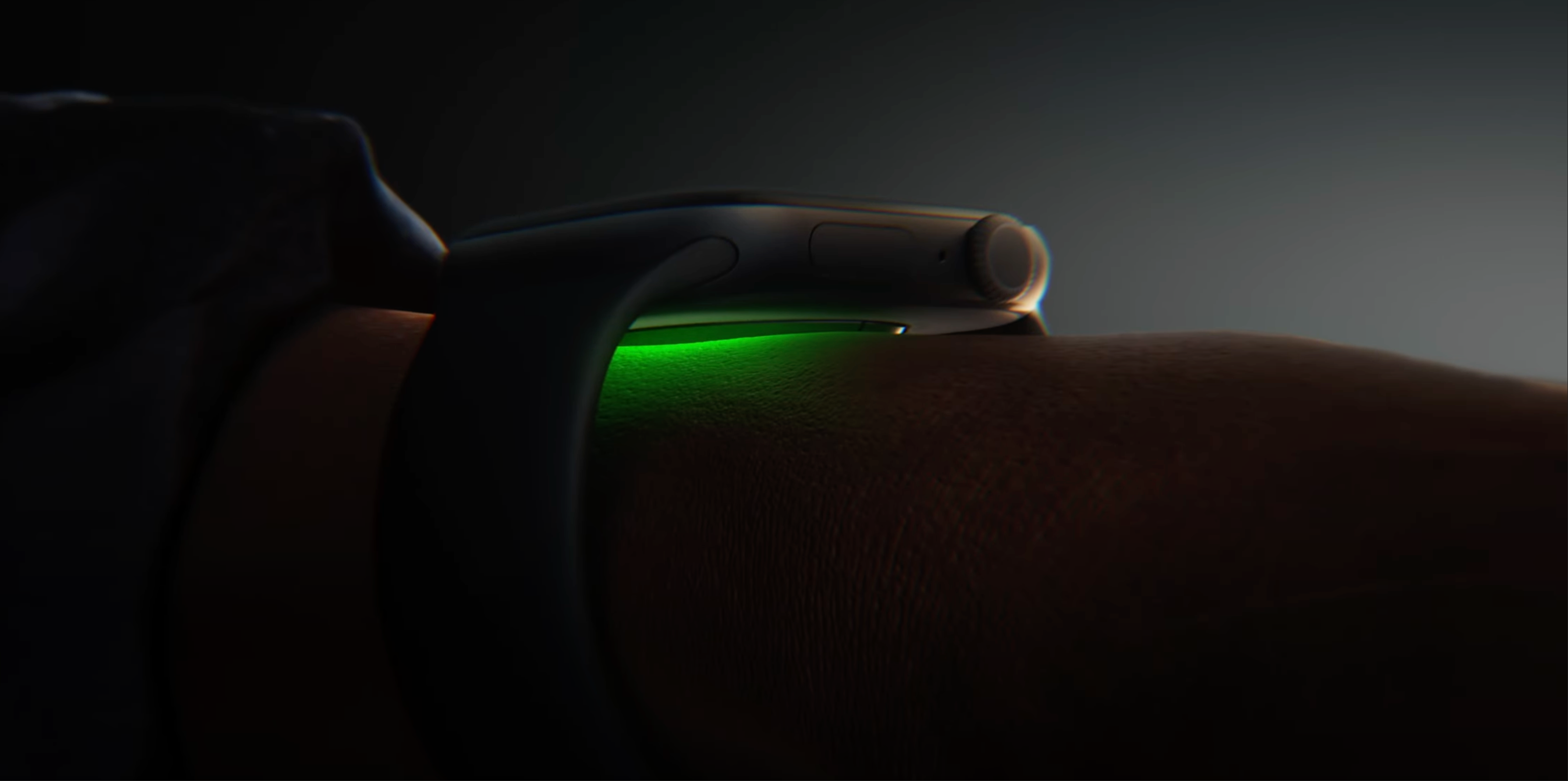
Enhanced Health Features: Dr. Sumbul Ahmad Desai (VP, Health) elaborated that Apple Watch now includes hypertension detection, utilizing optical heart rate sensor data and machine learning algorithms to identify chronic hypertension patterns, expected to notify over 1 million undiagnosed hypertension patients in its first year alone. This feature is pending approval from the FDA and other regulatory bodies. Additionally, Apple Watch introduces a Sleep Score feature, which helps users understand sleep quality by analyzing factors such as sleep duration, consistency of pre-sleep habits, frequency of nighttime awakenings, and time spent in each sleep stage, with the scoring method based on top expert guidance.
Hypertension Detection
(source: Apple)
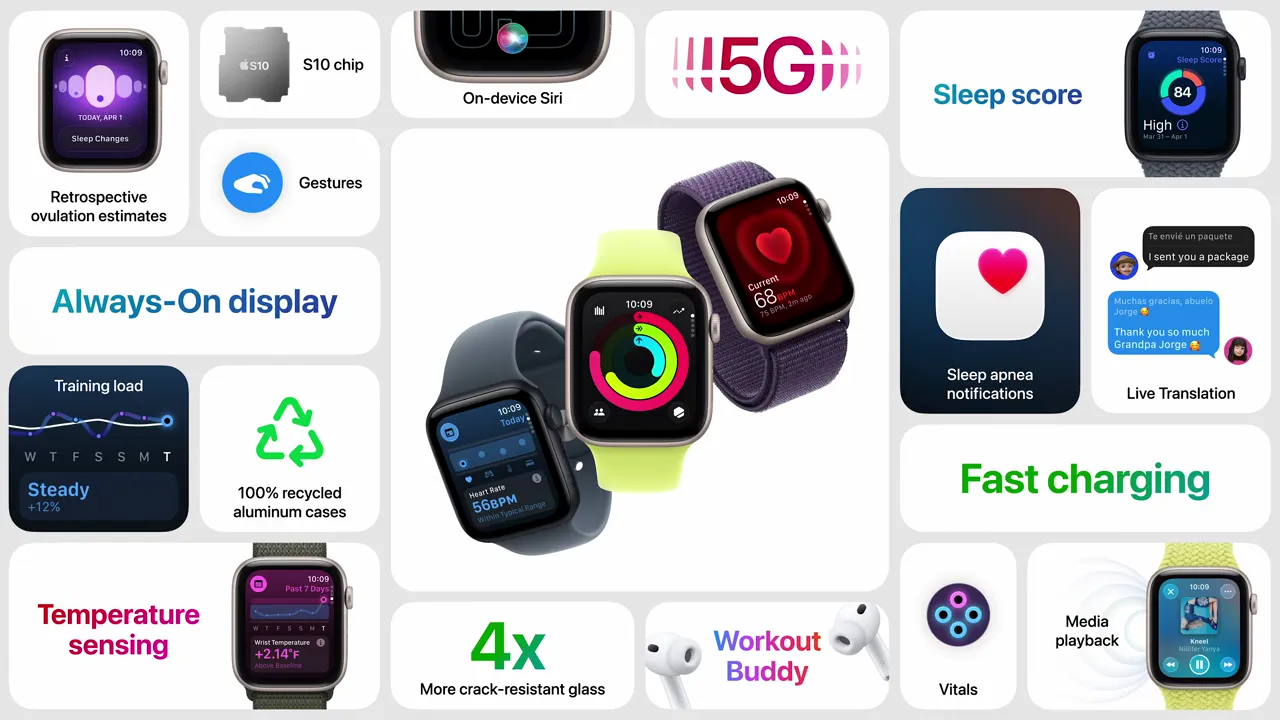
Apple Watch SE 3: Amanda Santangelo (Product Manager, Apple Watch) announced that Apple Watch SE 3 features the most powerful Apple Watch chip, the S10, bringing an always-on display to the SE series for the first time. It adds wrist temperature sensing (enabling retrospective ovulation estimation) and a Vitals app (notifying users of anomalies), along with new sleep apnea notifications and Sleep Score. Despite enhanced features, the S10 chip's energy efficiency allows for an 18-hour battery life, and for the first time, it supports fast charging, providing 8 hours of normal use with a 15-minute charge.
(source: Apple)
Apple Watch Ultra 3: Eugene Kim (VP, Hardware Engineering) introduced Apple Watch Ultra 3 with a new display, featuring the most advanced OLED and LTPO3 technology for wider viewing angles, higher brightness, and thinner bezels. Significant upgrades include new satellite connectivity, allowing users to stay connected and safe even in remote areas, capable of sending messages and sharing FindMy location, including a satellite emergency SOS feature. Battery life is extended to 42 hours.
Apple Watch Ultra 3 Satellite Communication
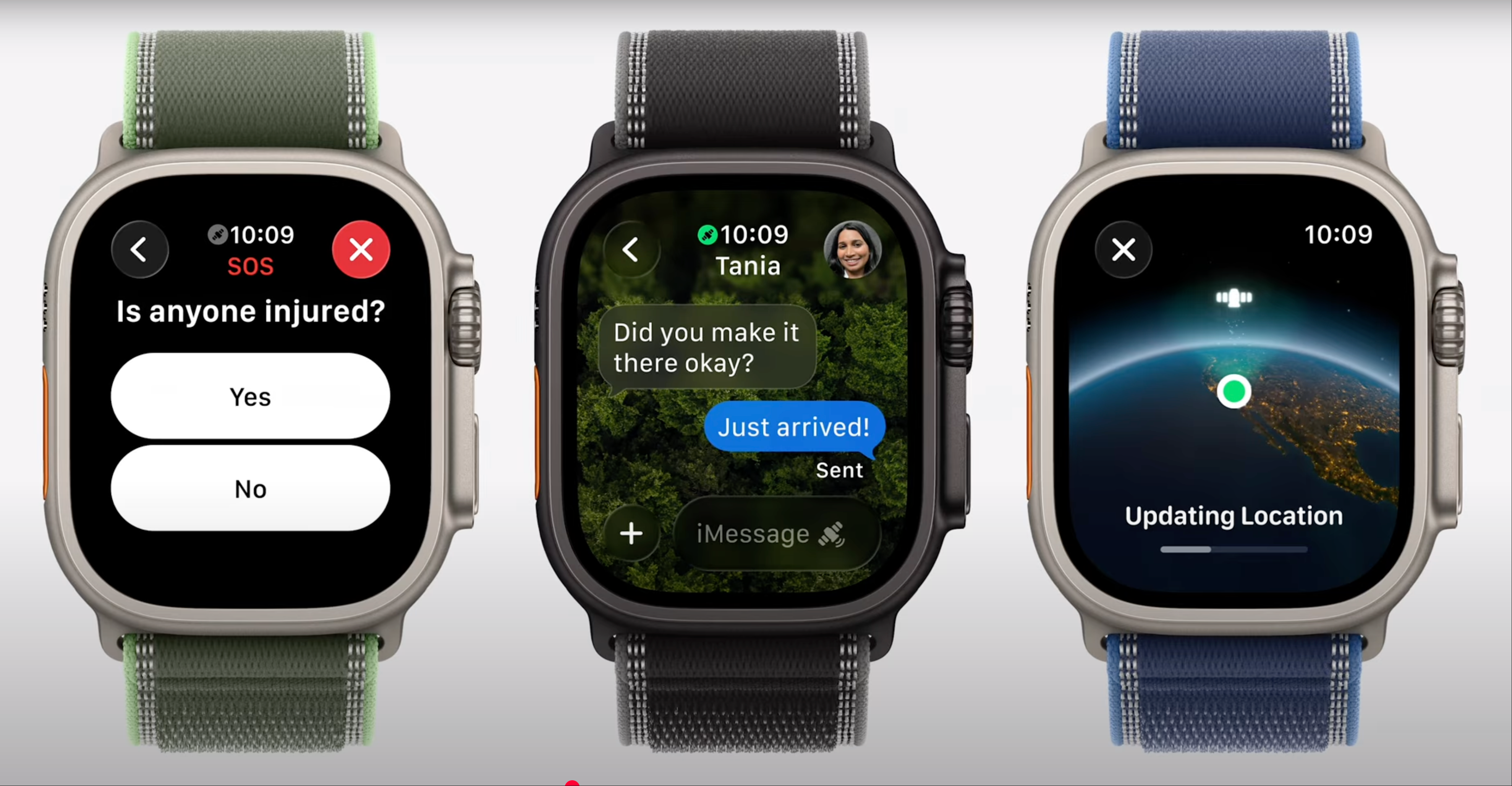
(source: Apple)
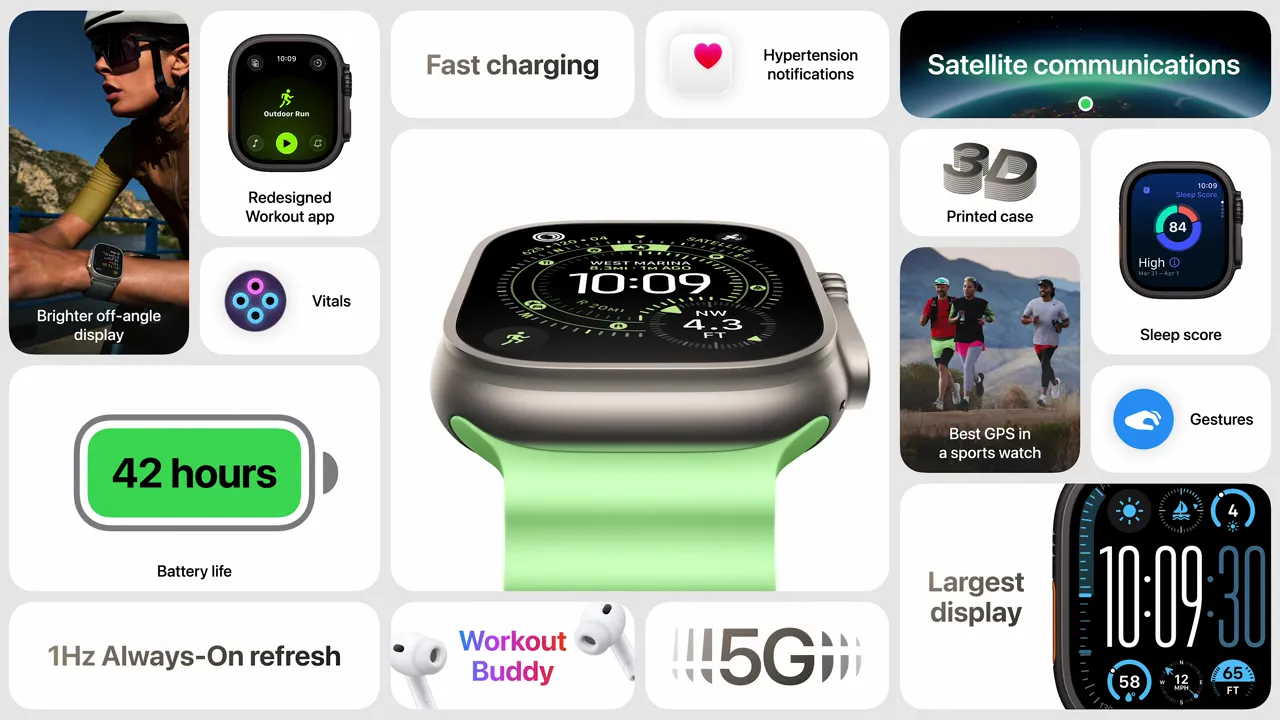
(source: Apple)
Analysts generally hold a cautious view on the Apple Watch series upgrades. Morgan Stanley believes the incremental appeal is limited. J.P. Morgan thinks that despite these enhancements, their impact on the overall investment thesis is relatively limited, with the main driver still being the iPhone. BNPP Exane View points out that the new heart rate sensor might be redundant for users who already own an Apple Watch.
iPhone Series: Comprehensive Innovation in Design, Performance, and Imaging
Apple launched 4 new iPhone models, including iPhone 17, iPhone Air, iPhone 17 Pro, and iPhone 17 Pro Max, aiming to meet unique user needs and continuously drive Average Selling Price (ASP) growth. All newly released iPhone models have discontinued the 128 GB storage option, starting with 256 GB storage.
iPhone 17: Kaiann Drance (VP, iPhone Product Marketing) introduced iPhone 17 with a more durable design, available in 5 colors: Lavender, Mist Blue, Black, White, and Sage. It features a larger 6.3-inch display with narrower bezels and, for the first time, introduces ProMotion technology with an adaptive refresh rate up to 120Hz and a peak outdoor brightness of 3,000 nits. iPhone 17 also introduces Ceramic Shield 2, improving scratch resistance by 3x.
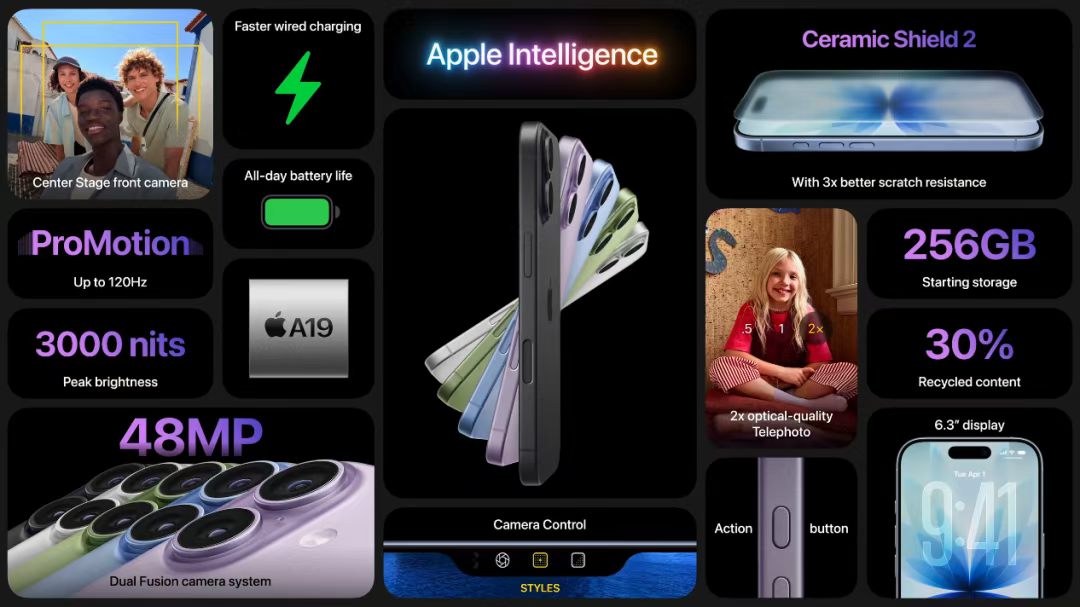
(source: Apple)
In terms of performance, iPhone 17 is powered by the latest generation Apple Silicon chip, A19, built on the most advanced 3-nanometer technology. Combined with the A19's increased memory bandwidth, on-device generative and large language models run faster. It achieves all-day battery life, with video playback time increased by 8 hours compared to iPhone 16, and a 10-minute charge provides 8 hours of video playback. For the camera system, it features an excellent 48-megapixel dual-fusion camera system, including a main camera and a 2x optical quality telephoto lens, and adds a new 48-megapixel fusion ultra-wide camera, with 4x the resolution of iPhone 16. iPhone 17 also introduces the new Center Stage front camera, with higher pixels, a wider field of view, and a sensor size almost 2x larger than its predecessor, featuring a square sensor for the first time and automatically expanding the field of view and rotating the frame via AI.
iPhone Air: The Fusion of Extreme Thinness and High Performance
Tim Cook proudly unveiled iPhone Air, the newest member of the iPhone family, designed to offer a futuristic, ultra-thin design and powerful performance. Abidur Chowdhury (Industrial Designer, iPhone) stated that the design goal was to create a powerful yet extremely thin iPhone that feels almost imperceptible in hand. Its core structure features an ultra-thin frame made from aerospace-grade 5 titanium, combining strength, lightness, and durability. iPhone Air is the first to enclose the titanium frame with Ceramic Shield on both sides, creating nanocrystals through a high-temperature process, significantly enhancing toughness and making it Apple's most durable design ever. The redesigned camera module plateau accommodates custom cameras, chips, and key system modules, utilizing all remaining space for a high-density battery.
iPhone Air Design Philosophy

(source: Apple) iPhone Air Extreme Thinness
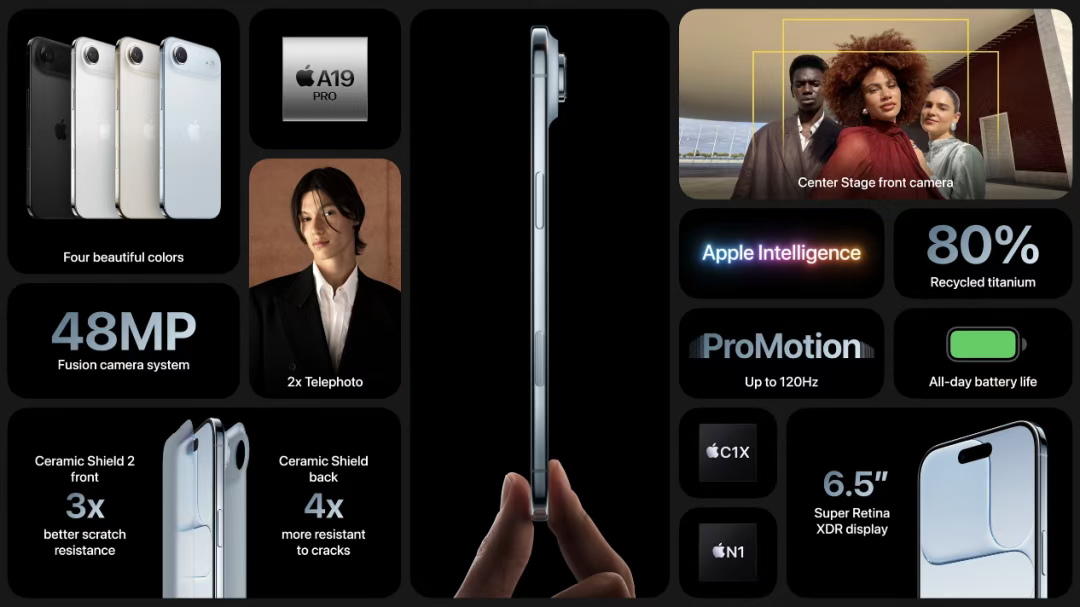
(source: Apple)
John Ternus (SVP, Hard Engineering) detailed that iPhone Air is only 5.6mm thick and exceptionally light. It features a 6.5-inch display, supporting ProMotion (up to 120Hz), always-on display, and 3,000 nits peak brightness. Protected by the new Ceramic Shield, it is 3x more scratch-resistant than the previous Ceramic Shield and, for the first time, brings Ceramic Shield to the back of the iPhone, making it 4x more crack-resistant than the previous back glass. Its frame is made from 80% recycled titanium and is available in 4 colors: Space Black, Cloud White, Pale Gold, and Sky Blue.
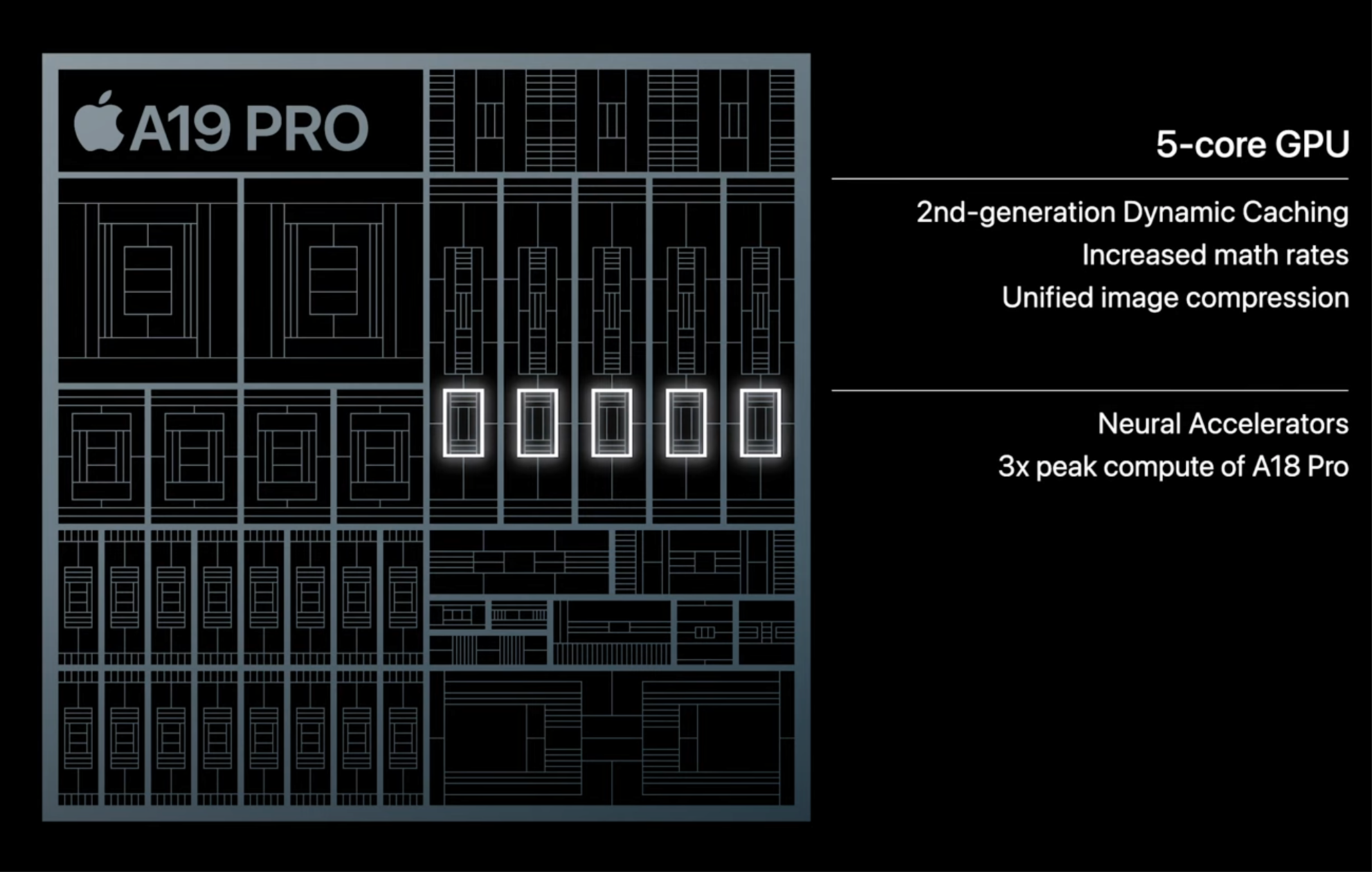
In terms of performance, Tim Millet (VP, Platform Architecture) stated that iPhone Air is powered by Apple's most energy-efficient and high-performance chip designed for iPhone—the A19 Pro. Its CPU is the fastest CPU in any smartphone, and the GPU has received significant upgrades, with peak GPU computing power 3x that of the A18 Pro, reaching MacBook Pro levels, making it ideal for GPU-intensive AI workloads. iPhone Air is the first to introduce Apple's designed Wi-Fi and Bluetooth chip—the N1 chip—to the iPhone, supporting Wi-Fi 7, Bluetooth 6, and Thread. Additionally, Apple's designed modem, C1X, is 2x faster than C1 and faster than the iPhone 16 Pro's modem, consuming 30% less power, making iPhone Air Apple's most energy-efficient iPhone ever.
A19 Pro GPU
(source: Apple)
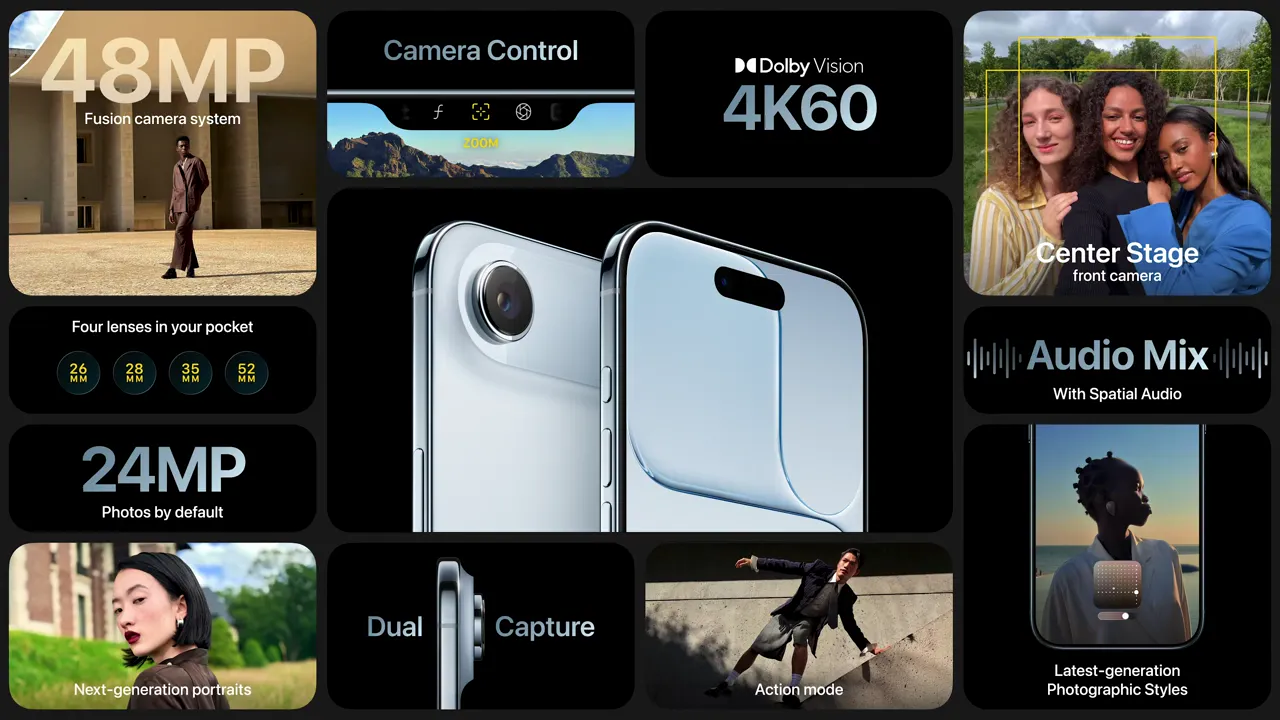
For the camera system, iPhone Air features a powerful 48-megapixel fusion camera system, highly capable and comparable to multiple high-end cameras. The 2x telephoto lens has an updated Photonic Engine, combining computational photography to support 24-megapixel default photos, next-generation portrait mode with focus control, and the latest photographic styles. Custom 28mm and 35mm lenses offer greater compositional flexibility. The innovative front Center Stage camera allows for horizontal selfies without rotating the phone. Additionally, iPhone Air introduces a new feature: Dual Capture Video, which can record simultaneously using both front and rear cameras.
iPhone Air Camera System
(source: Apple)
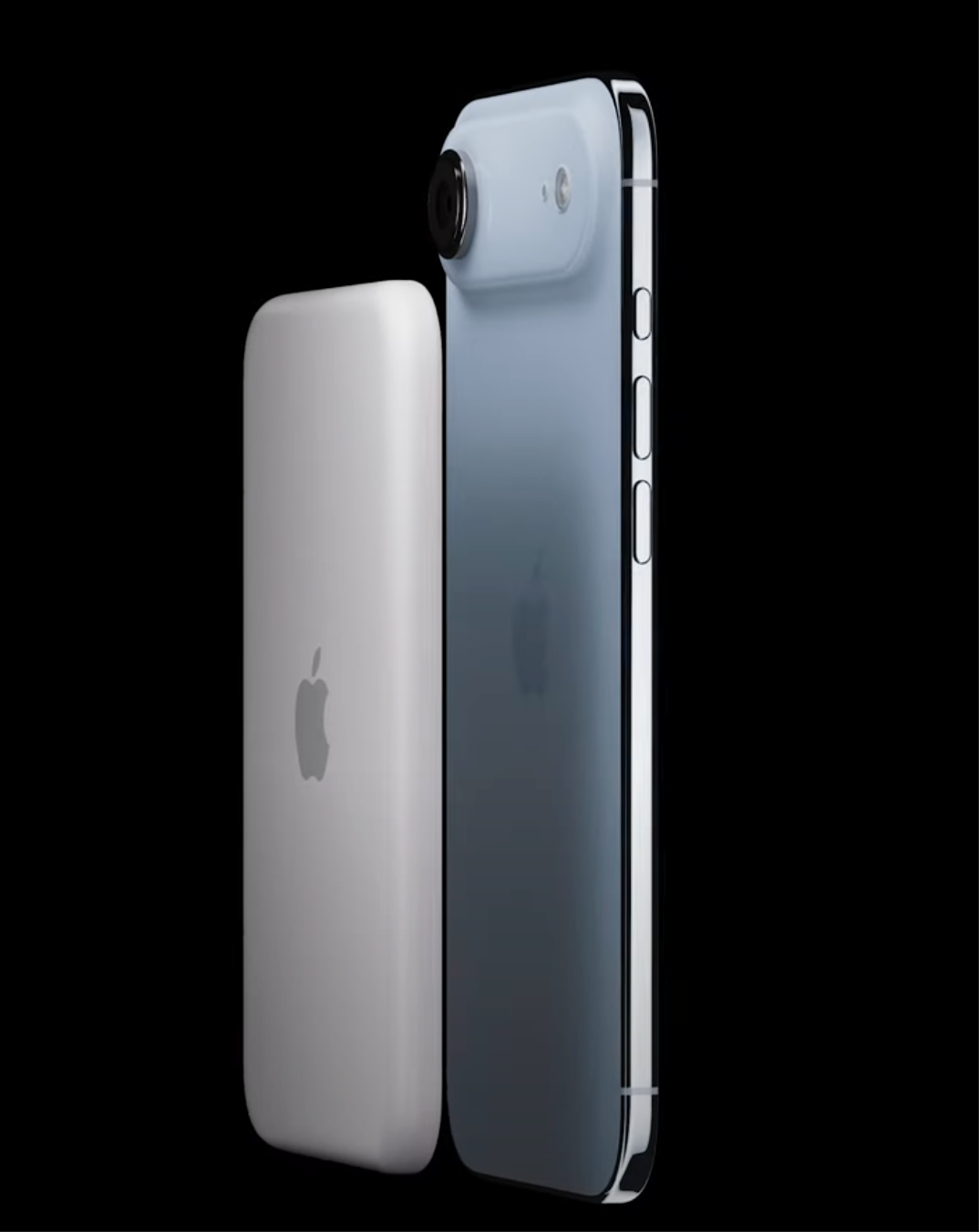
Notably, iPhone Air supports eSIM globally only, which saves internal space for the battery, allowing it to achieve all-day battery life despite being thinner and lighter. A new thin MagSafe battery accessory combined with iPhone Air can provide up to 40 hours of video playback.
MagSafe Battery Accessory
(source: Apple)
Morgan Stanley believes the new ultra-thin iPhone Air is one of the biggest highlights of this launch, which will help increase the iPhone upgrade rate in the next 12 months. However, Morgan Stanley also notes that due to strict regulations on physical SIM cards in the Chinese market, the eSIM-only iPhone Air may not sell well in China. J.P. Morgan believes the new form factor of iPhone Air may bring incremental sales, but due to its higher pricing and disadvantages in camera and battery compared to Pro models, its sales expectations will be moderate.
iPhone 17 Pro and iPhone 17 Pro Max: Professional-grade Performance and Thermal Innovation
Tim Cook stated that the goal for iPhone 17 Pro was to create the most professional iPhone to date. Molly Anderson (VP, Industrial Design) explained that iPhone 17 Pro features Apple's first unibody iPhone chassis, starting from solid aluminum, formed through custom extrusion, hot forging, and precision machining, making it lightweight, thermally efficient, and robust, capable of accommodating the largest battery ever in an iPhone.
Vapor Chamber: Key to High-Performance Thermal Management
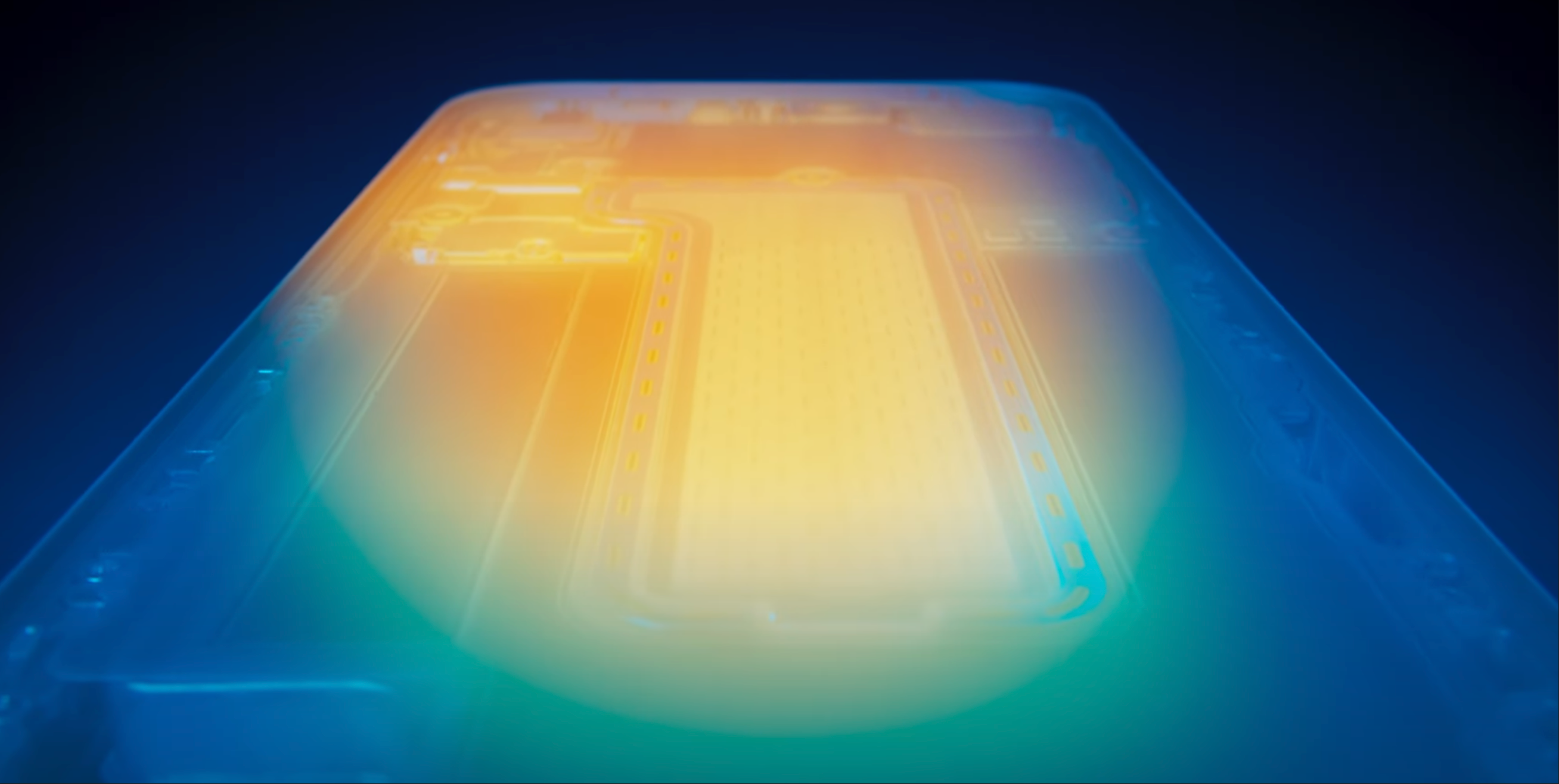
To achieve higher sustained performance, the iPhone 17 Pro series introduces a new thermal system, at its core being Apple's designed vapor chamber. A vapor chamber is a highly efficient heat transfer device containing a small amount of liquid (usually water) that evaporates and condenses under low pressure, rapidly transferring heat from a heat source (such as the A19 Pro chip) to a cooling area. This technology effectively removes heat from components, ensuring stable high-performance output during prolonged heavy loads (like playing demanding games or performing complex AI computations), preventing performance degradation due to overheating. Additionally, iPhone 17 Pro uses Apple's designed aerospace-grade aluminum alloy, which has 20x higher thermal conductivity than previously used titanium and is significantly lighter, further enhancing thermal efficiency. The back also features Ceramic Shield, as strong and durable as the front, and 4x more crack-resistant than the previous back glass.
iPhone 17 Pro Vapor Chamber Thermal System
(source: Apple)
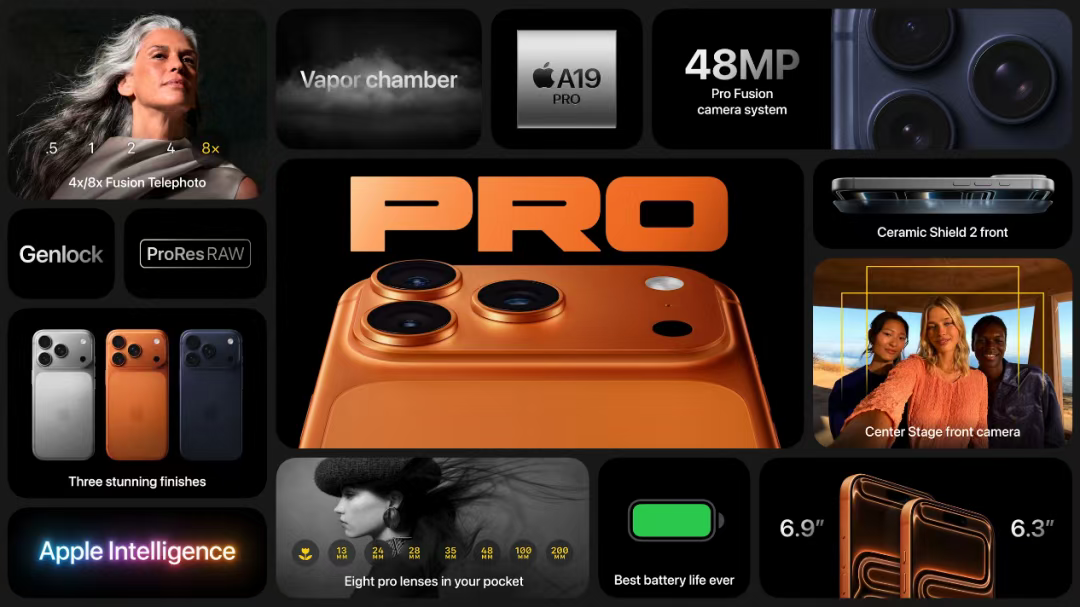
iPhone 17 Pro Performance
(source: Apple)
Greg "Joz" Joswiak (SVP, Worldwide Marketing) detailed that the iPhone 17 Pro design brings a massive leap in performance, making it the most powerful iPhone to date. It is powered by the formidable A19 Pro chip, featuring a 6-core CPU and a high-performance 6-core GPU, with each GPU core having a built-in neural accelerator, larger cache than A18 Pro, and more memory. Combined with the optimal thermal design, iPhone 17 Pro's sustained performance is up to 40% higher than iPhone 16 Pro. The front display is protected by the new Ceramic Shield 2, improving scratch resistance by 3x compared to its predecessor. For battery life, a significantly larger battery enables iPhone 17 Pro Max to achieve the best battery life ever in an iPhone. The eSIM-only model further increases battery size by utilizing the physical SIM card slot space, providing an additional 2 hours of video playback time, totaling up to 39 hours of video playback.
For the professional camera system, Patrick Carroll (Manager, iPhone Camera Architecture) stated that iPhone 17 Pro and iPhone 17 Pro Max feature Apple's best camera system ever. The front 18-megapixel Center Stage camera. The rear 3 cameras are all 48-megapixel for the first time, and all are fusion cameras, with an updated imaging pipeline for stronger resolution. The extended camera module plateau on iPhone 17 Pro accommodates a new 48-megapixel fusion telephoto camera, offering 4x optical zoom (100mm) and 8x optical zoom (200mm), which is Apple's longest optical quality zoom ever, with digital zoom up to 40x, equivalent to 8 professional lenses in your pocket.
For video features, Pro models lead in smartphone video, supporting Dolby Vision HDR, 4K 120, ProRes Log. New ProRes RAW Capture support records all information captured by the camera sensor, providing unparalleled post-production flexibility. Additionally, Genlock support has been added for ultra-precise video synchronization.
Storage and Pricing Strategy Adjustments:
Apple has adjusted its iPhone storage and pricing strategy. All newly released iPhone models have discontinued the 128 GB storage option, starting with 256 GB storage.
- iPhone 17 base model: Starting price $799, equivalent to a $100 discount compared to the 256 GB version of the iPhone 16 base model.
- iPhone Air: Starting price $999, consistent with the 256 GB version of the iPhone 16 Plus.
- iPhone 17 Pro: Starting price $1,099, implying a $100 price increase due to the discontinuation of the $999 128 GB model.
- iPhone 17 Pro Max: Starting price of $1,199 remains unchanged, but a new 2 TB ultra-premium storage option has been added, priced at $1,999.
Goldman Sachs believes Apple will continue to benefit from user preference for premium devices, while maintaining a lower entry price ($799) also helps continuously expand the user base globally.
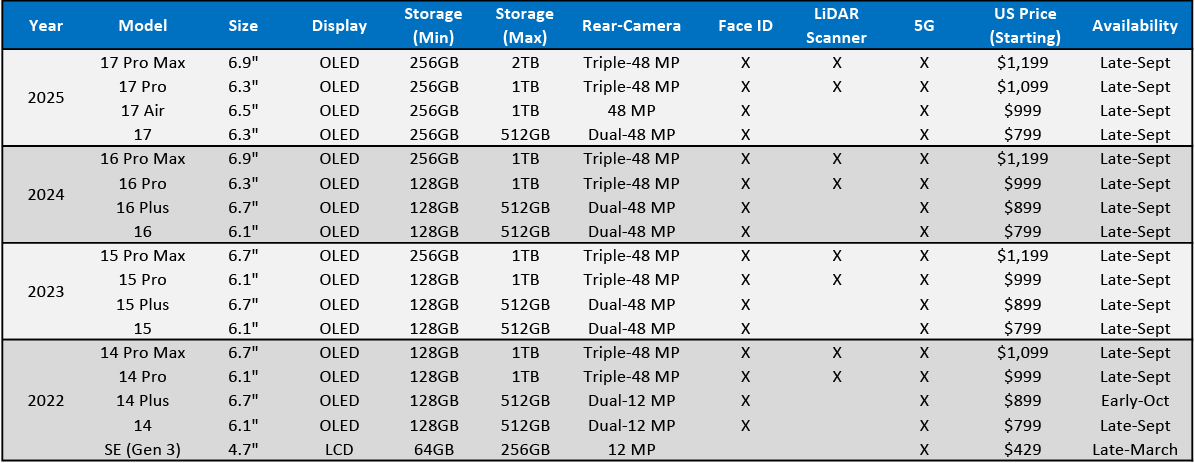
iPhone Model Specifications, Key Dates, and Pricing

(source: GS)
iPhone Series Comparison of Key Configurations/Features and Pricing Across Recent Four Generations
(source: JPM)
Market Reaction and Carrier Promotion Analysis
AAPL stock performed poorly on September 9, 2025, underperforming the S&P 500 by approximately 1.5%, possibly reflecting market disappointment over the unchanged pricing of the base iPhone models. BNPP Exane View considered this launch "disappointing" with "meager" innovation, thus not expecting consumers to "rush to upgrade." This expectation is also reflected in Apple's 2025 H2 shipment plan of approximately 80M-85M units, which is consistent with last year and below historical levels.
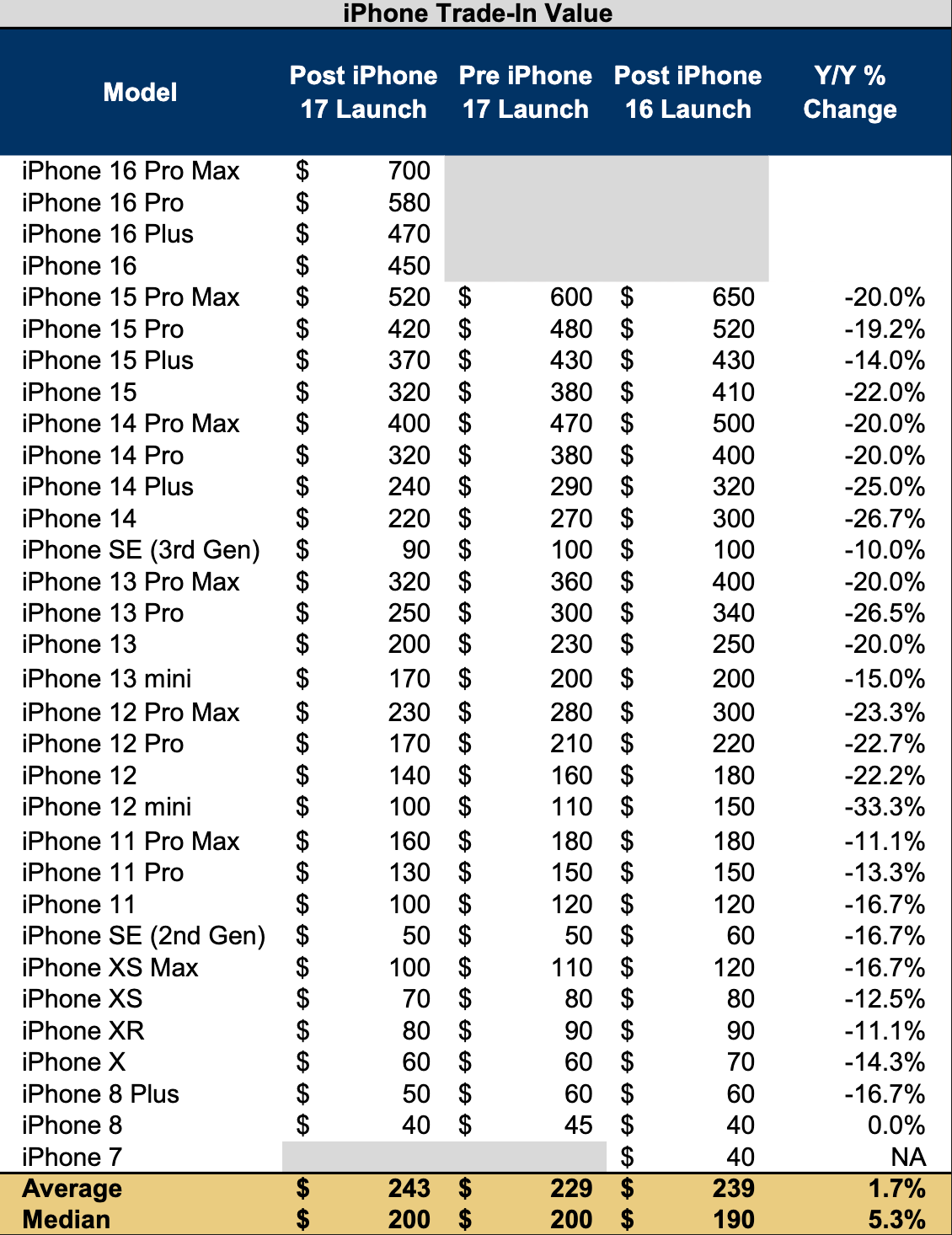
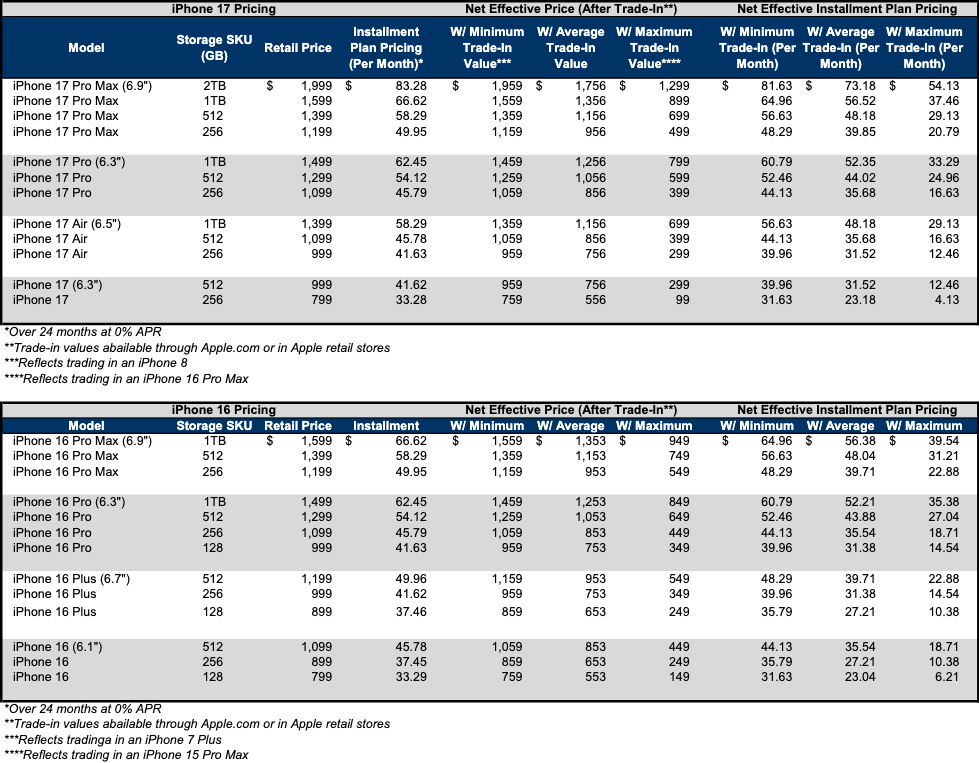
However, carrier promotions for the new Apple devices (iPhone Air/iPhone 17/iPhone 17 Pro/iPhone 17 Pro Max) remained consistent with the previous iPhone 16 family, with some discounts being even stronger, reflecting the higher Average Selling Price (ASP) of the new iPhone series. The maximum trade-in credit from carriers (such as AT&T, Verizon, and T-Mobile) has increased from $1,000 for the iPhone 16 family to $1,100. Morgan Stanley emphasized that higher old device trade-in values and more aggressive US carrier subsidies make the iPhone 17 series actually more affordable than last year, which is expected to drive iPhone upgrade rates. Although Apple lowered the trade-in values for most iPhone models, the median trade-in value for all iPhones increased by 5% year-over-year to $200, primarily due to record-high trade-in values for iPhone 16 models. This means consumers can now purchase higher storage SKU iPhone 17 devices at essentially the same price by trading in their old devices.
iPhone Median Trade-in Value Change
(source: MS)
iPhone 17 vs. iPhone 16 Price Comparison After Trade-in
(source: MS)
Morgan Stanley views this launch as a "modestly positive surprise," and given the generally conservative market expectations, Apple is expected to perform well by year-end. Apple's AI strategy is key to its stock price. Significant announcements regarding Apple Intelligence are expected by year-end, when Apple may gain approval for Apple Intelligence in China. The most significant updates for Apple Intelligence are anticipated in March-June 2026, expected to be an improved version of Apple Intelligence combining Apple's technology with partners' (Google Gemini, OpenAI, or Anthropic) technologies.


