
iPhone 17 Launch Preview - Pricing Strategy, iPhone 17 Air and Impact on ASP & Stock Performance
Will Apple's strategic pricing and the introduction of the ultra-thin iPhone 17 Air finally break the 'sell the news' cycle for iPhone launches and propel ASP growth, or will market conservatism and price sensitivity in key regions temper expectations?


iPhone 17 Launch Preview: Pricing Strategy and iPhone 17 Air as Market Focus
Apple is expected to hold its highly anticipated "Awe-Dropping" product launch event on September 9, 2025, officially unveiling the iPhone 17 family and other new products. Despite early supply chain leaks of some hardware information, market expectations for product-level "surprises" are limited. However, analysts generally believe that the key focus of this launch event will be Apple's pricing strategy, especially the introduction of the new ultra-thin model, the iPhone 17 Air, and the implicit price increase for some Pro models. These initiatives are expected to significantly boost the Average Selling Price (ASP) and may break the historical pattern of "sell the news" for iPhone stock performance post-launch, potentially serving as a positive catalyst for Apple's stock.
This launch event is anticipated to introduce four iPhone 17 models, including the iPhone 17 Pro Max, iPhone 17 Pro, the new iPhone 17 Air (replacing the Plus model), and the standard iPhone 17. Morgan Stanley notes that despite limited product innovation, pricing strategy will be central, with Apple expected to implement a moderate price increase for the first time in 7 years, thereby driving up ASP and potentially prompting the market to reassess Apple's growth prospects. J.P. Morgan emphasizes that the introduction of the iPhone 17 Air (with expected shipments of 10-15 million units in the second half of the year) and its pricing strategy will lead to better-than-expected market performance, particularly in the Chinese market. Goldman Sachs analysts also believe that the iPhone 17 series' form factor design innovation, the potential price increase for the iPhone 17 Pro, and promotional activities driven by carrier competition will collectively drive iPhone revenue growth of 5% year-over-year in F2025E and accelerate to 7% year-over-year in F2026E.
iPhone 17 Air: What are the Highlights of its Design Innovation and Market Positioning?
The iPhone 17 Air is considered the most innovative model in the iPhone 17 series, featuring an ultra-thin design and aiming to replace the Plus model as Apple's latest attempt to revitalize its fourth SKU.
Ultra-Thin Design and Unique Appearance: The iPhone 17 Air is only 5.5mm thick, at least 2.0mm thinner than the Pro versions, making it the thinnest iPhone to date. It weighs 145gm, significantly lighter than the iPhone 16 Pro (199gm) and the 16e (167gm), approaching the 13 Mini's 141gm. This model is equipped with a single camera, but it features a long, runway-like camera bump design. Its Dynamic Island design differs slightly from the other three models, with the front camera positioned on the left side of the pill-shaped cutout, which may be a fine-tuning to the internal design to accommodate the ultra-thin body.
iPhone 17 Series Exterior Models

iPhone 17 Air Model Details
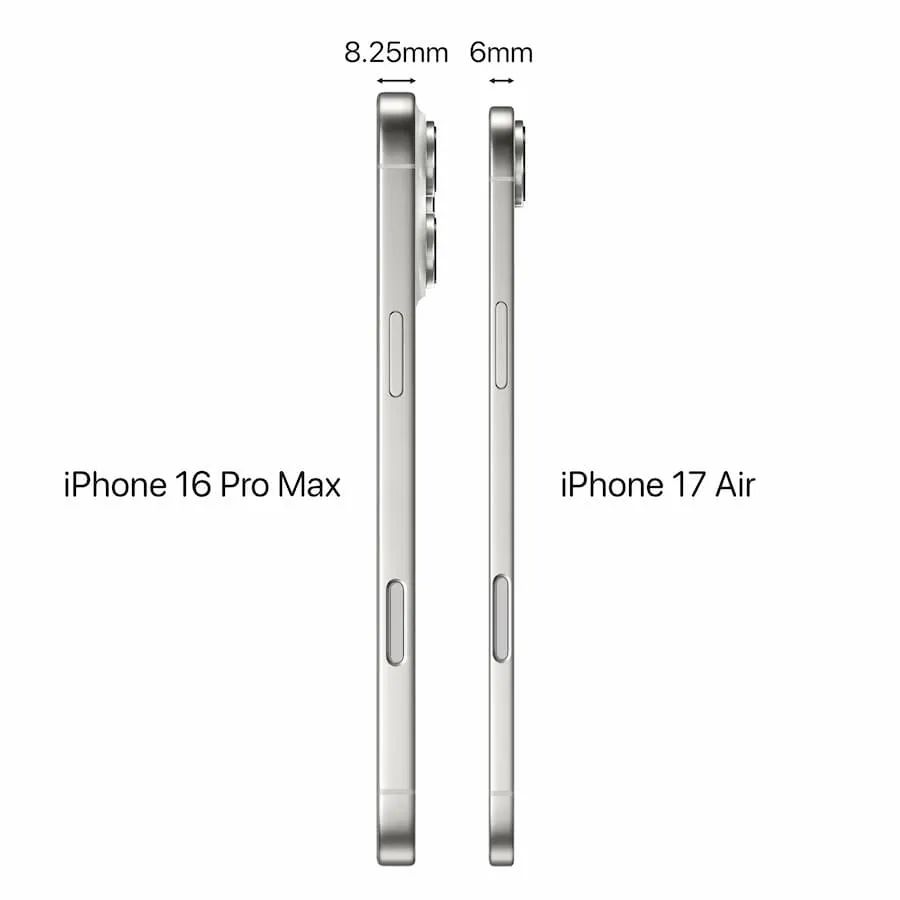
Internal Configuration and Feature Trade-offs: The iPhone 17 Air features a 6.6-inch display, positioned between the Pro model's 6.3-inch and the Pro Max's 6.9-inch. It will support 120Hz ProMotion technology, which was previously exclusive to Pro models. The memory configuration is 12GB RAM, consistent with Pro models. The modem will utilize Apple's in-house developed C1 modem. However, its rear camera is a single 48MP lens, lacking VisionPro spatial video capabilities, and its battery capacity is 2800mAh, which is smaller compared to other models. Notably, despite pursuing an ultra-thin design, the iPhone 17 Air has not sacrificed MagSafe functionality, retaining magnetic charging. Furthermore, this model is expected to adopt a pure eSIM solution, completely eliminating the physical SIM card tray.
Strategic Significance of Replacing the Plus Model: The introduction of the iPhone 17 Air aims to replace the underperforming Plus model. Historical data shows a declining mix share for Apple's fourth SKU, from 13%-14% in the early days of Mini to 6% in the later period of Plus, highlighting the necessity for Apple to continuously experiment with new form factors to boost sales. Analysts predict the iPhone 17 Air will be priced at approximately $900 to $999, roughly similar to or slightly higher than Plus models, with the starting price in China expected to be around RMB 6,999.
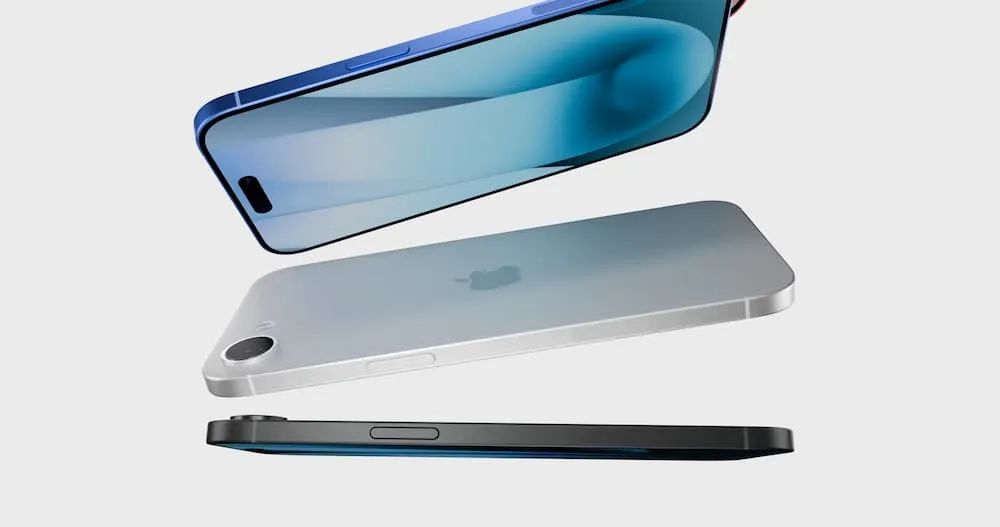
Considerations for Eliminating the Charging Port: Apple had considered removing the USB-C port from the iPhone 17 Air to create the first port-less iPhone, relying entirely on MagSafe wireless charging. However, this was ultimately not realized due to constraints from European Union regulations, which mandate that smartphones must be equipped with a USB-C port.
Conception of a Port-less iPhone
What are the Overall Specifications Upgrades for the iPhone 17 Series?
The iPhone 17 series features upgrades in multiple aspects to differentiate between new and old models and enhance user experience.
Screen and Button Design: All four iPhone 17 models will retain the Dynamic Island design on the front screen, with no significant change in size. The button layout on the side frame remains consistent with the iPhone 16 series, including the Action Button and Capture Button. Notably, the display size of the iPhone 17 base model will increase to 6.3 inches (compared to the iPhone 16 base model's 6.1 inches), matching the size of Pro models.
iPhone 17 Series Front Model Details

Comprehensive Camera System Upgrade: The front camera of the iPhone 17 series will be upgraded to 24MP (compared to the iPhone 16 series' 12MP). The iPhone 17 Pro and iPhone 17 Pro Max continue the triangular triple-camera design and are equipped with a rectangular camera module. Pro models are expected to feature a better 24MP front camera, and all three rear cameras are anticipated to reach 48MP (previously only two were 48MP). The upgraded telephoto lens may support 8x optical zoom (previously 5x). The iPhone 17 (base model) and iPhone 17 Air models will adopt 48MP Fusion and a 12MP Ultra Wide Lens.
iPhone 17 Series Back Model Details

Processor and Memory Improvements: All iPhone 17 models will feature updated A19 series processor chips and 12GB RAM (compared to the iPhone 16 series' 8GB RAM). Among them, the iPhone 17 Pro and Pro Max models will be equipped with higher-end chip models (possibly A19 Pro), while the iPhone 17 (base model) and Air models will feature lower-tier chip models. The increase in chip power and RAM capacity may reflect a greater demand for computational intensity in anticipation of upcoming Apple Intelligence feature updates and releases (including AI-enhanced Siri expected in 2026).
Wi-Fi Chip and MagSafe: All iPhone 17 models will be equipped with the MagSafe magnetic module. Pro models are expected to feature Apple's in-house developed Wi-Fi chip and may support Wi-Fi 7.
Summary of Key Expected Changes for iPhone 17 Series

(Source: MS)
Pricing Strategy: How to Boost ASP and Impact Market Expectations?
The pricing strategy for the iPhone 17 is a key focus of this launch event, expected to be Apple's first moderate price increase for multiple iPhone models in 7 years, aimed at boosting the Average Selling Price (ASP).
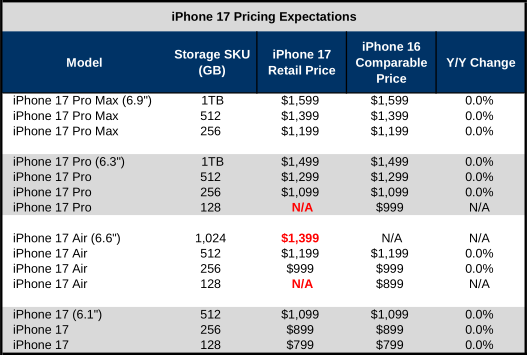
Drivers of Historical Price Increases: Apple's pricing strategy this time is to optimize its product mix. For example, the iPhone 17 Air will be priced $100 higher than the iPhone 16 Plus. Additionally, Apple will eliminate low-capacity storage configurations (such as 128GB), thereby optimizing the product mix to push sales towards higher-priced, higher-margin models, offsetting import tariffs and rising component costs.
Specific Pricing Expectations and Storage Configuration Adjustments: The iPhone 17 (base model) and Pro Max models are expected to be priced similarly to their predecessors (starting at $799 for the 128GB base model; $1,199 for the 256GB Pro Max). However, the price of the iPhone 17 Pro is anticipated to increase from $999 to $1099, as its base storage option is expected to change to 256GB, eliminating the 128GB storage model. The starting price for the iPhone 17 Air is expected to be $999 (256GB), which is $100 higher than the iPhone 16 Plus. Furthermore, a new 1TB iPhone 17 Air storage configuration will be added, priced at $1,399.
iPhone 17 Family Pricing Expectations
(Source: GS)
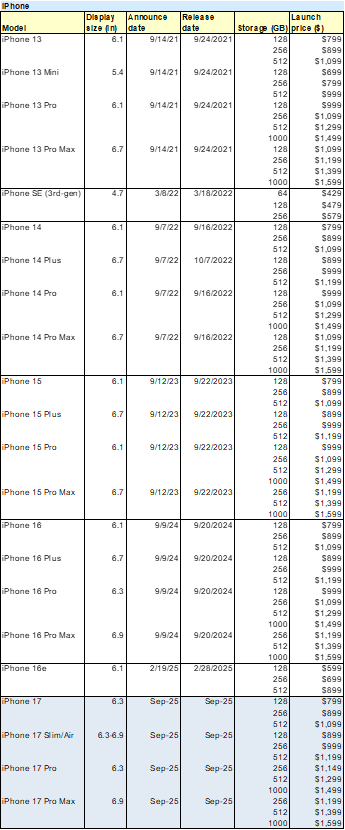
iPhone Model Specifications, Key Dates, and Pricing Summary
(Source: Citi)
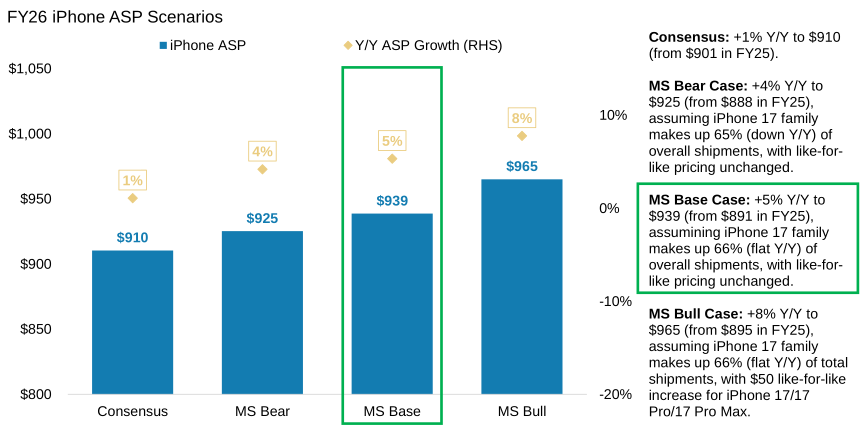
Impact on ASP and Demand Elasticity: Based on these pricing assumptions, and assuming a 66% mix share for new models in FY26 (flat year-over-year), Morgan Stanley forecasts FY26 iPhone Average Selling Price (ASP) to grow 5% year-over-year, 4 percentage points higher than market consensus (1%). The report suggests that these moderate price increases are unlikely to significantly impact iPhone 17 demand elasticity, as their incremental cost does not pose a substantial impediment when spread across a 2-3 year device usage cycle.
Morgan Stanley FY26 iPhone Pricing Base Forecast
(Source: MS)
China Market: Importance of Price Sensitivity and Subsidy Policies: In the Chinese market, smartphones priced under RMB 6,000 (approximately $840 USD) can receive a 15% discount. The breadth of Apple's SKUs in this price range will determine the upside potential in the medium term (at least until year-end), with this demand driven by the timing of subsidy support. If the iPhone Air's launch price can be closer to $800, it would create opportunities for upside and mean more SKUs could benefit from regional subsidies. However, a July 2025 survey showed that if iPhone 17 prices were to increase by 5%, the willingness of 25% of Chinese iPhone users to upgrade would decrease, demonstrating the Chinese market's price sensitivity.
If Prices Rise by 5%, 25% of Chinese Consumers' Willingness to Upgrade to iPhone 17 Will Decrease

(Source: MS)
Shipment Outlook and Stock Performance: Can iPhone 17 Break the "Sell the News" Historical Pattern?
Analysts' shipment forecasts for the iPhone 17 are relatively conservative, but they see potential for upside and suggest that this launch event might break the historical "sell the news" pattern for iPhone stock performance.
Current Shipment Forecasts and Potential Upside Risks: Citi expects iPhone 17 series shipments of 82 million units in CY25, largely flat compared to last year's iPhone 16 at 81 million units. Citi maintains its expectation for flat to +3% iPhone shipments in CY25/26, forecasting 227 million units and 234 million units respectively. Potential upside risks for shipments include:
- Strong Upgrade Intent in the US Market: A March 2025 survey showed that 51% of US iPhone users indicated they were "extremely likely" to upgrade their device in the next 12 months, marking a new historical high for the survey.
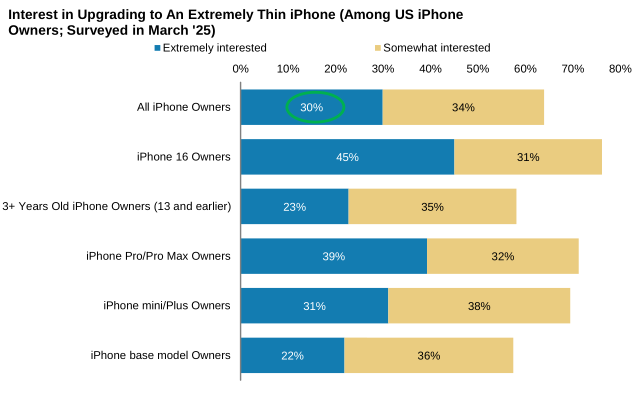
- Appeal of Ultra-Thin iPhone: 30% of US iPhone users expressed "significant interest" in an ultra-thin iPhone model, with 2/3 of those users showing at least "some interest".
AlphaWise March 2025 Survey Shows iPhone Upgrade Rate Increased to 51%, a 10-Year High

(Source: MS)
30% of US iPhone Users Show Interest in Ultra-Thin iPhone, with iPhone 16 and Pro/Pro Max Users Showing Highest Interest
(Source: MS)
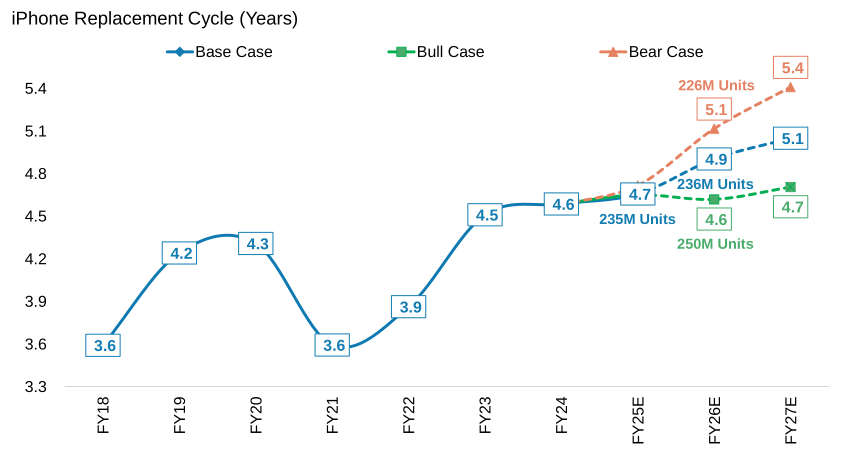
Extended Replacement Cycle and User Upgrade Opportunities: Apple's active iPhone installed base continues to expand, expected to reach 1.4 billion units by the end of CY24 and 1.5 billion units by the end of CY25. Although the iPhone replacement cycle is continuously extending, reaching 4.7 years in FY25 and projected to extend to approximately 5 years in CY26, nearly half of iPhone users are still using an iPhone 14 or earlier model, providing a good upgrade opportunity for the upcoming new products.
Morgan Stanley Forecasts iPhone Replacement Cycle to Extend by 0.2 Years to 4.9 Years in FY26, and Another 0.2 Years to 5.1 Years in FY27
(Source: MS)
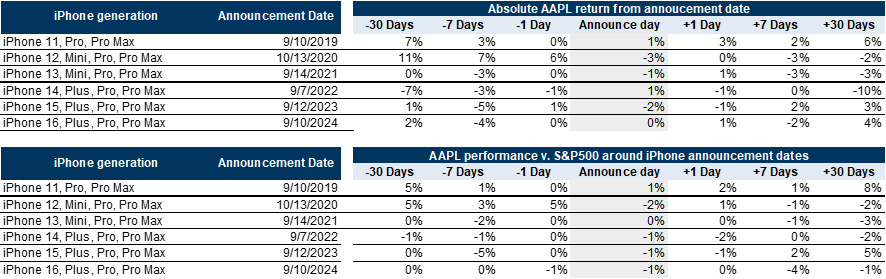
Historical Stock Patterns and the "Breaking Tradition" Argument: Historical experience suggests that iPhone launch events are typically "sell the news" events. Over the past 10 years, in 6 years, iPhone production forecasts for the December quarter were downgraded between the September launch event and year-end, leading to flat or underperforming AAPL stock performance relative to the broader market. However, Morgan Stanley believes that this year's market consensus for FY26 iPhone revenue growth is only 4%, which is considered overly conservative, primarily due to a lack of revolutionary product upgrades and "recency bias" from recent underperformance. Therefore, this iPhone 17 launch event may not be a negative "sell the news" catalyst as usual; instead, it could serve as a positive catalyst for the stock, laying the groundwork for potential valuation upgrades and outperformance before year-end.
Over the Past 10 Years, iPhone Production Forecasts for the December Quarter Were Downgraded 6 Times, Leading to Flat or Underperforming AAPL Stock Performance

(Source: MS)
AAPL Absolute and Relative S&P 500 Performance Around iPhone Launch Dates
(Source: MS)
Other Apple Ecosystem Updates and Strategic Layout
Beyond the iPhone, Apple will also introduce other hardware updates and continue to advance its AI strategy and iOS system optimization.
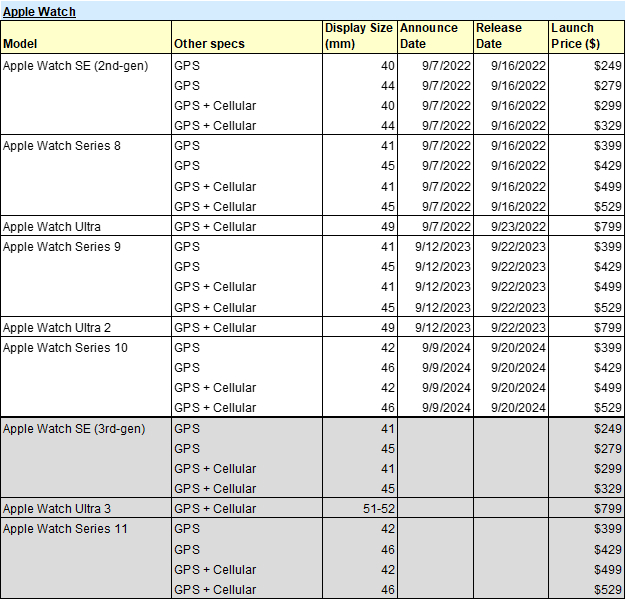
Evolutionary Upgrades for Apple Watch and AirPods: Expected releases include the Apple Watch Series 11, Apple Watch Ultra 3, and Apple Watch SE 3. These product upgrades are anticipated to be evolutionary, with limited incremental functionality, such as Apple Watch Ultra 3 supporting satellite connectivity and AirPods Pro 3 adding some health-related sensors.
Apple Watch Products by Key Specifications, Announcement Date, Release Date, and Launch Price
(Source: citi)
iOS 26: AI-Driven and User Experience Enhancements: Apple is expected to release iOS 26 alongside the iPhone 17. Updates include: UI enhancements with a "Liquid Glass" design theme, AI-driven features (e.g., real-time translation, new Visual Intelligence features), and quality-of-life improvements.
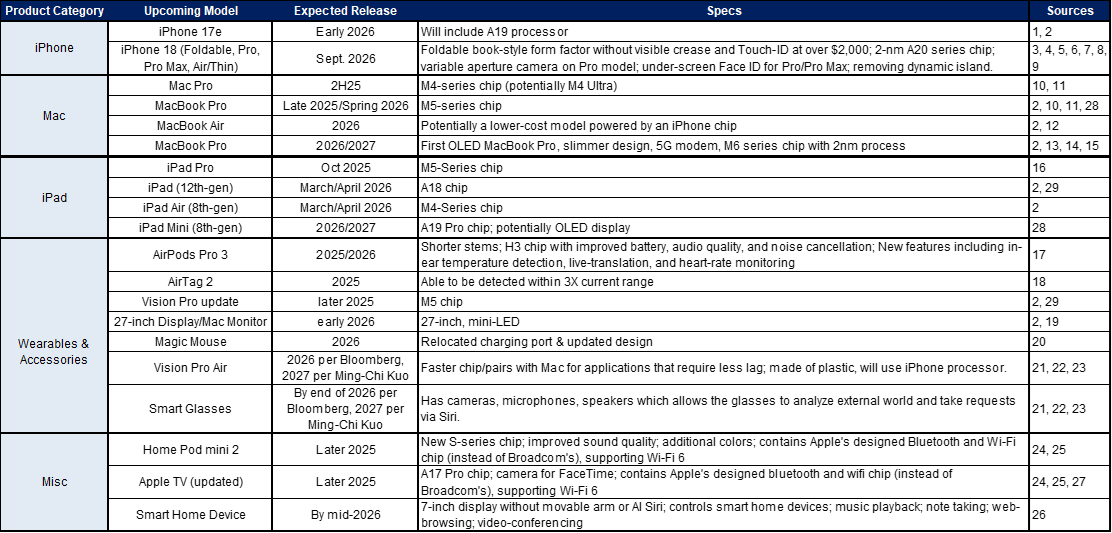
Apple's AI Strategy and Future Product Roadmap: The report anticipates that this launch event will not feature any significant AI announcements, but Apple will continue to develop its own Foundation Models and collaborate with other LLM vendors (e.g., discussions with Google to potentially power Siri with Gemini), and remains open to M&A to accelerate its AI roadmap.
AAPL 2025 and 2026 Product Roadmap
(Source: citi)
Carrier Promotional Activities: Major US carriers (AT&T, Verizon, T-Mobile) offer significant iPhone promotional activities through trade-in programs, bill credits, and other means, reaching up to $1,000. These promotions reflect the fierce competition among carriers to attract and retain customers, thereby supporting device upgrades.
Selected iPhone Carrier Promotional Activities for iPhone 12, 13, 14, 15, and 16 Series

(Source: citi)


